

What Are Transport Adjectives?
Transport adjectives are words that describe vehicles or the experience of using them. They tell us more about nouns like ‘car’, ‘bus’, ‘train’, or ‘journey’.
These adjectives help you give more details when you talk about travel. They make your sentences more interesting and informative.
🎓 Impara l'inglese con il metodo misto
Piccoli gruppi · Tutor IA disponibile 24 ore su 24, 7 giorni su 7 · Preparazione agli esami di Cambridge
Piani da $39 $79 al mese
Common Adjectives to Describe Transport
Here are some important adjectives you can use to describe different types of transport, along with their opposites:
- Fast: Moves quickly. Opposite: Slow (moves not quickly).
- Safe: Not dangerous; protected. Opposite: Dangerous (can cause harm).
- Empty: Has no people or things inside. Opposite: Crowded (has too many people) or Full (has many people or things).
- Comfortable: Feels good; relaxed. Opposite: Uncomfortable (does not feel good).
- Cheap: Not expensive; costs little money. Opposite: Expensive (costs a lot of money).
- Clean: Not dirty. Opposite: Dirty (not clean).
How to Use Transport Adjectives in Sentences
You usually put adjectives before the noun they describe. For example, you say a fast train, not a train fast. You can also use them after verbs like 'to be' (is, are).
- Prima di un sostantivo: I prefer a comfortable bus for long journeys.
- After 'to be': The train was very crowded this morning.
- To compare: Planes are faster than cars.
| Aggettivo | Opposite |
|---|---|
| Fast | Slow |
| Safe | Dangerous |
| Empty | Crowded / Full |
| Comfortable | Uncomfortable |
| Cheap | Expensive |
| Clean | Dirty |
Esempi
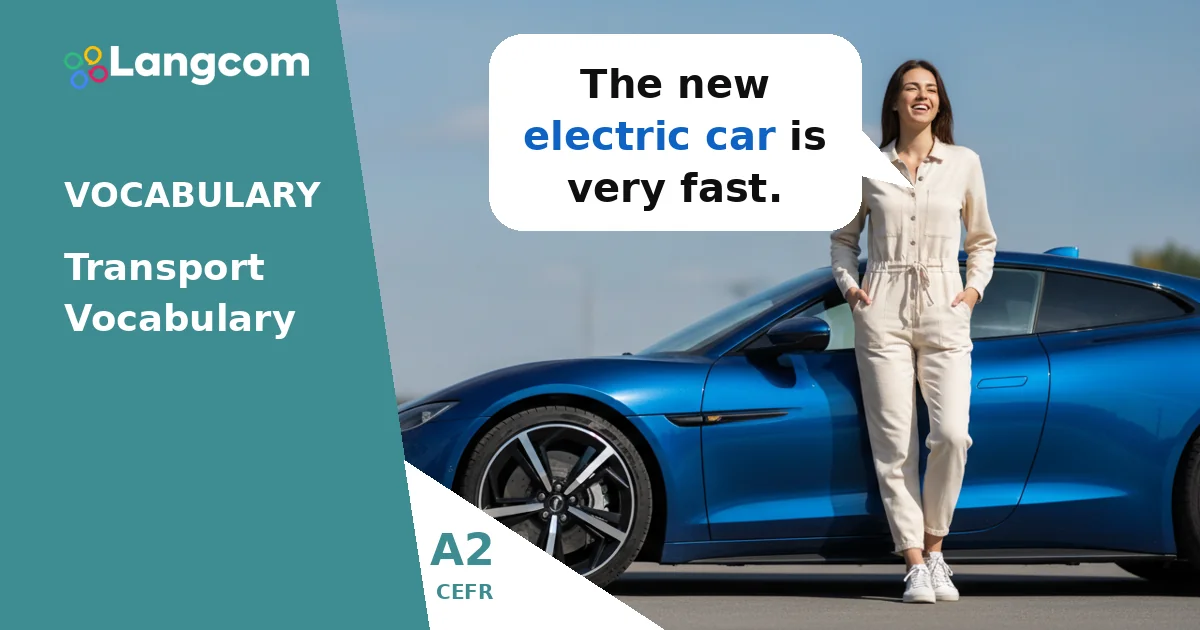
- The new electric car is very fast.
- I don't like slow journeys; I get bored.
- Travelling by train is generally very safe.
- Driving in the city can be dangerous at night.
- The bus was empty, so I had two seats.
- This metro line is always crowded during rush hour.
- Our seats on the plane were very comfortable.
- The old taxi was quite uncomfortable.
- Public transport is often cheaper than driving.
- That luxury car is too expensive for me.
- I like to travel in a clean taxi.
- The floor of the old bus was very dirty.
Esercitazione
💬 Hai bisogno di una consulenza personalizzata?
In qualità di Centro autorizzato di preparazione agli esami Cambridge, possiamo aiutarti a scegliere il corso e la certificazione più adatti alle tue esigenze. Contatta oggi stesso i nostri consulenti.
Chatta con un consulente su WhatsAppErrori comuni per chi parla spagnolo
Spanish speakers sometimes make mistakes with adjective order or choosing the correct opposite word.
- Incorrect word order: In Spanish, adjectives often come after the noun. In English, they usually come before.
✗ a car fast
✓ a fast car - Confusing opposites: Make sure you use the correct opposite. For example, empty is the opposite of crowded oppure full, not alone.
- Using 'very' too much: While 'very' is useful, try to learn stronger adjectives too. Instead of very dirty, you might say filthy (though this is a higher level word). For A2, focus on the basic opposites.
Domande frequenti
Why is it important to learn transport adjectives?
Learning transport adjectives helps you describe your travel experiences more clearly. You can talk about how you feel, the condition of the vehicle, and the speed of your journey. This makes your English communication much richer.
Can I use these adjectives for other things, not just transport?
Yes, many of these adjectives are general and can describe other nouns too. For example, you can have a fast runner, un safe place, an empty room, oppure un clean shirt. They are very useful words!
Where do adjectives usually go in an English sentence?
Adjectives typically go before the noun they describe (e.g., a dangerous road) or after a 'to be' verb (e.g., The bus is crowded).




0 Commenti