di Raúl | 17 luglio 2026 | Inglese per bambini - Livello pre-A1 (principianti)
Learning the names of body parts in English is very useful for everyday communication. You can talk about yourself, describe people, or explain if you feel pain. Knowing words like head, hand, foot, eye, and mouth helps you understand and speak basic English. This...
di Raúl | 17 luglio 2026 | A1 Inglese per principianti
Object pronouns are small words like me, you, him, her, it, us, and them. We use them to replace nouns that receive the action of a verb or come after a preposition. For example, instead of saying I see John, you can say I see him. The pronoun him is the object. They...
di Raúl | 17 luglio 2026 | A1 Inglese per principianti
Life events are important moments and changes that happen in a person’s life, from the very beginning to the end. Learning this vocabulary helps you describe your own life story and understand others. For A1 English learners, knowing these basic terms is...
di Raúl | 17 luglio 2026 | Inglese per bambini - Livello pre-A1 (principianti)
I verbi d'azione ci dicono cosa fa qualcuno o qualcosa. Queste parole indicano un movimento o un'attività. Imparare i verbi d'azione ti aiuta a parlare delle attività quotidiane e a descrivere il mondo che ti circonda. Ad esempio, correre, saltare e nuotare sono tutti verbi d'azione. Sono molto importanti...
di Raúl | 17 luglio 2026 | Inglese per bambini - Livello pre-A1 (principianti)
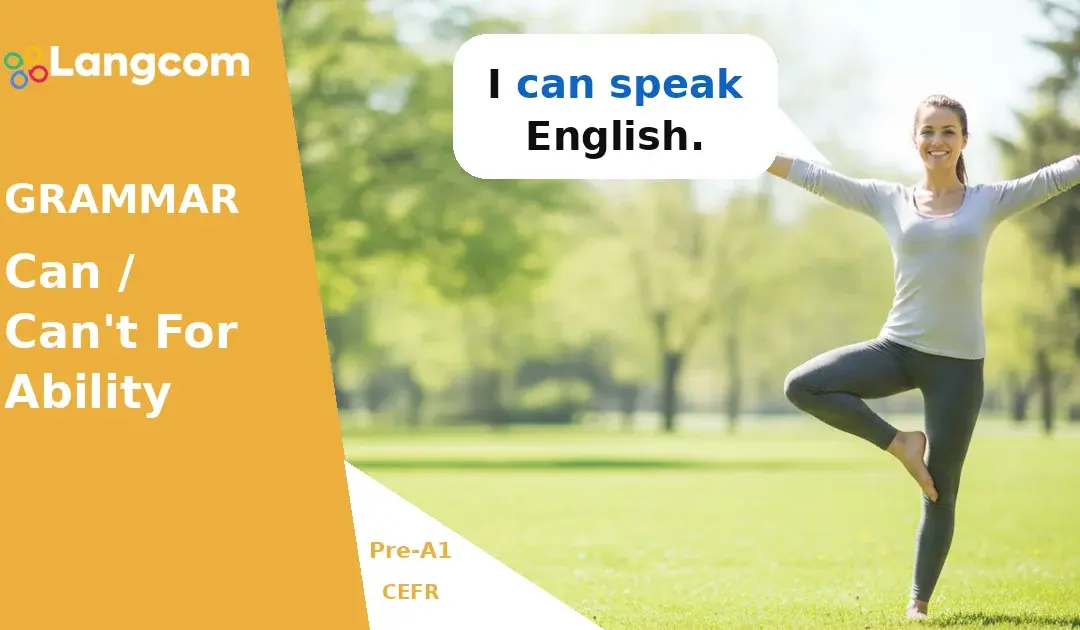
Si usa “can” per dire cosa qualcuno o qualcosa è in grado di fare. Si usa “can’t” per dire cosa qualcuno o qualcosa non è in grado di fare. “Can” e “can’t” sono verbi modali. Ci aiutano a esprimere la capacità. La struttura è semplice: per prima cosa, si indica chi o cosa (io, tu, lui, lei,...).
