


What is the Present Simple?
The Present Simple is a basic English tense. We use it to talk about things that are always true or happen repeatedly.
- It describes your daily routines.
- It talks about habits.
- It states general facts.
🎓 Apprenez l'anglais grâce à la méthode mixte
Petits groupes · Tuteur IA disponible 24 h/24, 7 j/7 · Préparation aux examens de Cambridge
Plans provenant de $39 $79 par mois
How Do We Form Positive Sentences?
To make a positive sentence in the Present Simple, we use the base form of the verb for most subjects.
- For I, you, we, they: Use the verb as it is.
- Exemple : I work. You study. We live. They play.
- For he, she, it: Add -s ou -es to the end of the verb.
- Exemple : He works. She studies. It rains.
Spelling Rules for -s et -es:
- Most verbs just add -s: work -> works, eat -> eats.
- Verbs ending in -ch, -sh, -s, -x, -z, -o add -es: watch -> watches, finish -> finishes, go -> goes.
- Verbs ending in a consonant + -y change -y à -ies: study -> studies, fly -> flies. (But play -> plays because it's a vowel + -y).
How Do We Form Negative Sentences?
To make a negative sentence, we use do not ou does not before the main verb. The main verb always stays in its base form.
- For I, you, we, they: Use do not (ou don't) + base verb.
- Exemple : I do not work. (I don't work.) They don't live here.
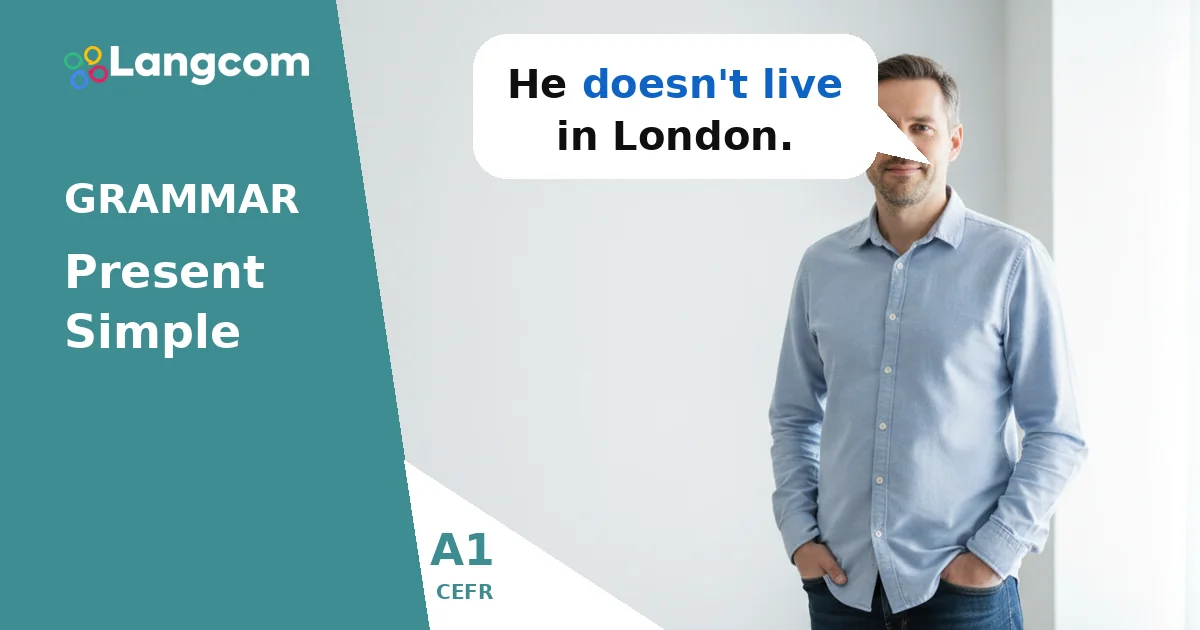
- For he, she, it: Use does not (ou doesn't) + base verb.
- Exemple : He does not study. (He doesn't study.) She doesn't like coffee.
Remember: The verb after do not ou does not never has -s ou -es.
When Do We Use the Present Simple?
Here are the main situations when you use the Present Simple:
- Daily Routines and Habits: Things you do every day, week, or month.
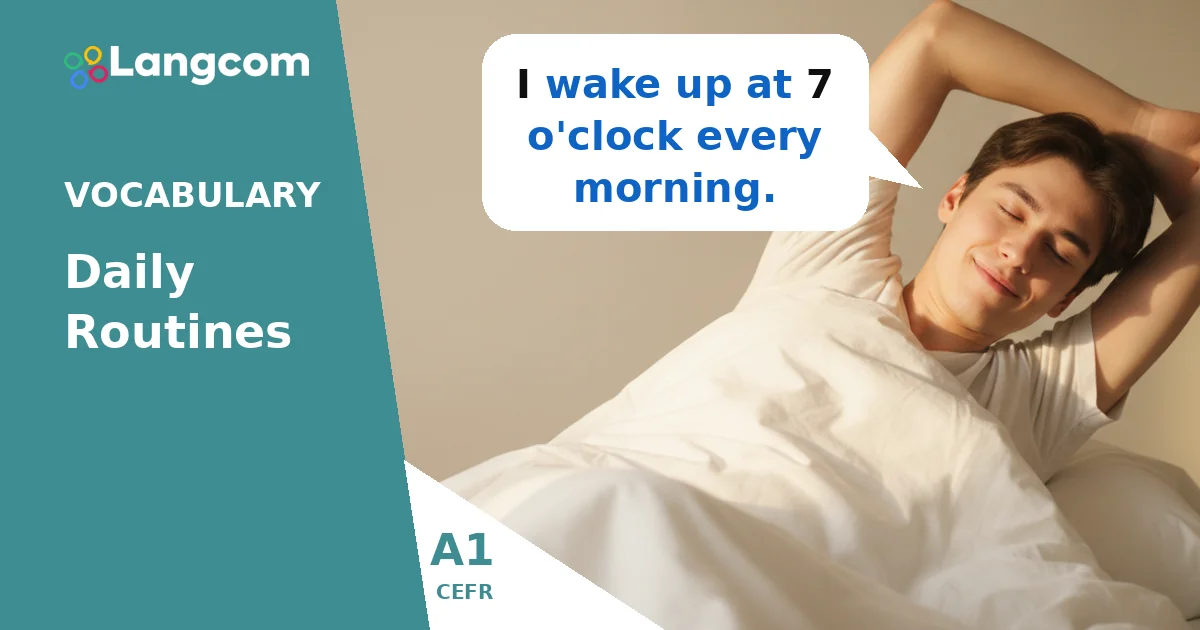
- I wake up at 7 AM every day.
- She drinks tea in the morning.
- General Facts and Truths: Things that are always true.
- The sun rises in the east.
- Water boils at 100 degrees Celsius.
- Schedules and Timetables: Fixed events.
- The train leaves at 9:00 AM.
- The class starts at 6 PM.
| Objet | Positive | Negative |
|---|---|---|
| I / You / We / They | work | do not work (don't work) |
| He / She / It | works | does not work (doesn't work) |
Exemples
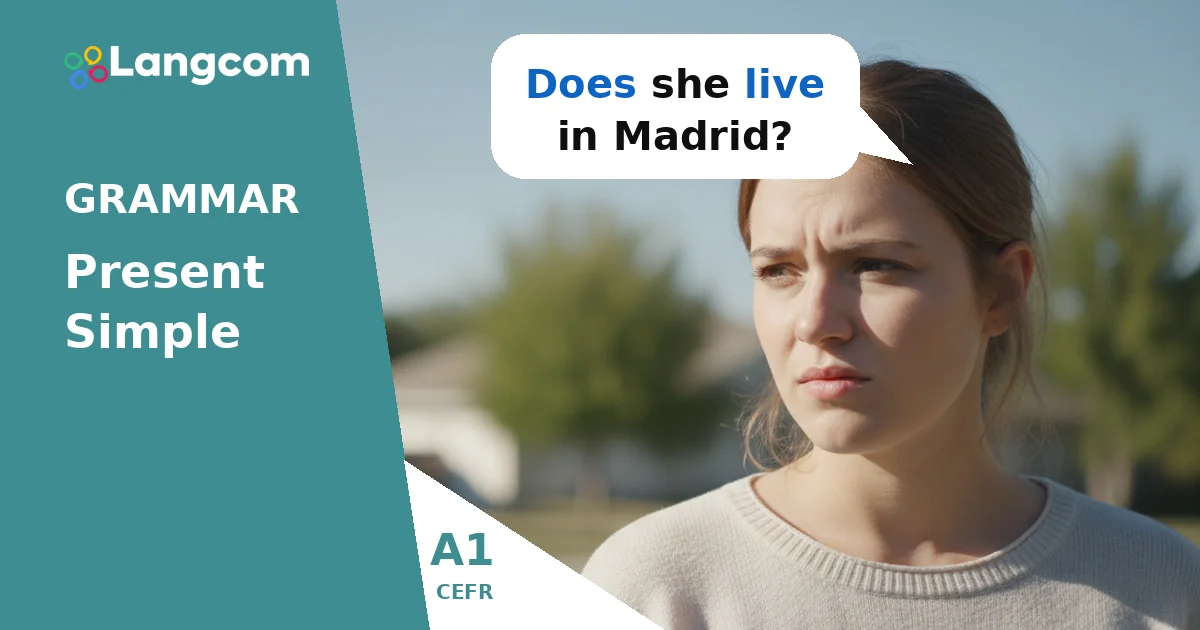
- I live in Madrid.
- She works in a hospital.
- We don't eat meat.
- He doesn't speak French.
- They watch TV every evening.
- It often rains in autumn.
Entraînement
💬 Vous avez besoin de conseils personnalisés ?
En tant que centre de préparation agréé par Cambridge, nous pouvons vous aider à choisir la formation et la certification qui vous conviennent. Discutez-en dès aujourd'hui avec nos conseillers.
Discutez avec un conseiller sur WhatsAppErreurs courantes chez les hispanophones
Spanish speakers sometimes make specific mistakes with the Present Simple. Be careful with these:
- Forgetting -s for he/she/it:
- Faux : She like coffee.
- Correct : She likes coffee.
- Using not without do/does:
- Faux : I not work here.
- Correct : I do not work here. (I don't work here.)
- Adding -s to the verb after do/does not:
- Faux : He doesn't works.
- Correct : He doesn't work.
Questions fréquemment posées
What is the Present Simple used for?
It is used for habits, routines, and general facts. For example, I drink coffee every morning. ou The Earth goes around the sun.
When do I add '-s' or '-es' to a verb?
You add -s ou -es only for he, she, it in positive sentences. For example, He reads, She watches.
Why do we use 'do' and 'does' for negative sentences?
Do et does are auxiliary verbs that help form the negative in the Present Simple. They carry the negative meaning (not) and the subject agreement (does for third person singular). The main verb remains in its base form. For example, We don't live there.

0 commentaire