

To ask about prices in English, use How much is it? for one item or How much are they? for many items. To say a price, state the main number, then the currency, and then the smaller number (like cents or pence). Par exemple, £5.99 est five pounds ninety-nine. It is important not to use ‘and’ or ‘of’ between the main currency and the smaller unit.
Understanding prices is a key skill for daily life, especially when shopping or traveling. This simple method helps you communicate clearly in English. You will learn common currency names and how to use them correctly in sentences. Practise these phrases to feel more confident when talking about money.
How Do We Ask About Prices?
When you want to know the cost of something, you use a simple question.
- For one item, use How much is it? ou How much is this?
- For many items, use How much are they? ou How much are these?
You can also name the item directly in your question.
- How much is the coffee?
- How much are the bananas?
🎓 Apprenez l'anglais grâce à la méthode mixte
Petits groupes · Tuteur IA disponible 24 h/24, 7 j/7 · Préparation aux examens de Cambridge
Plans provenant de $39 $79 par mois
How Do We Say Prices?
Saying prices is easy once you know the pattern. You say the number for the main currency, then the currency name, then the number for the smaller unit.
- For £5.99, dis-tu five pounds ninety-nine.
- For $16.50, dis-tu sixteen dollars fifty.
- For €4.50, dis-tu four euros fifty.
Sometimes, if the currency is clear from the situation, you can leave out the currency name.
- It's five ninety-nine. (Meaning £5.99 ou $5.99, etc.)
Remember to use the plural form of the currency name if the number is more than one.
- one pound, but two pounds
- one dollar, but ten dollars
Common Currencies in English
Many countries use different currencies. Here are some common ones you might hear.
- The UK uses the pound (£).
- The USA, Canada, and Australia use the dollar ($).
- Many countries in Europe use the euro (€).
| Symbol | Currency Name | Example Price | How to Say It |
|---|---|---|---|
| £ | Pound | £10.50 | ten pounds fifty |
| $ | Dollar | $25.99 | twenty-five dollars ninety-nine |
| € | Euro | €3.75 | three euros seventy-five |
| R$ | Real | R$50.00 | fifty reais |
| S/. | Sol | S/.12.20 | twelve soles twenty |
| Mex$ | Peso | Mex$ 8.15 | eight pesos fifteen |
Exemples
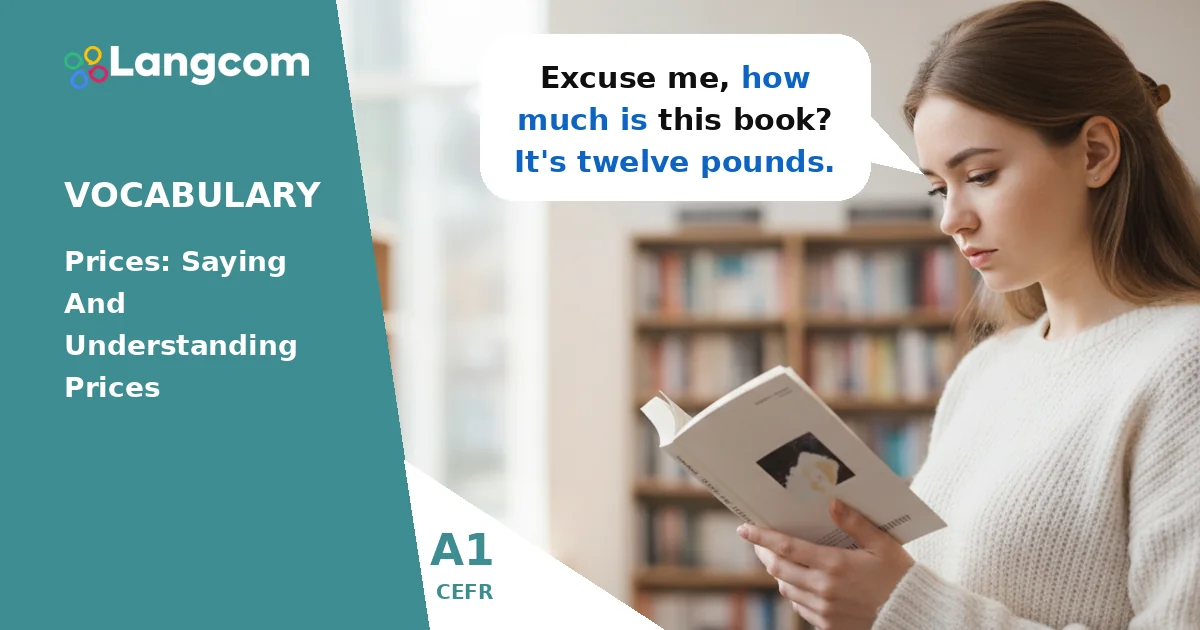
- Excuse me, how much is this book? It's twelve pounds.
- How much are these shoes? They're eighty-five dollars ninety-nine.
- Is the coffee expensive? No, it's only three euros fifty.
- A: How much is that apple? B: It's one dollar twenty.
- A: How much are these bananas? B: They're two euros seventy-five.
Entraînement
💬 Vous avez besoin de conseils personnalisés ?
En tant que centre de préparation agréé par Cambridge, nous pouvons vous aider à choisir la formation et la certification qui vous conviennent. Discutez-en dès aujourd'hui avec nos conseillers.
Discutez avec un conseiller sur WhatsAppErreurs courantes chez les hispanophones
Spanish speakers sometimes make these mistakes when saying prices:
- Using 'and' or 'of' for cents/pence:
Incorrect : five pounds and ninety-nine
Correct : five pounds ninety-nine - Forgetting the plural for currency names:
Incorrect : two dollar
Correct : two dollars - Using 'cost' instead of 'is/are' for simple questions:
Incorrect : How much cost this?
Correct : How much is this?
Questions fréquemment posées
How do I ask about the price of one thing?
You can ask How much is it? ou How much is this?
How do I ask about the price of many things?
You can ask How much are they? ou How much are these?
Do I always say the currency name when giving a price?
Not always. If it's clear from the context, you can sometimes just say the numbers, for example, It's five ninety-nine.
What are some common currencies in English-speaking countries?
Common currencies include the pound (£), the dollar ($), and the euro (€).



0 commentaire