
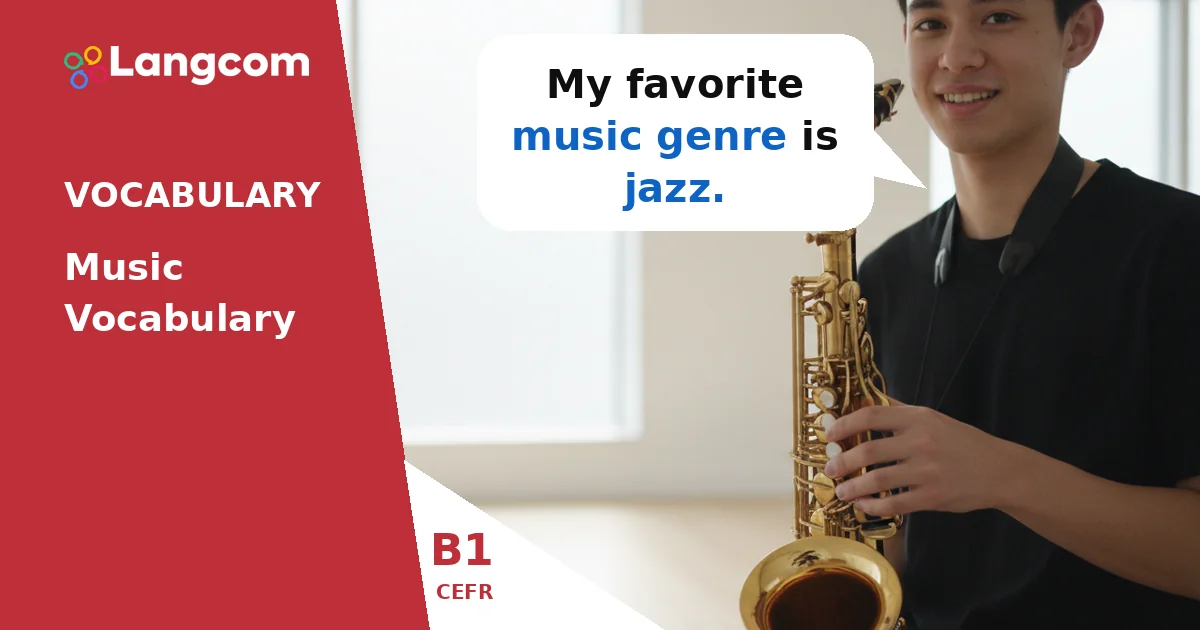

What are common music genres?
A genre is a category or type of music. There are many different genres around the world.
Here are some popular music genres you should know:
- Pop: This is short for ‘popular music’. It often has catchy melodies and is very common on the radio.
- Rock: A powerful genre often featuring electric guitars and strong drums.
- Jazz: Known for its improvisation and complex rhythms, often played with saxophones et trumpets.
- Folk: Traditional music from a specific culture or region, often telling stories.
- Dance: Music made for dancing, common in clubs and parties, usually with a strong beat.
- Opera: A classical genre where singers perform a dramatic story with orchestral music.
- Tango: A specific genre of music and dance originating in Argentina.
🎓 Apprenez l'anglais grâce à la méthode mixte
Petits groupes · Tuteur IA disponible 24 h/24, 7 j/7 · Préparation aux examens de Cambridge
Plans provenant de $39 $79 par mois
Who makes music?
Many different people are involved in creating and performing music. We call them artists.
- A singer: A person who uses their voice to make music. Adele is a famous singer.
- A musician: A person who plays a musical instrument. A singer can also be a musician if they play an instrument. He is a talented musician who plays the piano.
- A band: A group of musicians who play music together. The Beatles were a famous rock band.
- A DJ: Short for 'Disc Jockey'. A person who plays recorded music at clubs or parties. The DJ played great dance music all night.
- A dancer: A person who dances, often to music. She is a professional dancer in a ballet company.
What words describe music and events?
When you talk about music, you also need words for the parts of music and events where music is played.
- A song: A piece of music with lyrics (words). What's your favorite song on this album?
- An album: A collection of songs released together by an artist ou band. Her new album has ten amazing songs.
- Lyrics: The words of a song. I love the lyrics of this song; they are very meaningful.
- A melody: The main tune of a song. The melody of that pop song is very catchy.
- A rhythm: The pattern of sounds and silences in music. This dance music has a strong rhythm.
- An instrument: An object used to make music, like a guitar ou piano. My sister plays several musical instruments.
- A concert: A live performance of music. We bought tickets for the rock concert next month.
- A festival: A large public event, often lasting several days, with many bands et artists performing. Glastonbury is a famous music festival.
How do we talk about listening to music?
Here are some common phrases to talk about your music habits and preferences:
- Listen to music: To hear and pay attention to music. I listen to music every day on my way to work.
- Play an instrument: To make music using an instrument. Do you play any musical instruments?
- Go to a concert/festival: To attend a live music event. Let's go to a concert this weekend.
- Download music: To save music files to your device. I downloaded her new album last night.
- Stream music: To listen to music directly from the internet without downloading. Many people stream music on their phones now.
- Turn up/down the music: To increase or decrease the volume. Can you turn up the music? I can't hear it.
| Genre | Description / Example |
|---|---|
| Pop | Catchy, popular music often heard on the radio. |
| Rock | Energetic music with guitars and drums. |
| Jazz | Complex, improvisational music, often with saxophones. |
| Folk | Traditional music telling stories, often acoustic. |
| Dance | Music with a strong beat, for clubs and parties. |
| Opera | Classical drama set to music, performed by singers and an orchestra. |
| Tango | A specific music and dance style from Argentina. |
Exemples
- My favorite music genre is jazz.
- She is a talented singer and musician.
- The band played their new song at the concert.
- I love to dance to pop music.
- Have you heard his latest album?
- The DJ played a great mix of dance and rock music.
- The lyrics of this song are very emotional.
- I want to learn to play a musical instrument.
Entraînement
✍️ Vous ne savez pas quel est votre niveau ?
Passez notre test de niveau gratuit et recevez des commentaires personnalisés de la part d'examinateurs certifiés par Cambridge.
Passez notre test de niveau GRATUITErreurs courantes chez les hispanophones
Many Spanish speakers make small mistakes with music vocabulary. Here are some common ones:
- Music vs. Song: Remember that music is a general term, while a song is a specific piece of music with lyrics. You say "I like music" (general) or "I like that song" (specific). It is usually incorrect to say "I like that music" when you mean a specific piece.
- Play music vs. Listen to music: À play music means to perform it (e.g., "I play the guitar") or to make it sound (e.g., "The DJ played some great tunes"). To listen to music means to hear it with attention (e.g., "I listen to classical music every morning").
- Dance (verb) vs. Dance music (genre) vs. A dancer (person): These are related but different. Dance is a verb ("I love to dance"). Dance music is a genre of music ("Dance music is popular in clubs"). A dancer is a person who dances ("She is a professional dancer").
Questions fréquemment posées
What is the difference between a band and a musician?
A musician is an individual person who plays a musical instrument ou sings. A band is a group of two or more musicians who perform music together.
Can 'dance' be a type of music?
Oui, dance can be a genre of music, often called dance music or electronic dance music (EDM). It is specifically created for dancing, usually in clubs or parties.
How do I say 'my favorite music' in English?
On peut dire que "My favorite music is..." followed by the genre, for example, "My favorite music is rock." Or you can say "My favorite genre is..." ou "I love... music."
What are lyrics?
Lyrics are the words that are sung in a song. If a song has no words, it is called an instrumental piece.

0 commentaire