

Why Learn Color Expressions in English?
English is full of idiomatic expressions. Many of these idioms use colors to describe feelings, situations, or characteristics. For C1 learners, understanding and using these expressions is key to sounding more natural and fluent.
These phrases often have meanings that are not obvious from the individual words. They add a layer of cultural understanding to your language skills.
✍️ Vous ne savez pas quel est votre niveau ?
Passez notre test de niveau gratuit et recevez des commentaires personnalisés de la part d'examinateurs certifiés par Cambridge.
Passez notre test de niveau GRATUITRed Expressions: Anger, Danger, and Debt
The color red often connects to strong emotions like anger, or to situations involving warnings or financial trouble.
-
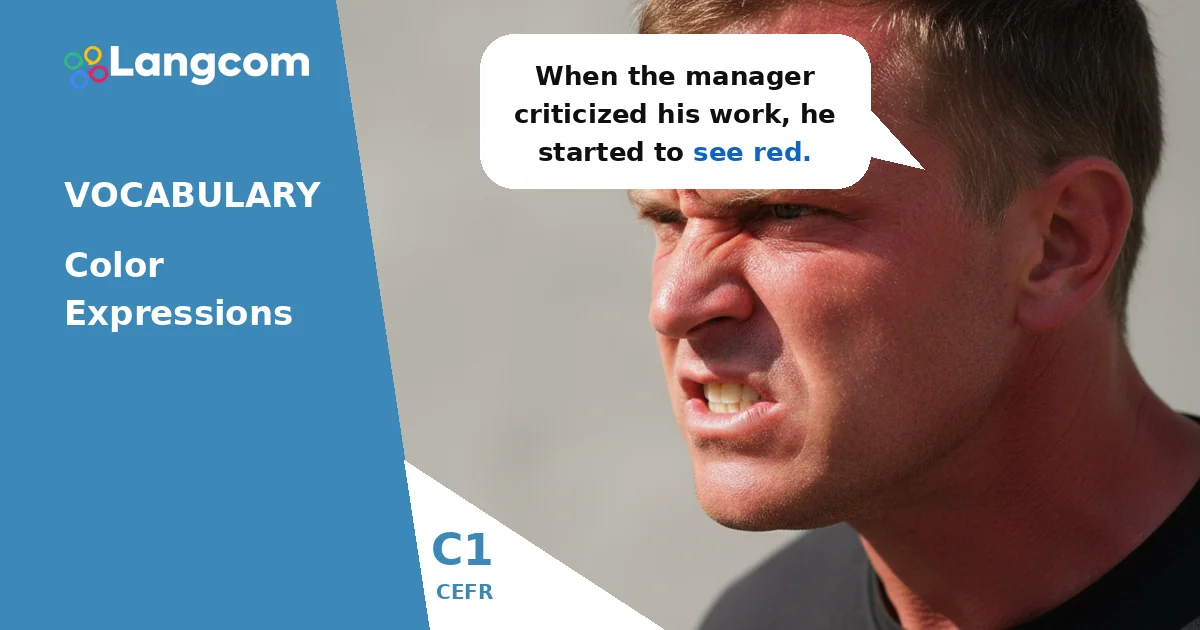
See red: To become extremely angry.
-
Turn red: To blush because of embarrassment, shame, or sometimes anger.
-
Get caught red-handed: To be discovered in the act of doing something wrong or illegal.
-
Cut through red tape: To deal with or remove excessive bureaucracy and official rules that cause delays.
-
Be in the red: To owe money; to have a negative balance in a bank account or business finances.
Green Expressions: Permission, Inexperience, and Nature
Green expressions often relate to permission, newness, nature, or even illness.
-
Get the green light: To receive permission to proceed with something.
-
Be green / Be a greenhorn: To be new to something, inexperienced, or naive.
-
Have a green thumb: To be naturally skilled at gardening and making plants grow.
-
Be/look green around the gills: To look very sick, pale, and nauseous.
-
Green party: A political party whose main policies focus on environmental protection and sustainability.
| Expression | Signification |
|---|---|
| See red | To become very angry |
| Turn red | To blush from embarrassment or anger |
| Get caught red-handed | To be caught in the act of doing something wrong |
| Cut through red tape | To deal with excessive bureaucracy |
| Be in the red | To owe money; have a negative balance |
| Get the green light | To receive permission to proceed |
| Be green / Be a greenhorn | To be new or inexperienced |
| Have a green thumb | To be good at gardening |
| Be/look green around the gills | To look very sick or nauseous |
| Green party | A political party focused on environmental issues |
Exemples
- When the manager criticized his work, he started to see red.
- She turned red when everyone laughed at her joke.
- The thief was caught red-handed trying to steal the painting.
- It took weeks to cut through all the red tape to get the building permit.
- After buying a new car, my bank account is definitely in the red.
- The project finally got the green light after months of planning.
- He's still a bit green when it comes to coding, but he learns fast.
- My grandmother has a green thumb; her garden is always beautiful.
- After the boat trip, he looked green around the gills.
- The Green party is campaigning for stricter environmental laws.
Entraînement
Prêt à obtenir votre certificat ?
Le cours Langcom prépare les étudiants aux examens de Cambridge, IELTS, TOEFL, DELE, SIELE et Michigan.
Commencez avec LangcomErreurs courantes chez les hispanophones
Spanish speakers sometimes make mistakes with color expressions by translating too literally or confusing similar concepts:
-
Déroutant turn red with see red: In Spanish, 'ponerse rojo' can mean to blush or to get angry. In English, turn red usually means to blush from embarrassment. For anger, use see red.
-
Literal translation of 'green': Do not confuse be green (inexperienced) with literally being green. Also, be green around the gills specifically means looking sick, not just being green.
-
Misunderstanding red tape: This idiom refers to bureaucracy, not actual red tape used for binding documents. A common error is to think it means something simple to fix.
Questions fréquemment posées
Are these color expressions common in everyday English?
Yes, many of these expressions are very common in both spoken and written English. Using them will help you sound more natural and advanced in your communication.
Can I use these expressions in formal writing or business contexts?
Some expressions, like get the green light ou cut through red tape, are perfectly acceptable in business or formal contexts. Others, like see red ou be a greenhorn, are more informal and better suited for casual conversations or less formal writing.
How can I remember all these different color expressions?
The best way to remember them is through consistent practice. Try to notice them when you read or listen to English. You can also try to use one or two new expressions in your conversations or writing each week. Grouping them by color, as we did, can also help.




0 commentaire