

What are character adjectives?
Character adjectives are words that describe a person’s personality or behavior. They tell us what kind of person someone is.
- Par exemple, kind describes someone who is nice and helps others.
- Lazy describes someone who does not like to work.
These words are very useful for talking about people.
🎓 Apprenez l'anglais grâce à la méthode mixte
Petits groupes · Tuteur IA disponible 24 h/24, 7 j/7 · Préparation aux examens de Cambridge
Plans provenant de $39 $79 par mois
How to use character adjectives in sentences?
You usually use character adjectives with the verb to be (am, is, are).
- Utilisation I am + adjective: I am confident.
- Utilisation He is / She is + adjective: He is funny. She is shy.
- Utilisation They are / We are + adjective: They are friendly. We are hard-working.
It is simple to make sentences about people's personalities.
Common A1 Character Adjectives
Here are some important adjectives to describe people at an A1 level:
- Shy: Someone who is nervous or uncomfortable talking to new people. She is shy and doesn't talk much.
- Confident: Someone who believes in themselves and is not afraid to speak or act. He is confident and speaks loudly.
- Lazy: Someone who does not like to work or do things. My brother is lazy; he never cleans his room.
- Hard-working: Someone who works a lot and tries very hard. She is hard-working and always finishes her tasks.
- Mean: Someone who is unkind or not nice to others. The boy was mean to his sister.
- Friendly: Someone who is nice and easy to talk to. Our neighbor is very friendly; she always says hello.
- Kind: Someone who is good and cares about others. He is a kind person and helps everyone.
- Generous: Someone who likes to give things to others, like money or gifts. My aunt is generous; she always shares her food.
- Serious: Someone who does not laugh or smile much and thinks deeply. The teacher is serious in class.
- Funny: Someone who makes people laugh. My friend is very funny; he tells good jokes.
- Talkative: Someone who likes to talk a lot. She is talkative and loves long conversations.
- Quiet: Someone who does not talk much or makes little noise. He is quiet and prefers to read alone.
| Adjectif | Signification |
|---|---|
| Shy | Does not like talking to new people. |
| Confident | Believes in oneself, not afraid. |
| Lazy | Does not like to work or do things. |
| Hard-working | Works a lot and tries hard. |
| Mean | Unkind or not nice to others. |
| Friendly | Nice and easy to talk to. |
| Kind | Good and cares about others. |
| Generous | Likes to give things to others. |
| Serious | Does not laugh much, thinks deeply. |
| Funny | Makes people laugh. |
| Talkative | Likes to talk a lot. |
| Quiet | Does not talk much or makes little noise. |
Exemples
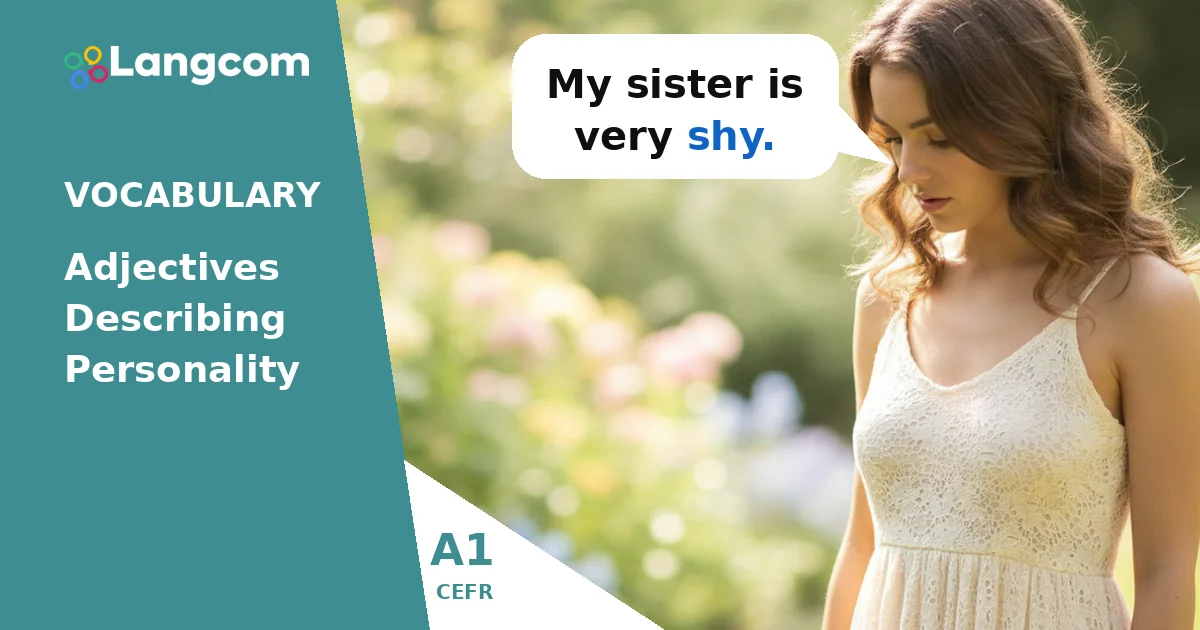
- My sister is very shy.
- Our new manager is confident and speaks well.
- He is a lazy student.
- She is a hard-working doctor.
- Don't be mean to your friends!
- The dog is very friendly.
- My grandmother is a kind woman.
- He is generous with his time.
- The professor is a serious person.
- She is so funny; she always makes me smile.
- My cousin is very talkative.
- He is a quiet boy in class.
Entraînement
💬 Vous avez besoin de conseils personnalisés ?
En tant que centre de préparation agréé par Cambridge, nous pouvons vous aider à choisir la formation et la certification qui vous conviennent. Discutez-en dès aujourd'hui avec nos conseillers.
Discutez avec un conseiller sur WhatsAppErreurs courantes chez les hispanophones
Many learners make small mistakes with character adjectives. Here are two common ones:
- Déroutant Funny et Fun:
- Funny means someone makes you laugh. My friend is funny. (Correct)
- Fun describes an activity or experience that is enjoyable, not a person's personality. The party was fun. (Correct) My friend is fun. (Incorrect for personality, means they are enjoyable to be with, but funny is for personality)
- He is a funny person. (Correct)
- He is a fun person. (Possible, but funny is about making people laugh, fun is about being enjoyable to be around. For A1, stick to funny for personality.) - Using Friendly vs. 'Simpático':
- In Spanish, 'simpático' can mean nice, friendly, or pleasant. In English, friendly is about being open and easy to talk to. Kind ou nice are better for general pleasantness.
- She is very friendly. (Correct: She talks to everyone, smiles.)
- He is a kind person. (Correct: He is good and helps others.)
Questions fréquemment posées
What is a character adjective?
A character adjective is a word that describes a person's personality or how they behave. For example, shy, friendly, ou hard-working.
How do I use these adjectives in a sentence?
You use them with the verb to be. Par exemple, She is confident ou They are generous.
Can I use these words for animals?
Yes, sometimes! You can say My dog is very friendly ou My cat is quiet.
What kind of exercise will I do with these words?
You will practice matching these character adjectives to pictures or descriptions in a drag-and-drop exercise. This helps you connect the word to its meaning.


0 commentaire