

What are the main types of food?
When we talk about food, we often put it into groups. These groups help us understand different kinds of food. Learning these categories is a good first step.
-
Meat: This comes from animals. Examples are chicken, beef, et pork.
-
Fish: This comes from the sea or rivers. It is a type of seafood.
-
Vegetables: These are parts of plants we eat, like carrots, potatoes, et broccoli.
-
Fruit: These are sweet parts of plants, like apples, bananas, et oranges.
-
Grains: These are seeds from plants, like rice et bread.
-
Dairy: These foods come from milk, like cheese et yogurt.
🎓 Apprenez l'anglais grâce à la méthode mixte
Petits groupes · Tuteur IA disponible 24 h/24, 7 j/7 · Préparation aux examens de Cambridge
Plans provenant de $39 $79 par mois
How do we use common food words?
Let's look at some important food words and how to use them in simple sentences. Remember to say these words aloud to practice!
-
Meat: This is food from animals. I eat meat for dinner.
-
Fish: This is food from the water. She likes to eat fish.
-
Chicken: A very common type of meat. Do you like chicken?
-
Vegetables: Healthy food from plants. We need to eat more vegetables.
-
Fruit: Sweet food from plants. An apple is a fruit.
-
Rice: A grain often eaten with meals. I eat rice every day.
-
Bread: Made from flour, water, and yeast. Can I have some bread, please?
-
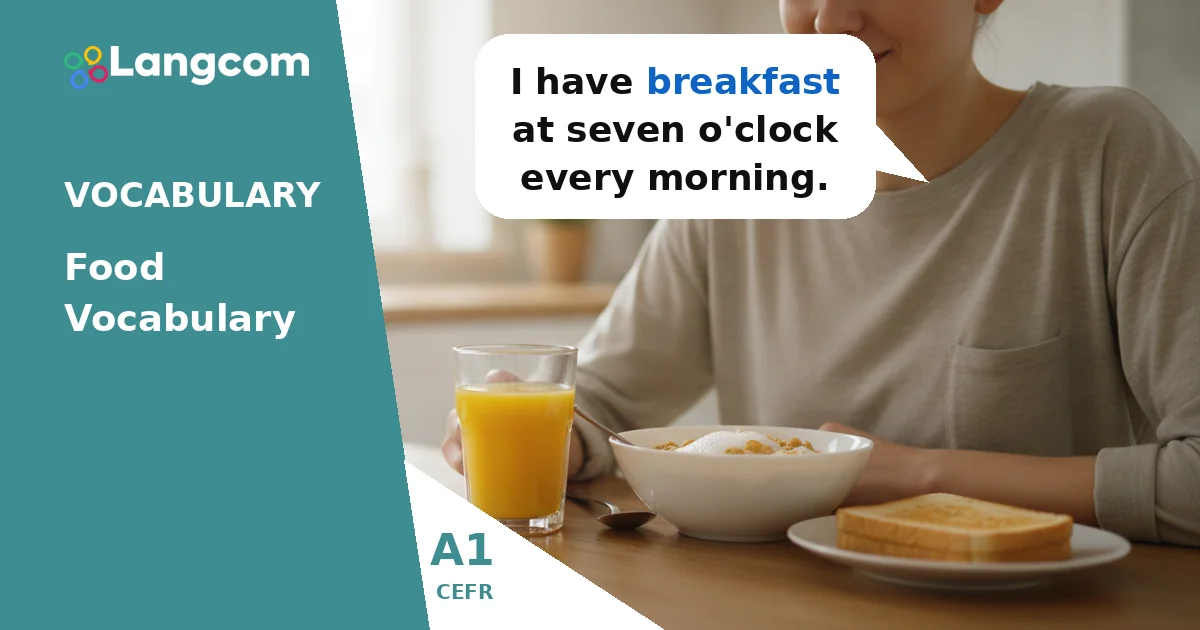
Eggs: We get these from chickens. I eat eggs for breakfast.
-
Water: An important drink. Please give me some water.
-
Milk: A drink from cows. I drink milk with my cereal.
| Category | Exemples |
|---|---|
| Meat | chicken, beef, pork |
| Fish | salmon, tuna |
| Vegetables | carrots, potatoes, broccoli |
| Fruit | apples, bananas, oranges |
| Grains | rice, bread, pasta |
| Dairy | milk, cheese, yogurt |
Exemples
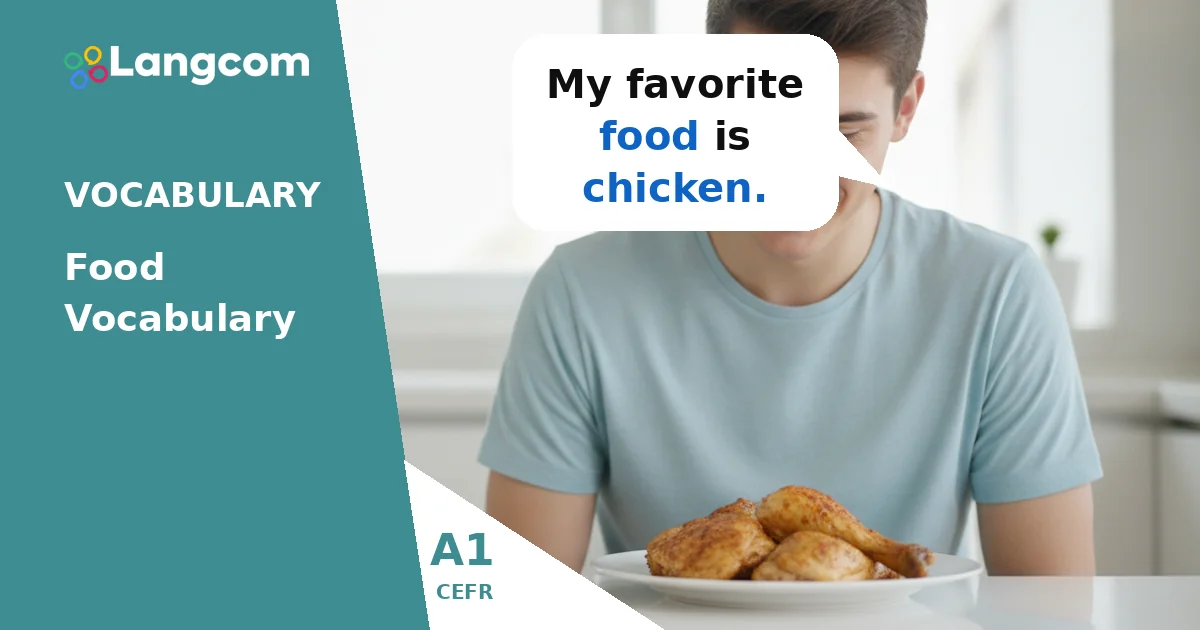
- My favorite food is chicken.
- I want to buy some fruit and vegetables.
- Do you like fish?
- We need bread for sandwiches.
- She eats rice with her meal.
Entraînement
💬 Vous avez besoin de conseils personnalisés ?
En tant que centre de préparation agréé par Cambridge, nous pouvons vous aider à choisir la formation et la certification qui vous conviennent. Discutez-en dès aujourd'hui avec nos conseillers.
Discutez avec un conseiller sur WhatsAppErreurs courantes chez les hispanophones
Spanish speakers sometimes make small mistakes with English food words. Here are some common ones:
-
Fruit (uncountable) vs. Fruits (countable): In English, fruit is usually uncountable when you talk about it in general. For example, I like fruit (correct). If you mean different types of fruit, you can say fruits, but it's less common for general use. I like many different fruits (correct, specific types).
-
Vegetables (plural): In English, we usually say vegetables (plural) when talking about this food group in general. Not vegetable. For example, Eat your vegetables! (correct). If you mean one specific item, then it's a vegetable, comme A carrot is a vegetable.
-
Bread (uncountable): Bread is usually uncountable in English. We do not say a bread. We say a slice of bread ou some bread. For example, I want some bread (correct).
Questions fréquemment posées
Is 'fruit' countable or uncountable?
Generally, fruit is uncountable when you talk about it as a food group, like I love fruit. You can use fruits when referring to different types of fruit, for example, The market sells many exotic fruits.
How do I ask for food in a restaurant?
You can say simple phrases like I would like the chicken, please ou Can I have some water? You can also ask What is this? if you don't know a food item.
What is the difference between 'food' and 'meal'?
Food is a general word for anything you eat. Meal is a specific time when you eat food, like breakfast, lunch, ou dinner. For example, I like Italian food, but Dinner is my favorite meal.


0 commentaire