

How Do We Make Negative Sentences in Present Simple?
To make a sentence negative in the Present Simple, we add a special word before the main verb. This word is don’t o doesn’t.
These are short forms:
- don’t is short for do not.
- doesn’t is short for does not.
The main verb in the sentence always stays in its base form. This means it does not change, even for he, she, it.
🎓 Aprende inglés con el método mixto
Grupos reducidos · Tutor de IA disponible las 24 horas del día, los 7 días de la semana · Preparación para los exámenes de Cambridge
Planes de $39 $79 al mes
When Do We Use 'Don't'?
Utilizamos don't when the subject of the sentence is:
- I
- You
- We
- They
- Or a plural noun (e.g., my friends, the students).
The structure is: Subject + don't + base form of the verb.
When Do We Use 'Doesn't'?
Utilizamos doesn't when the subject of the sentence is:
- He
- She
- It
- Or a singular noun (e.g., my dad, the dog).
The structure is: Subject + doesn't + base form of the verb. Remember, the verb does not end in '-s' after doesn't.
| Asunto | Forma negativa | Main Verb |
|---|---|---|
| I | don't | work |
| You | don't | work |
| We | don't | work |
| They | don't | work |
| He | doesn't | work |
| She | doesn't | work |
| It | doesn't | work |
Ejemplos
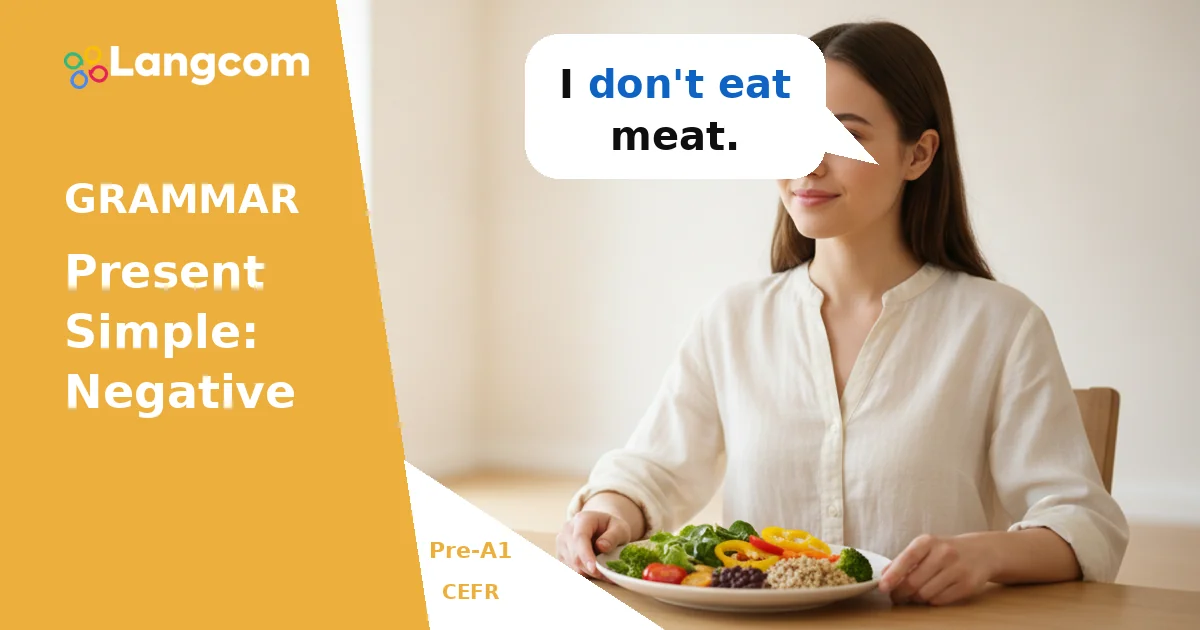
- I don't eat meat.
- You don't live in a big city.
- We don't watch TV in the morning.
- They don't play football on Tuesdays.
- He doesn't like pizza.
- She doesn't work on weekends.
- It doesn't rain much in summer here.
Práctica
💬 ¿Necesitas asesoramiento personalizado?
Como centro autorizado de preparación para los exámenes de Cambridge, podemos orientarte para que elijas el curso y la certificación más adecuados. Habla hoy mismo con nuestros asesores.
Chatea con un asesor por WhatsAppErrores habituales de los hispanohablantes
Spanish speakers often say I no like coffee. This is incorrect in English. You must use don't o doesn't. The correct way is I don't like coffee.
Another common mistake is adding '-s' to the verb after doesn't. Por ejemplo, She doesn't likes pizza is wrong. The correct form is She doesn't like pizza. The verb always stays in its base form after don't o doesn't.
Preguntas más frecuentes
What is the short form of do not and does not?
La forma abreviada de do not es don't. The short form of does not es doesn't.
Does the verb change after don't or doesn't?
No, the main verb always stays in its base form after don't o doesn't. Por ejemplo, He doesn't eat, no He doesn't eats.
Can I use don't or doesn't for all verbs?
Se utiliza don't o doesn't for most action verbs in the Present Simple. For the verb to be (am, is, are), you make it negative differently (e.g., I am not, He is not).


0 Comentarios