
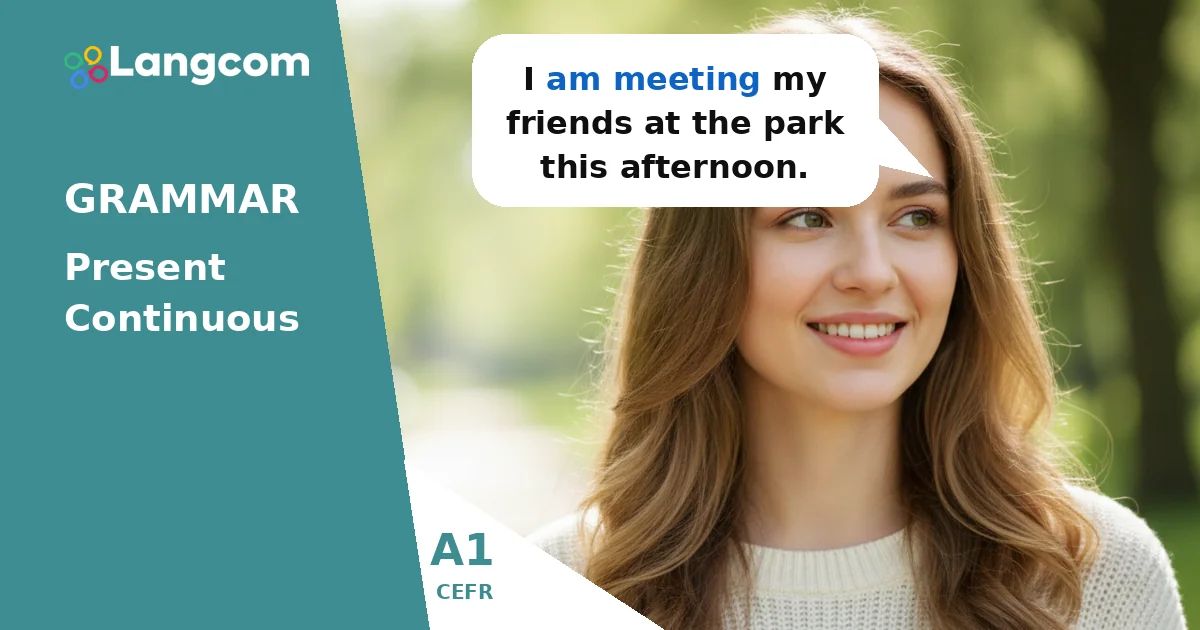

What is the Present Continuous for the Future?
The present continuous tense usually describes actions happening right now. For example, I am studying English now.
But we can also use it to talk about the future! We use it for plans and arrangements that are already decided and fixed. Think of it like looking at your calendar.
- I am visiting my grandparents next weekend. (This is a plan you already made.)
- She is having dinner with her boss tonight. (This is an arrangement.)
🎓 Aprende inglés con el método mixto
Grupos reducidos · Tutor de IA disponible las 24 horas del día, los 7 días de la semana · Preparación para los exámenes de Cambridge
Planes de $39 $79 al mes
How do we form the Present Continuous for the Future?
The form is the same as the present continuous for actions happening now. We use subject + am/is/are + verb-ing.
Oraciones afirmativas:
- I am playing football on Saturday.
- You are meeting John at 3 PM.
- He is travelling to London tomorrow.
- She is starting a new job next month.
- It is arriving at 10 o'clock.
- We are having a party this evening.
- They are coming to my house later.
Oraciones negativas:
Añadir not después de am/is/are.
- I am not working tomorrow.
- She is not going to the cinema tonight.
- They are not visiting us next week.
Preguntas:
Put Am/Is/Are before the subject.
- Are you working this weekend?
- Is he playing tennis on Friday?
- What are you doing tomorrow evening?
When do we use the Present Continuous for the Future?
We use this tense for things that are already organized and fixed. These are not sudden decisions.
- Fixed Plans: You have a clear plan in your diary or calendar. For example, I am flying to Paris on Monday. (You have bought the ticket.)
- Arrangements: You have made an agreement with someone. For example, We are having lunch with my aunt on Sunday. (You and your aunt agreed.)
We often use time expressions for the future with this tense:
- tomorrow
- tonight
- this evening
- next week/month/year
- on Monday/Tuesday, etc.
- at 7 o'clock
| Tipo | Ejemplo |
|---|---|
| Positive | I am travelling tomorrow. |
| Negative | She is not working next week. |
| Question | Are they coming this evening? |
Ejemplos
- I am meeting my friends at the park this afternoon.
- She is having a doctor's appointment next Tuesday.
- We are not going out tonight; we are staying home.
- Are you visiting your family for Christmas?
- My train is leaving at 8 AM tomorrow.
- What time are they arriving at the airport?
Práctica
💬 ¿Necesitas asesoramiento personalizado?
Como centro autorizado de preparación para los exámenes de Cambridge, podemos orientarte para que elijas el curso y la certificación más adecuados. Habla hoy mismo con nuestros asesores.
Chatea con un asesor por WhatsAppErrores habituales de los hispanohablantes
Spanish speakers sometimes use the simple present tense for future plans, like I go to the cinema tonight. This is a common mistake.
- Incorrecto: I go to the cinema tonight.
- Correcto: I am going to the cinema tonight.
In English, the simple present for the future is usually for schedules (like a train schedule: The train leaves at 7 PM). For personal plans, you need the present continuous or going to.
- Incorrecto: He plays football on Saturday. (If it's a personal plan)
- Correcto: He is playing football on Saturday.
Preguntas más frecuentes
What is the main use of the present continuous for the future?
The main use is to talk about future plans and arrangements that are already decided and fixed. It's for things you have organized, like I am having lunch with my sister tomorrow.
Can I use 'going to' instead of the present continuous for future plans?
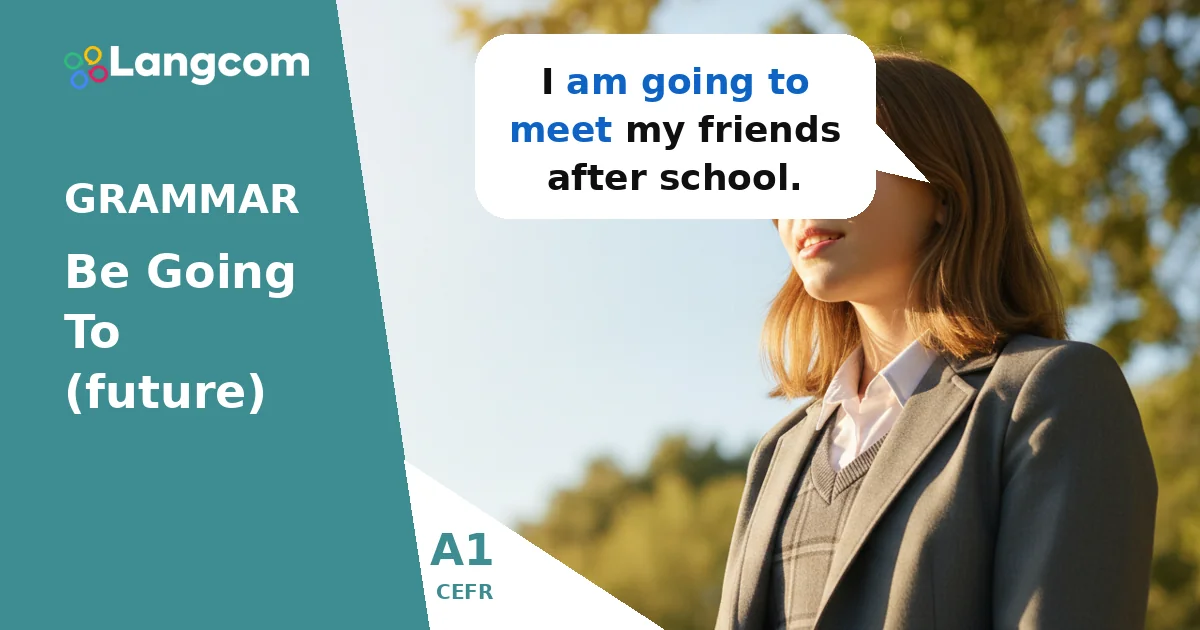
Yes, you can often use going to for future plans too. For example, I am going to meet my friends tomorrow means the same as I am meeting my friends tomorrow. Both are correct for plans.
Do I need a future time word with the present continuous for the future?
Yes, it is very important to use a future time word like tomorrow, next week, o this evening. This helps people understand you are talking about the future, not now. For example, I am reading a book means now, but I am reading a book tonight means in the future.


0 Comentarios