

Collocations are words that often go together naturally in English. Learning these fixed pairs or groups of words, especially for the natural world, helps you speak more fluently and sound more like a native speaker. For example, we say rough weather, no strong weather. These phrases are important for talking about our planet and environmental topics. You will learn common A1 collocations like climate change, carbon footprint, y solar energy. Understanding and using these collocations correctly will make your English clearer and more natural when you discuss nature and the environment.
What are Collocations?
Collocations are simply words that like to be together. They are common combinations of words that English speakers use naturally.
Think of them like friends that always go out together. If you use the wrong friend, it sounds strange to a native speaker.
- For example, we say make a mistake, no do a mistake.
- For the natural world, we say heavy rain, no strong rain.
🎓 Aprende inglés con el método mixto
Grupos reducidos · Tutor de IA disponible las 24 horas del día, los 7 días de la semana · Preparación para los exámenes de Cambridge
Planes de $39 $79 al mes
Why Learn Natural World Collocations?
Learning collocations for the natural world is very useful for A1 learners.
- It helps you talk about the environment, weather, and our planet more easily.
- You will understand English speakers better when they talk about these topics.
- Your English will sound more natural and correct.
- It builds a strong foundation for more advanced vocabulary.
Common Natural World Collocations (A1 Level)
Here are some important collocations to help you talk about the natural world:
- Rough weather: This means bad weather, like strong winds or heavy rain. The boat trip was cancelled due to rough weather.
- Global warming: This is when the Earth's temperature gets hotter. Global warming is a big problem for our planet.
- Environmentally friendly: This means good for the environment, not causing harm. Using a bicycle is an environmentally friendly way to travel.
- Carbon footprint: This is the amount of carbon dioxide you produce. We try to make it smaller. I want to reduce my carbon footprint.
- Solar energy: This is power that comes from the sun. It is clean energy. Many houses use solar energy now.
- Climate change: This is a long-term change in Earth's weather patterns. Scientists are worried about climate change.
- Fragile environment: This means an environment that is easily damaged. The polar regions have a very fragile environment.
- The Earth’s atmosphere: This is the air around our planet. Pollution can damage the Earth’s atmosphere.
- Ecological impact: This is the effect something has on nature and living things. New factories can have a negative ecological impact.
How to Use These Collocations in Sentences
Using these collocations in full sentences helps you remember them. Try to make your own sentences too!
- We often have rough weather in winter.
- Global warming is making the ice melt.
- This new car is more environmentally friendly.
- My carbon footprint is smaller when I walk.
- Our school uses solar energy for electricity.
- Climate change causes strange weather.
- The forest is a fragile environment.
- Gases go into the Earth’s atmosphere.
- Building new roads has an ecological impact.
| Collocation | Meaning (Simple) |
|---|---|
| rough weather | Bad weather (wind, rain) |
| global warming | Earth getting hotter |
| environmentally friendly | Good for nature |
| carbon footprint | Your CO2 amount |
| solar energy | Power from the sun |
| climate change | Long-term weather changes |
| fragile environment | Easily damaged nature |
| the Earth’s atmosphere | Air around our planet |
| ecological impact | Effect on nature |
Ejemplos
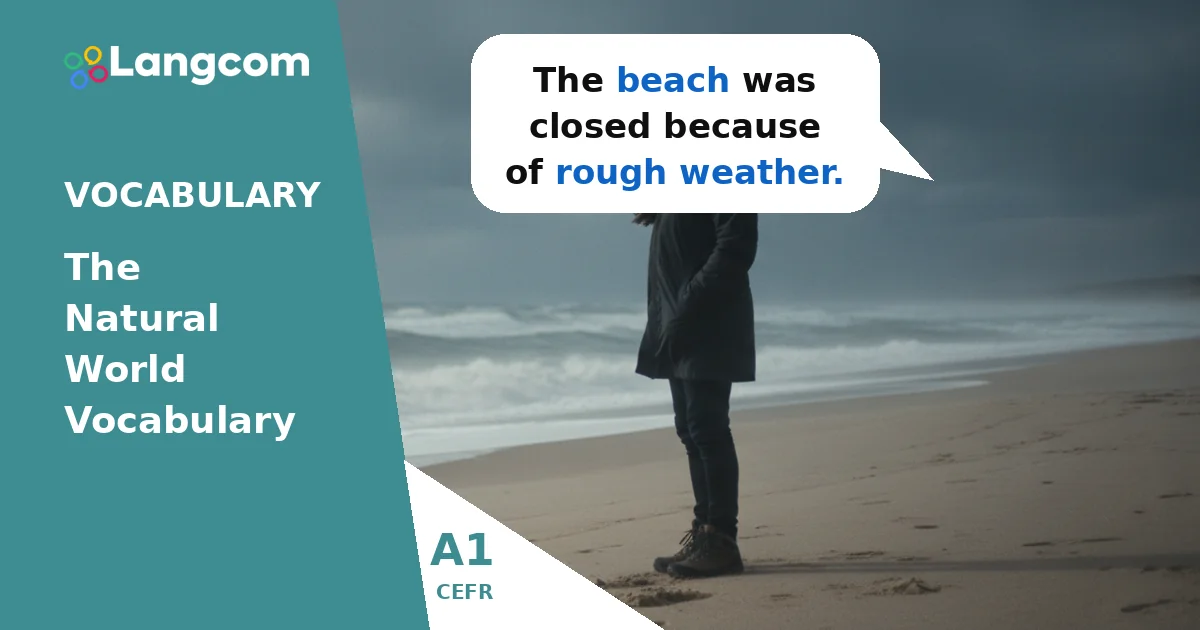
- The beach was closed because of rough weather.
- We need to stop global warming.
- Is this product environmentally friendly?
- I try to reduce my carbon footprint by recycling.
- Solar energy is a clean source of power.
- Climate change is a serious issue.
- Protecting the fragile environment is important.
- The ozone layer is part of the Earth’s atmosphere.
- Every human activity has an ecological impact.
Práctica
💬 ¿Necesitas asesoramiento personalizado?
Como centro autorizado de preparación para los exámenes de Cambridge, podemos orientarte para que elijas el curso y la certificación más adecuados. Habla hoy mismo con nuestros asesores.
Chatea con un asesor por WhatsAppErrores habituales de los hispanohablantes
A common mistake for Spanish speakers is to translate words directly from Spanish to English. But collocations don't always work like that.
- Incorrecto: strong weather (from 'tiempo fuerte')
- Correcto: rough weather
Another example is trying to say change of climate en lugar de climate change. Remember, English has fixed pairs of words. Always try to learn words in groups, not just one by one.
Preguntas más frecuentes
What is a collocation in simple terms?
A collocation is a group of two or more words that often go together in English. For example, fast food is a collocation, but quick food is not common.
Why are natural world collocations important for A1 learners?
They help you talk about nature, weather, and environmental topics correctly from the start. Using them makes your English sound more natural and helps you understand others better.
How can I remember new collocations?
Try to learn new words in phrases, not alone. Write down the whole collocation, like solar energy, not just 'solar'. Use them in your own sentences and review them often.
Are there more natural world collocations?
Yes, there are many more! But for A1, focusing on these common ones is a great start. As you learn more English, you will discover many new collocations.


0 Comentarios