

Why is Natural World Vocabulary Important for You?
When you want to talk about animals, plants, or the environment, you need specific words. This vocabulary helps you understand what you read or hear about nature.
It also allows you to express your own ideas clearly, whether you are discussing a documentary, sharing a travel experience, or simply describing a beautiful park.
🎓 Aprende inglés con el método mixto
Grupos reducidos · Tutor de IA disponible las 24 horas del día, los 7 días de la semana · Preparación para los exámenes de Cambridge
Planes de $39 $79 al mes
What Are Animal Coverings?
Animals have different outer layers that protect them from the weather and other animals. Here are some common types:
-
Skin: This is the outer layer of an animal's body, similar to human skin. Animals like snakes, frogs, and elephants have skin. For example: A snake sheds its skin as it grows.
-
Fur: This is the soft, thick hair that covers the bodies of many mammals, such as bears, cats, and dogs. Fur keeps them warm. For example: The polar bear has thick fur to survive in the cold.
-
Feathers: These are the light, flat growths that cover a bird's body. Feathers help birds fly and keep them warm and dry. For example: The peacock showed its beautiful feathers.
-
Scales: These are small, flat, hard plates that cover the bodies of fish and many reptiles like lizards. Scales provide protection. For example: The fish's scales sparkled in the water.
What Are Common Animal Body Parts?
Animals have specific parts that help them move, interact, and survive. Let's look at two important ones:
-
Paw: This is the foot of an animal, especially a mammal like a cat, dog, or bear. Paws often have claws. For example: The dog lifted its paw to greet me.
-
Tail: This is the part that extends from the rear end of an animal's body. Animals use their tails for balance, communication, or even to catch things. For example: Monkeys use their long tails to swing through trees.
What Are the Parts of a Plant or Tree?
Just like animals, plants and trees have distinct parts with specific names:
-
Petals: These are the colorful, often soft parts of a flower. Petals attract insects for pollination. For example: The rose has soft red petals.
-
Leaf (plural: leaves): This is the flat, green part of a plant or tree that makes food using sunlight. For example: In autumn, the leaves on the trees turn yellow and red.
-
Branch: This is a part of a tree that grows out from the trunk, often with leaves or smaller branches attached. For example: A bird built a nest on a high branch.
What is a Spider's Web?
Spiders create a unique structure to catch their food:
-
Web: This is a net of fine, sticky threads made by a spider to trap insects. For example: The spider spun a beautiful web between the two bushes.
| Word | Meaning / Example |
|---|---|
| Fur | Thick hair covering mammals. (e.g., a bear's fur) |
| Feathers | Light growths covering birds. (e.g., a bird's feathers) |
| Scales | Small, hard plates on fish/reptiles. (e.g., fish scales) |
| Skin | Outer layer of a body. (e.g., human skin, snake skin) |
| Paw | An animal's foot. (e.g., a dog's paw) |
| Tail | Part at an animal's rear. (e.g., a monkey's tail) |
| Petals | Colorful parts of a flower. (e.g., rose petals) |
| Leaf | Flat, green part of a plant. (e.g., a tree leaf) |
| Branch | Part of a tree growing from the trunk. (e.g., a tree branch) |
| Web | Net of threads made by a spider. (e.g., a spider's web) |
Ejemplos
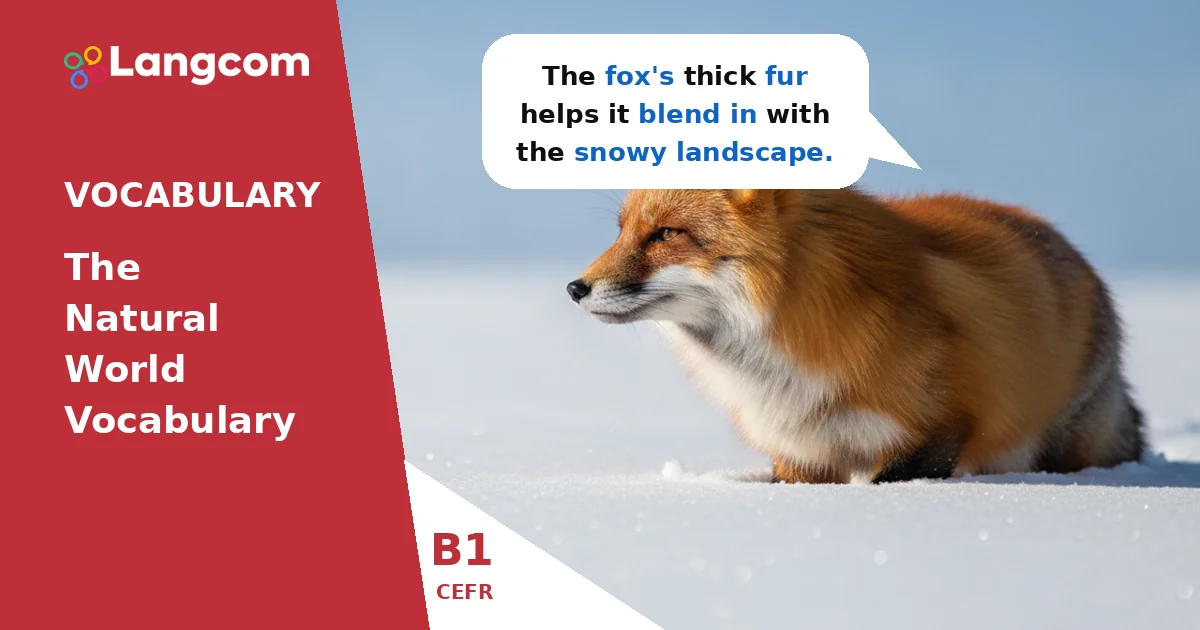
- The fox's thick fur helps it blend in with the snowy landscape.
- Many birds have colorful feathers that help them attract a mate.
- The fish's scales protected it from predators in the ocean.
- Our cat likes to chase its own tail when it's playful.
- The dog left muddy paw prints all over the kitchen floor.
- The bee landed on the flower's bright yellow petals.
- Autumn leaves fall from the branches of the oak trees.
- A spider's web can be almost invisible in the morning dew.
Práctica
✍️ ¿No sabes en qué nivel estás?
Realiza nuestra prueba de nivel gratuita y recibe comentarios personalizados de examinadores certificados por Cambridge.
Realice nuestra prueba de nivel GRATUITAErrores habituales de los hispanohablantes
Confuso Skin y Fur
Los hispanohablantes a veces confunden skin y fur because the word piel in Spanish can refer to both. Remember:
- Uso skin for humans and for the outer layer of animals that do not have thick hair, such as snakes, frogs, or elephants. Example: My skin feels dry in winter. o The crocodile has tough skin.
- Uso fur specifically for the thick, soft hair covering mammals like bears, cats, or dogs. Example: The cat's fur is very soft.
Confuso Leaf y Sheet
Another common point of confusion is between leaf (for plants) and sheet (for paper), as both can be hoja in Spanish. Always use leaf when talking about plants or trees. Example: The tree lost all its leaves in winter.
Preguntas más frecuentes
What is the difference between fur and hair?
Fur usually refers to the thick, soft hair covering animals, often for warmth or protection. Hair can refer to human hair or a single strand of animal fur. For example, My dog has long hair (talking about its fur) or I found a hair on my shirt (a single strand).
Can I use 'skin' for animals?
Sí, puedes usar skin for animals, especially for reptiles, amphibians, or when talking about the general outer layer. For example, a frog's skin is moist. However, for mammals with thick hair, fur is more specific and commonly used.
Why is this vocabulary important for B1 learners?
At the B1 level, you are expected to describe and discuss familiar topics in more detail. The natural world is a common topic in everyday conversations, media, and travel. Knowing these words helps you express yourself clearly and understand others when talking about nature, animals, and plants.




0 Comentarios