

¿Cuál es la diferencia entre “cuánto” y “cuántos”?
En inglés, utilizamos diferentes palabras para preguntar por la cantidad. Depende de si lo que se pregunta es contable o incontable.
Piensa en cosas que puedas contar una a una, como ‘una manzana, dos manzanas’. Estas son sustantivos contables. Las cosas que no se pueden contar una a una, como el ‘agua’ o el ‘azúcar’, son sustantivos incontables.
🎓 Aprende inglés con el método mixto
Grupos reducidos · Tutor de IA disponible las 24 horas del día, los 7 días de la semana · Preparación para los exámenes de Cambridge
Planes de $39 $79 al mes
When do we use "How much"?
Utilizamos How much? para los sustantivos incontables. Son cosas que no se pueden contar una por una.
- Para cosas incontables:
How much water? (You cannot say 'one water', 'two waters')
How much sugar?
How much time?
How much money? - Para consultar los precios:
Cuando preguntes por el precio de algo, utiliza siempre How much?
How much is this book?
How much are these shoes?
When do we use "How many"?
Utilizamos How many? para los sustantivos contables. Son cosas que se pueden contar una a una.
- Para cosas contables:
How many apples? (You can say 'one apple', 'two apples')
How many chairs?
How many people?
How many books?
| Pregunta | Usar para | Ejemplos |
|---|---|---|
| How much? | Uncountable nouns (things you cannot count) | water, money, sugar, time, information |
| How many? | Countable nouns (things you can count) | apples, chairs, people, books, cars |
Ejemplos
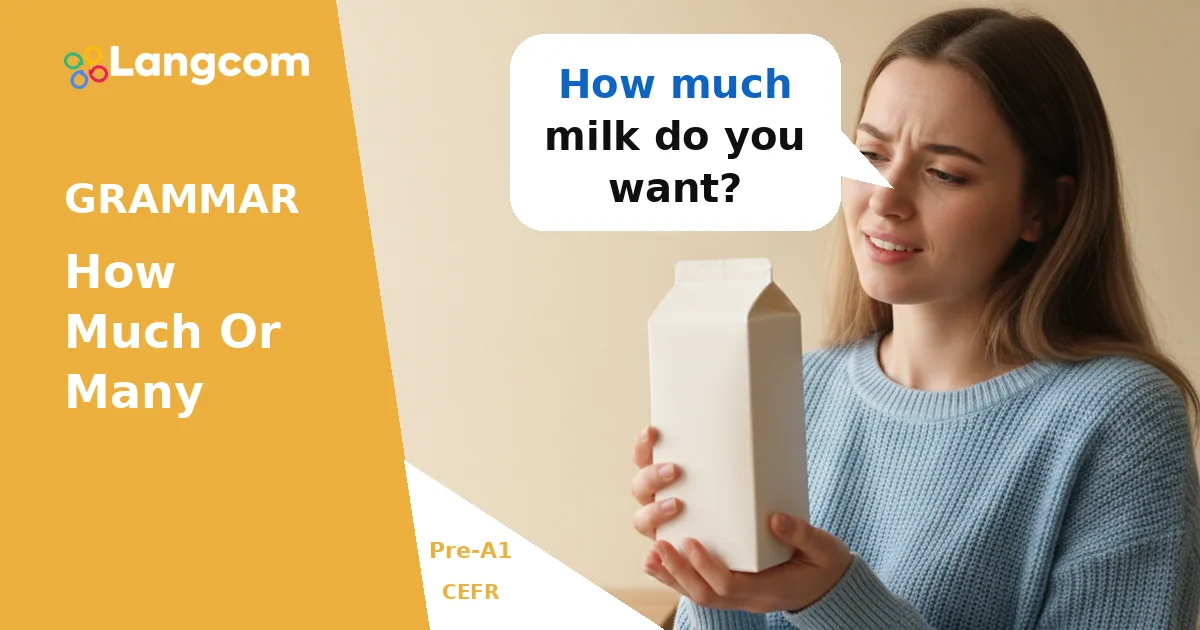
- How much milk do you want?
- How many students are in the class?
- How much is this coffee?
- How many brothers and sisters do you have?
- How much rice is left?
- How many pencils do you need?
Práctica
💬 ¿Necesitas asesoramiento personalizado?
Como centro autorizado de preparación para los exámenes de Cambridge, podemos orientarte para que elijas el curso y la certificación más adecuados. Habla hoy mismo con nuestros asesores.
Chatea con un asesor por WhatsAppErrores habituales de los hispanohablantes
Errores habituales de los hispanohablantes
Los hispanohablantes a veces confunden much y many porque el español utiliza mucho/mucha (singular) y muchos/muchas (plural). In English, it's simpler: much es para sustantivos incontables, many significa «contable».
- Incorrecto: How many money do you have?
- Correcto: How much money do you have?
- Incorrecto: How much books are there?
- Correcto: How many books are there?
Recuerda: much Es para las cosas que no se pueden contar una a una. Many es para las cosas que se pueden contar.
Preguntas más frecuentes
¿Cuál es la regla principal para 'cuánto' y 'cuántos'?
Uso How much? para los sustantivos incontables (como «agua» o «azúcar»). Utiliza How many? para los sustantivos contables (como manzanas, sillas).
¿Debo usar 'cuánto' o 'cuántos' para los precios?
Utiliza siempre How much? al preguntar por los precios. Por ejemplo, How much is this shirt?
¿Puedo usar 'How much' para referirme al tiempo?
Sí, se utiliza How much time? because 'time' in general is an uncountable noun. For example, How much time do we have?
¿Y qué hay de 'mucho'?
A lot of ¡Es una buena expresión porque se puede usar tanto con sustantivos contables como con incontables! Por ejemplo, a lot of water y a lot of books.



0 Comentarios