
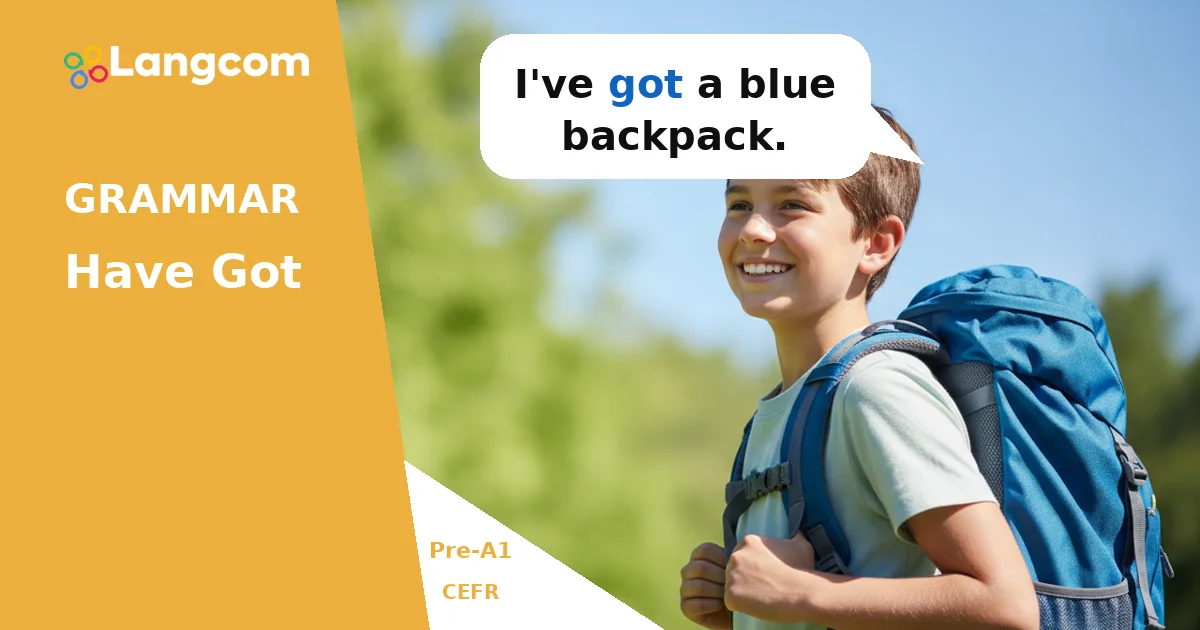

What does Have Got mean?
Have got is a common way to talk about possession in English. It means ‘to own’ or ‘to possess’ something.
- It is very common in everyday conversation.
- It is often used in British English.
- It means the same as have when we talk about things we own.
🎓 Aprende inglés con el método mixto
Grupos reducidos · Tutor de IA disponible las 24 horas del día, los 7 días de la semana · Preparación para los exámenes de Cambridge
Planes de $39 $79 al mes
How to Use Have Got (Positive Sentences)
Utilizamos have got with the subjects I, You, We, They.
- I have got a new book. (Yo tengo un libro nuevo.)
- You have got a nice smile. (Tú tienes una sonrisa bonita.)
- We have got a big house. (Nosotros tenemos una casa grande.)
- They have got two dogs. (Ellos tienen dos perros.)
Remember, we often use contractions in spoken English:
- I’ve got (I have got)
- You’ve got (You have got)
- We’ve got (We have got)
- They’ve got (They have got)
How to Use Has Got (Positive Sentences)
For the subjects He, She, It, we use has got.
- He has got a blue car. (Él tiene un coche azul.)
- She has got long hair. (Ella tiene el pelo largo.)
- It has got a broken leg. (Tiene una pata rota. – referring to an animal)
We also use contractions for these:
- He’s got (He has got)
- She’s got (She has got)
- It’s got (It has got)
How to Say No: Haven’t Got y Hasn’t Got (Negative Sentences)
To make negative sentences, we add not after have o has. We usually use the contracted forms.
- Para I, You, We, They, use haven’t got.
- I haven’t got a pen. (No tengo un bolígrafo.)
- You haven’t got time. (No tienes tiempo.)
- We haven’t got any milk. (No tenemos leche.)
- They haven’t got a map. (Ellos no tienen un mapa.)
- Para He, She, It, use hasn’t got.
- He hasn’t got a job. (Él no tiene trabajo.)
- She hasn’t got a brother. (Ella no tiene un hermano.)
- It hasn’t got a tail. (No tiene cola. – referring to an animal)
Asking Questions with Have Got y Has Got
To ask a question, we put Have o Has at the beginning of the sentence.
- Have I got your keys? (¿Tengo tus llaves?)
- Have you got a pet? (¿Tienes una mascota?)
- Have we got enough food? (¿Tenemos suficiente comida?)
- Have they got a new teacher? (¿Tienen un profesor nuevo?)
- Has he got a sister? (¿Tiene él una hermana?)
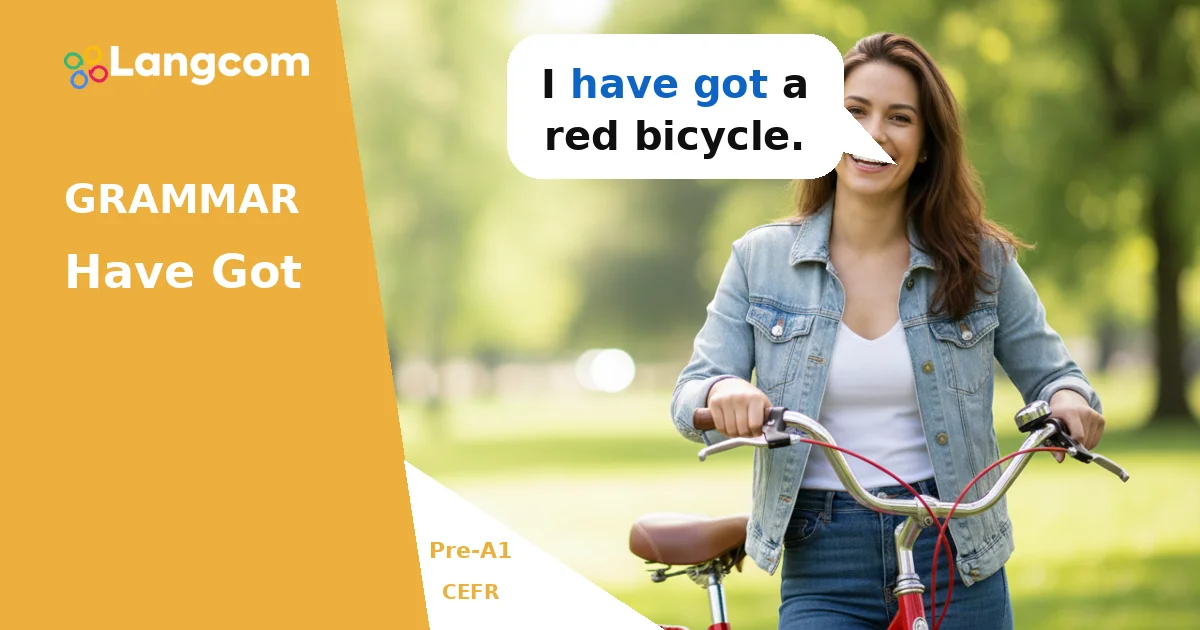
- Has she got a bicycle? (¿Tiene ella una bicicleta?)
- Has it got a name? (¿Tiene un nombre? – referring to an object or animal)
You can give short answers:
- Yes, I have. / No, I haven’t.
- Yes, she has. / No, she hasn’t.
| Subject | Positive | Negative |
|---|---|---|
| I / You / We / They | have got | haven’t got |
| He / She / It | has got | hasn’t got |
Ejemplos
- I’ve got a blue backpack.
- She’s got a beautiful voice.
- They haven’t got any money.
- He hasn’t got a phone.
- Have you got a pen?
- Has she got a cat?
- We’ve got a lot of homework.
Práctica
💬 ¿Necesitas asesoramiento personalizado?
Como centro autorizado de preparación para los exámenes de Cambridge, podemos orientarte para que elijas el curso y la certificación más adecuados. Habla hoy mismo con nuestros asesores.
Chatea con un asesor por WhatsAppErrores habituales de los hispanohablantes
Spanish speakers sometimes make these mistakes:
- Forgetting ‘got’: You might say I have a car. This is correct English, but if you want to use the have got structure, remember to add got.
Correcto: I have got a car. - Using ‘do/don’t’ for negatives and questions: With have got, we do not use do o does.
Incorrecto: I don’t have got a book.
Correcto: I haven’t got a book.
Incorrecto: Do you have got a sister?
Correcto: Have you got a sister? - Incorrect form for ‘He/She/It’: Remember to use has got, not have got, for third person singular.
Incorrecto: She have got a new phone.
Correcto: She has got a new phone.
Preguntas más frecuentes
What is the difference between ‘have’ and ‘have got’ for possession?
For possession, have y have got mean the same thing. Have got is very common in spoken English, especially in British English, and often sounds more natural in everyday conversation. For example, I have a car y I have got a car both mean ‘Yo tengo un coche’.
Can I use contractions with ‘have got’?
Yes, absolutely! Contractions are very common with have got. We say I’ve got, you’ve got, he’s got, she’s got, it’s got, we’ve got, y they’ve got. For negatives, we use haven’t got y hasn’t got.
Is ‘have got’ formal or informal?
Have got is generally considered informal or neutral. It is very common in everyday spoken and written English. In very formal writing, you might prefer to use just have.
Can ‘have got’ be used for actions or experiences?
No, have got is only used for possession or characteristics. For actions or experiences, you must use just have. For example, you say I have breakfast (not I’ve got breakfast) or I have a shower (not I’ve got a shower).

0 Comentarios