

Why is Free Time Vocabulary Important?
Talking about your free time is a common topic in daily conversations. It helps you connect with people and share your personality.
Knowing this vocabulary is also essential for English exams, especially at B1 level. You might need to:
- Describe your hobbies.
- Talk about your weekend plans.
- Ask others about their interests.
✍️ ¿No sabes en qué nivel estás?
Realiza nuestra prueba de nivel gratuita y recibe comentarios personalizados de examinadores certificados por Cambridge.
Realice nuestra prueba de nivel GRATUITAVerbs for Free Time Activities: Go + -ing
Many activities use the verb go followed by a verb ending in -ing. These are usually activities you do outside or as a hobby.
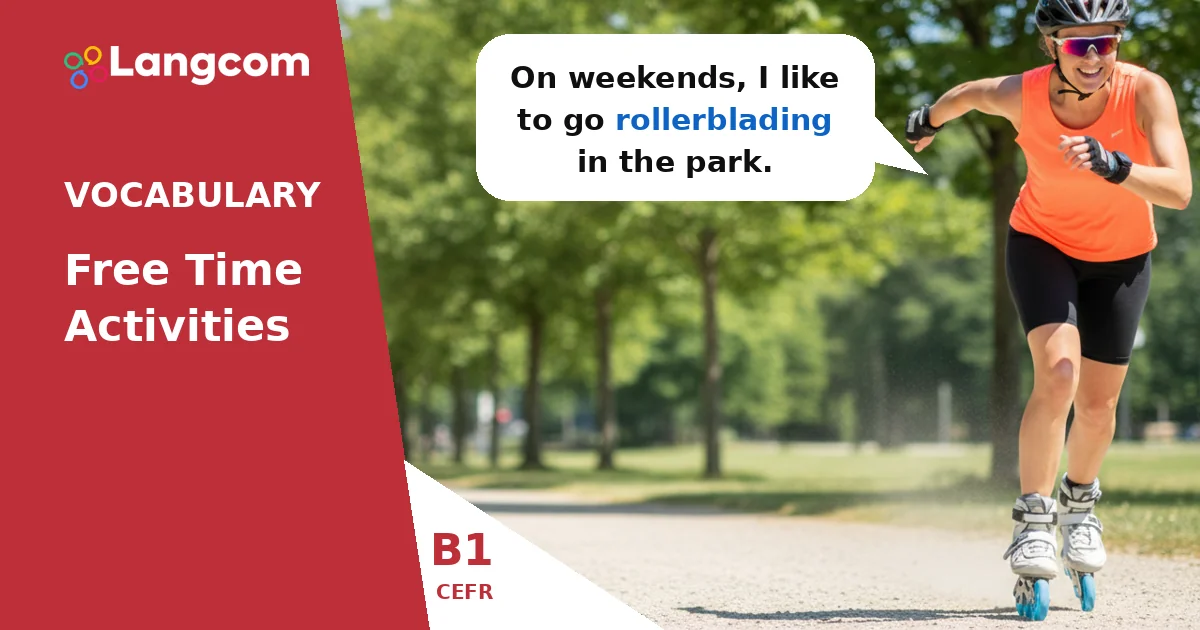
- go rollerblading: I love to go rollerblading in the park on sunny days.
- go shopping: On Saturdays, my sister and I often go shopping for new clothes.
- go to the cinema: Let's go to the cinema tonight and watch a new film.
- go to concerts: They often go to concerts to see their favourite bands.
Verbs for Free Time Activities: Play + Noun
We use the verb play for sports, games, and musical instruments.
- play board games: My family loves to play board games together on rainy afternoons.
- play computer games: My brother spends hours playing computer games with his friends online.
Verbs for Free Time Activities: Do + Noun
El verbo do is used for general activities, sports without a ball, or individual hobbies.
- do sport: It's important to do sport regularly to stay healthy.
Verbs for Free Time Activities: Make + Noun
El verbo make is used for creating things or building something.
- make jewellery: She likes to make jewellery as a hobby and sometimes sells it.
- make model planes: My uncle enjoys making model planes in his free time.
Other Common Free Time Verbs and Collocations
Here are more important phrases to describe what you do in your free time:
- sing in a band: My friend sings in a band every weekend.
- read books: I always read books before I go to sleep.
- draw cartoons: He can draw cartoons very well.
- collect cards: Do you collect cards, like football cards?
- listen to music: I often listen to music while I'm studying.
- text friends: I usually text friends to make plans.
- take photos: She loves to take photos of nature.
- hang out with friends: We often hang out with friends at the coffee shop.
- cook: He enjoys cooking new recipes in his free time.
- paint: My grandmother likes to paint beautiful landscapes.
- surf the internet: I usually surf the internet to find interesting articles.
| Verb + Activity | Example Sentence |
|---|---|
| go rollerblading | She loves to go rollerblading on sunny days. |
| go shopping | We often go shopping for new clothes. |
| go to the cinema | Let's go to the cinema tonight. |
| play board games | My family plays board games. |
| play computer games | He plays computer games every day. |
| do sport | It's good to do sport. |
| make jewellery | She likes to make jewellery. |
| make model planes | My uncle makes model planes. |
| sing in a band | My friend sings in a band. |
| read books | I enjoy reading books. |
| draw cartoons | He can draw cartoons well. |
| collect cards | Do you collect cards? |
| listen to music | I listen to music while working. |
| text friends | I text friends to make plans. |
| take photos | She loves to take photos. |
| hang out with friends | We hang out with friends. |
| cook | He enjoys cooking new recipes. |
| paint | My grandmother likes to paint. |
| surf the internet | I surf the internet for news. |
Ejemplos
- On weekends, I like to go rollerblading in the park.
- My sister loves to make jewellery and give it as gifts.
- Do you prefer to play board games or computer games?
- After school, I often listen to music and text friends.
- They usually go to the cinema on Friday nights.
- It's good to do sport to stay fit and healthy.
- I enjoy reading books, especially fantasy novels.
- We often hang out with friends at the beach in summer.
Práctica
¿Estás listo para obtener tu certificado?
El curso Langcom prepara a los alumnos para los exámenes de Cambridge, IELTS, TOEFL, DELE, SIELE y Michigan.
Empieza a utilizar LangcomErrores habituales de los hispanohablantes
Common Mistakes with Free Time Activities
Spanish speakers sometimes make mistakes with the verbs used for activities:
-
Using 'do' for sports with a ball:
✗ I do football.
✓ I play football.
Remember to use play for sports with a ball (football, tennis) and games (board games, computer games).
-
Using 'make' instead of 'do' for general activities:
✗ I make sport.
✓ I do sport.
Uso do for general activities like do sport, do yoga, do homework.
-
Forgetting '-ing' with 'go':
✗ Let's go shop.
✓ Let's go shopping.
Cuando go is followed by an activity, it usually takes the -ing form (e.no-translation>go swimming, go cycling).
Preguntas más frecuentes
What are some common ways to ask about free time activities?
Puedes preguntar: What do you do in your free time?, What are your hobbies?, o What do you like doing on weekends?
How can I use this vocabulary in the B1 Preliminary exam?
In the B1 Preliminary Speaking Part 1, you might be asked about your hobbies or what you do in your free time. You can use phrases like I enjoy reading books o I often go rollerblading to answer these questions.
Is there a difference between 'hobby' and 'free time activity'?
A hobby is usually a regular activity you do for pleasure, like making jewellery o collecting cards. A free time activity is a more general term for anything you do when you are not working or studying, like listening to music o hanging out with friends.

0 Comentarios