por Raúl | Sep 27, 2026 | C1 Advanced (CAE)
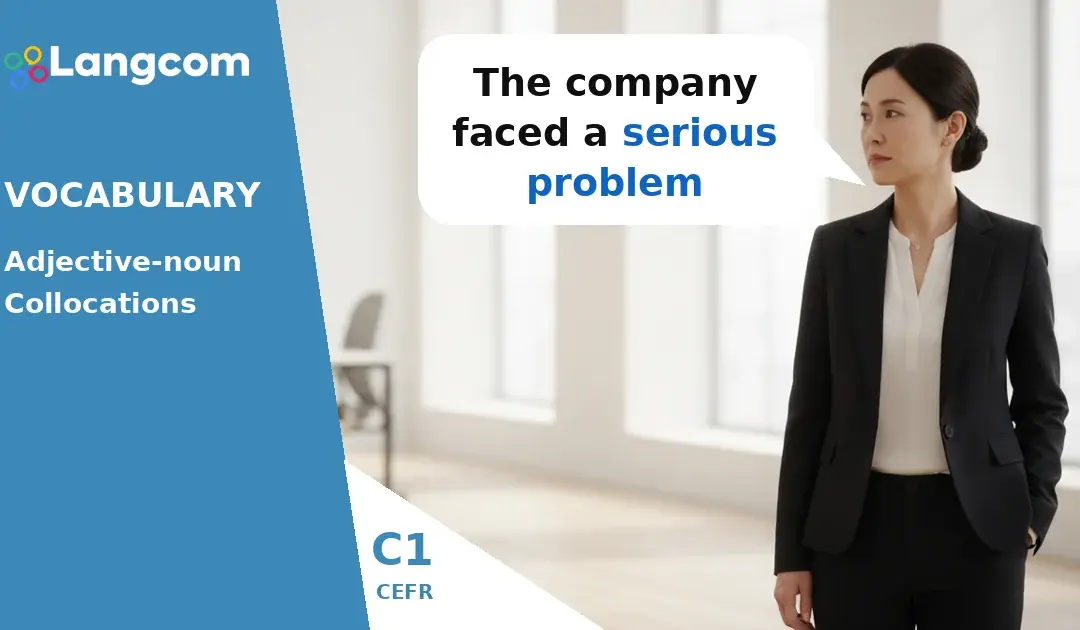
Adjective-noun collocations are pairs of words that naturally go together, like heavy rain or serious problem. For C1 English learners, mastering these fixed expressions is crucial for sounding natural and precise. Instead of using general adjectives like big,...
por Raúl | Sep 27, 2026 | C1 Advanced (CAE)
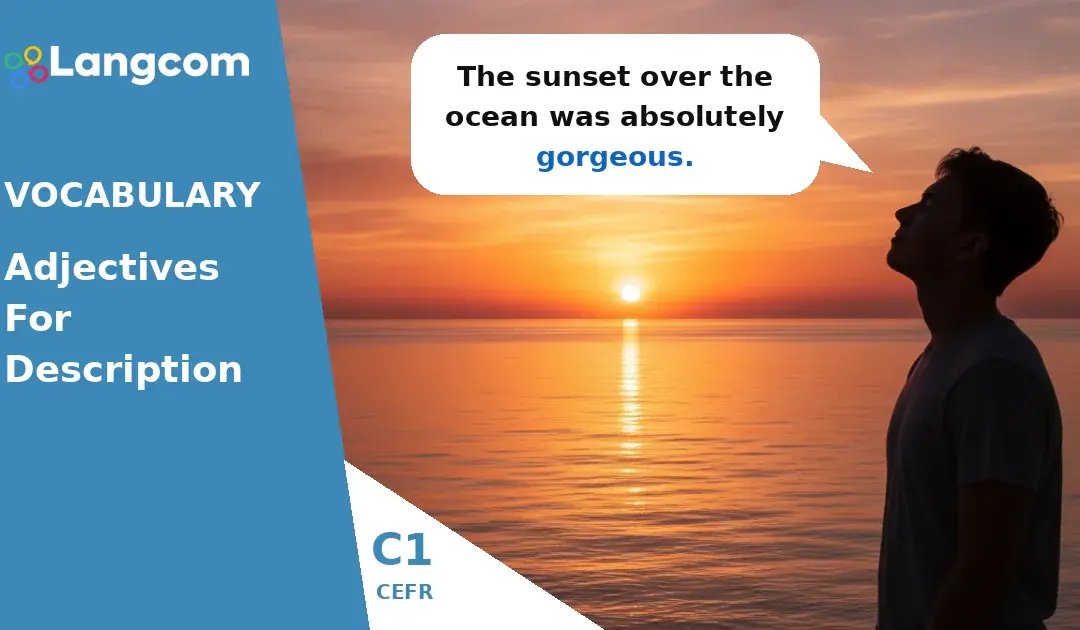
To achieve C1 level English, replace common adjectives like ‘very good’ or ‘very bad’ with more precise and impactful synonyms. Using stronger adjectives makes your language more vivid and sophisticated. Instead of saying ‘The movie was very good,’ you can say ‘The...

por Raúl | Sep 27, 2026 | B1 Preliminary (PET)
Learning vocabulary for entertainment helps you talk about your free time and social activities in English with confidence. These words are essential for describing what you do for fun, whether you go to the cinema, a theatre, or a concert. Understanding terms like...
por Raúl | Sep 27, 2026 | B1 Preliminary (PET)
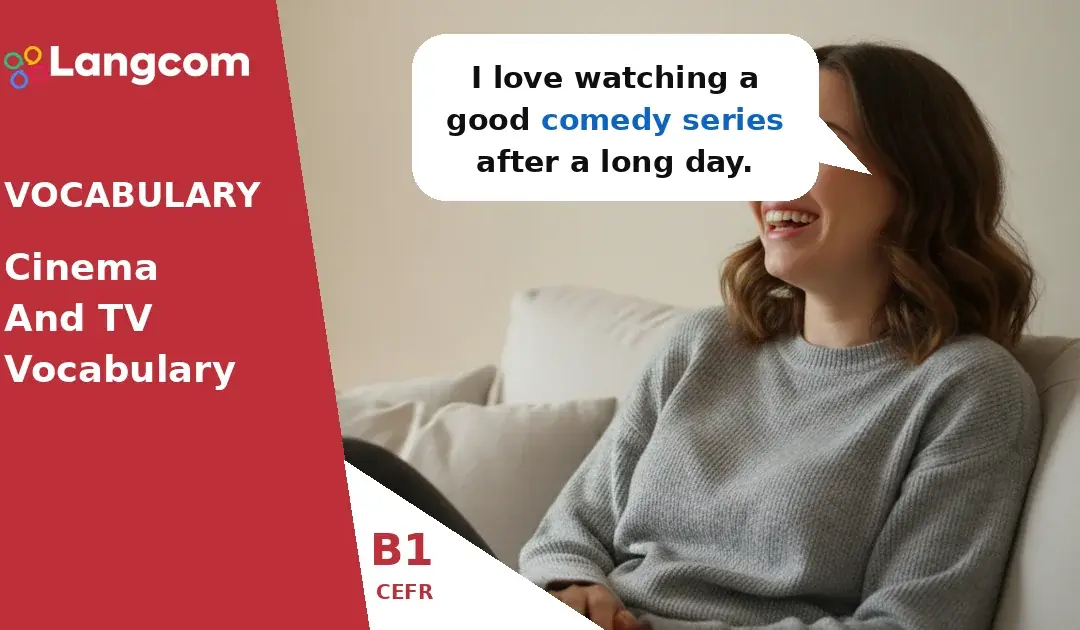
Learning the correct vocabulary for different types of TV programmes helps you describe what you watch and understand others. Knowing terms like comedy series, wildlife documentary, or the news is essential for everyday conversations and for exams like the B1...
por Raúl | Sep 27, 2026 | B1 Preliminary (PET)
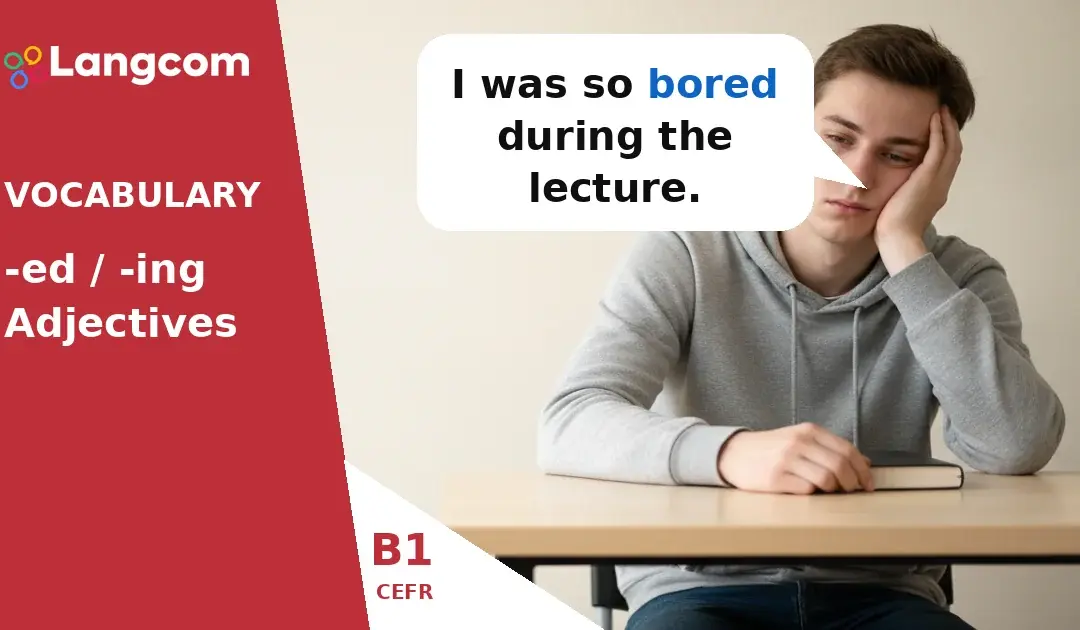
-ed and -ing adjectives are essential for describing feelings and what causes them. Many English adjectives come from verbs and end in either -ed or -ing. The key difference is simple: -ed adjectives describe *how a person or an animal feels*, like I am bored. They...
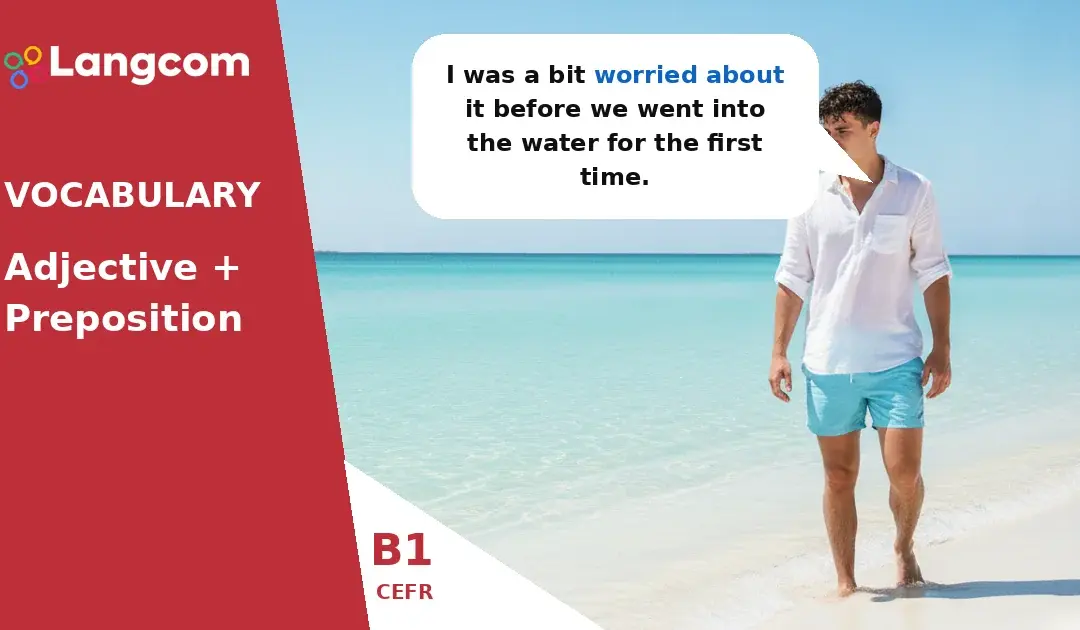
por Raúl | Sep 26, 2026 | B1 Preliminary (PET)
Adjectives often need a specific preposition to complete their meaning in English. These combinations are fixed, which means you cannot usually change the preposition. For example, we say interested in, not interested about. Learning these pairs helps your English...
