por Raúl | Sep 21, 2026 | Inglés para principiantes (nivel A1)
To ask questions about ‘he’, ‘she’, or ‘it’ in the Present Simple, we always use the helping verb does. This is different from ‘I’, ‘you’, ‘we’, or ‘they’, which use do. Remember, does...
por Raúl | Sep 21, 2026 | Inglés para principiantes (nivel A1)
Wake up means to stop sleeping. Get up means to leave your bed. Go to bed means to enter your bed to sleep. These three common verbs are essential for talking about your daily routine in English. Understanding their differences helps you describe your morning and...
por Raúl | Sep 9, 2026 | Inglés para principiantes (nivel A1)
To make negative sentences in the Present Simple for ‘he’, ‘she’, and ‘it’, you always use doesn’t followed by the base form of the verb. This means you do not add ‘-s’ to the main verb. For example, you say He...

por Raúl | Sep 9, 2026 | Inglés para principiantes (nivel A1)
Learning job words helps you talk about what people do every day! In English, we use specific words to describe different jobs. For example, someone who helps customers in a shop is a shop assistant. If you drive a car for money, you are a taxi driver. People who...
por Raúl | Sep 9, 2026 | Inglés para principiantes (nivel A1)
Sentence stress is when you say some words in a sentence more strongly than others. This is very important in English because it helps people understand your meaning. When you stress a word, you make it a little louder, longer, and sometimes with a higher pitch....
por Raúl | Sep 9, 2026 | Inglés para principiantes (nivel A1)
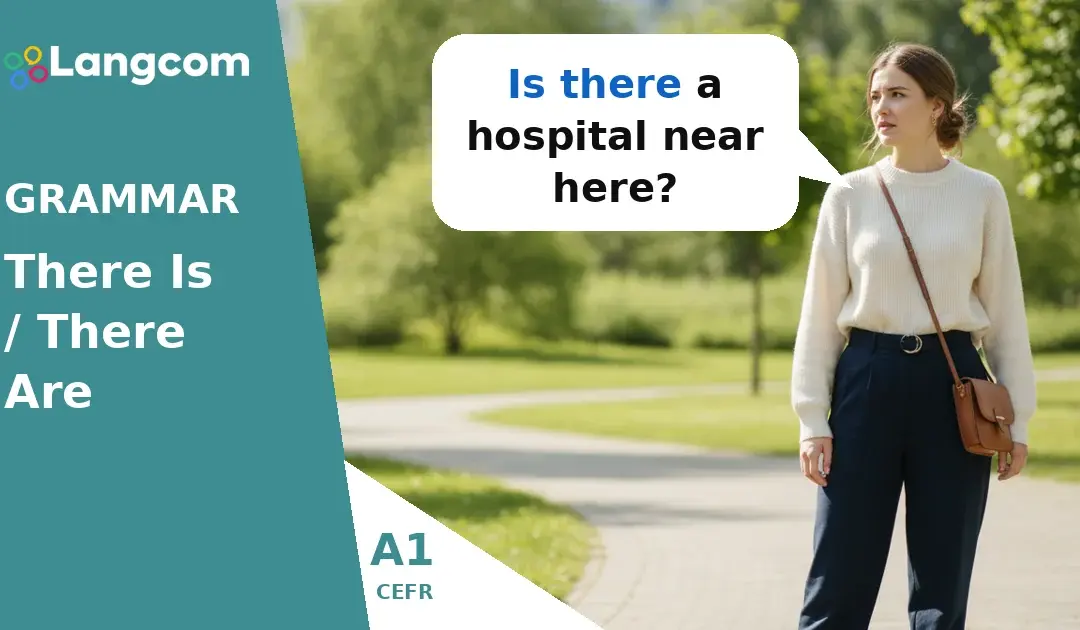
To ask questions about the existence of something in English, you simply invert the order of there is or there are. This is a key step for A1 learners. For singular items, you use Is there…? For example, to ask about one park, you would say Is there a park...
