

¿Cómo se llaman las cuatro estaciones en inglés?
El año se divide en cuatro partes principales, llamadas estaciones. Cada estación tiene un clima diferente y en la naturaleza ocurren cosas distintas.
-
Spring: Esta temporada llega tras winter. Empieza a hacer más calor. Las flores comienzan a brotar y a los árboles les salen hojas nuevas. Suele llover en spring.
-
Summer: Esta es la estación más calurosa. Los días son largos y hace mucho sol. La gente suele ir a la playa o practicar actividades al aire libre en summer.
-
Autumn (o Fall): Esta temporada llega tras summer. Empieza a hacer más fresco. Las hojas de los árboles cambian de color a rojo, naranja y amarillo, y luego se caen. Puede hacer viento.
-
Winter: Esta es la estación más fría. Los días son cortos y las noches largas. A veces nieva. La gente lleva ropa de abrigo, como abrigos y bufandas, en winter.
🎓 Aprende inglés con el método mixto
Grupos reducidos · Tutor de IA disponible las 24 horas del día, los 7 días de la semana · Preparación para los exámenes de Cambridge
Planes de $39 $79 al mes
Hablar del tiempo en cada estación del año
A menudo hablamos del tiempo cuando hablamos de las estaciones. A continuación te presentamos algunos términos meteorológicos habituales para cada estación:
-
En spring: warm, rainy, sunny.
-
En summer: hot, sunny, clear.
-
En autumn: cool, windy, cloudy.
-
En winter: cold, snowy, icy.
Puedes utilizar estas palabras para describir el tiempo. Por ejemplo, It is warm in spring. o It is snowy in winter.
¿Por qué es importante aprender el vocabulario relacionado con las estaciones?
Aprender los nombres de las estaciones es muy útil por muchas razones:
-
Conversaciones cotidianas: Puedes hablar del tiempo o de tus planes. Por ejemplo, I want to go to the park in spring.
-
Comprender a los demás: Cuando la gente habla de sus vacaciones o de sus actividades, suele mencionar la estación del año. Por ejemplo, My birthday is in summer.
-
Lectura y comprensión auditiva: Verás y oirás estas palabras en libros, canciones y películas. Esto te ayudará a entender mejor el inglés.
| Temporada | Clima habitual |
|---|---|
| Spring | Warm, rainy, flowers grow |
| Summer | Hot, sunny, long days |
| Autumn / Fall | Cool, windy, leaves change color |
| Winter | Cold, snowy, short days |
Ejemplos
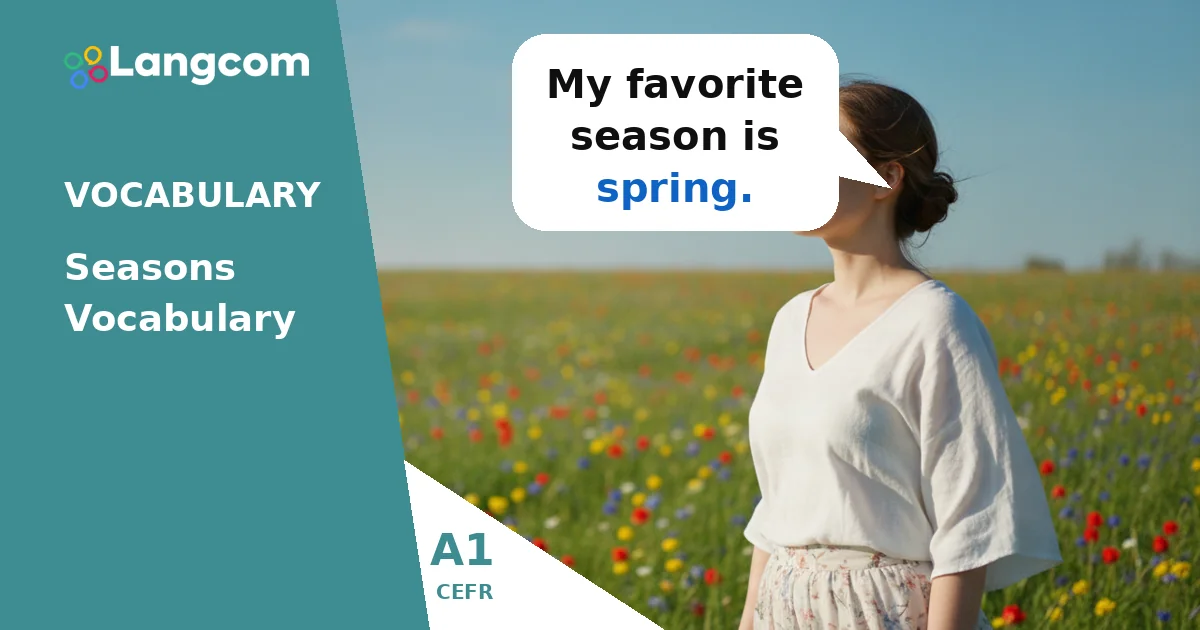
- My favorite season is spring.
- It is very hot in summer.
- The leaves fall in autumn.
- I wear a big coat in winter.
- What is the weather like in your country in spring?
- We go swimming every summer.
Práctica
💬 ¿Necesitas asesoramiento personalizado?
Como centro autorizado de preparación para los exámenes de Cambridge, podemos orientarte para que elijas el curso y la certificación más adecuados. Habla hoy mismo con nuestros asesores.
Chatea con un asesor por WhatsAppErrores habituales de los hispanohablantes
Un punto que suele generar confusión entre los estudiantes es la palabra que designa la estación que sigue al verano.
-
En inglés británico, solemos decir autumn.
-
En inglés americano, la gente suele decir fall.
¡Las dos son correctas! Puedes usar cualquiera de las dos autumn o fall, pero conviene conocer ambas cosas. Por ejemplo, I love the colors of autumn. y I love the colors of fall. Ambas significan lo mismo.
Preguntas más frecuentes
¿Cuántas estaciones hay en inglés?
En inglés hay cuatro estaciones principales: spring, summer, autumn (o fall), y winter.
¿Cuál es la diferencia entre 'autumn' y 'fall'?
Autumn es el término habitual para referirse a la estación que sigue a summer en inglés británico. Fall es el término habitual para referirse a la misma estación del año en inglés americano. Ambos son correctos.
¿Cuál es la estación más cálida?
La estación más cálida es summer. Normalmente es hot y sunny.
¿Cuál es la estación más fría?
La estación más fría es winter. Normalmente es cold, y a veces… snows.




0 Comentarios