por Raúl | 15 de julio de 2026 | A2 Inglés básico
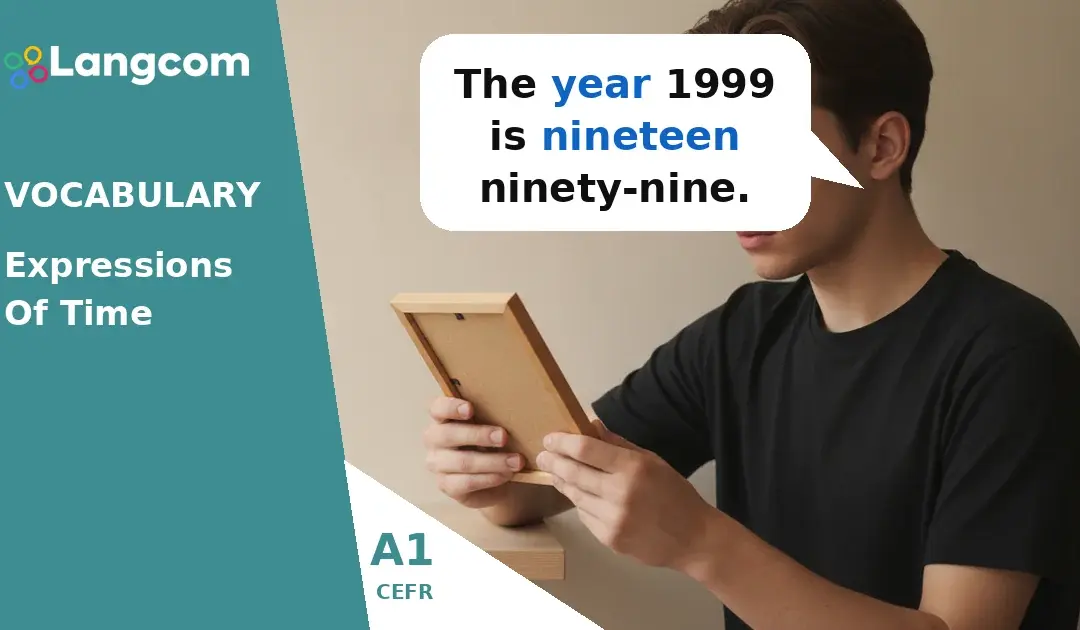
To say years in English, we usually split them into two pairs of numbers, like nineteen eighty-four for 1984. For years from 2000 to 2009, say two thousand and X, for example, two thousand and five. From 2010, you can say twenty X, like twenty twenty-three. For dates,...

por Raúl | 15 de julio de 2026 | A2 Inglés básico
Learning English words for family members helps you talk about the people you love. At A1 level, you will learn basic words like mum, dad, brother, and sister. These words are important for everyday conversations and understanding simple texts. Knowing them allows you...
por Raúl | 15 de julio de 2026 | Inglés para niños: nivel pre-A1 (principiantes)
Learning English numbers 0-12 is a great first step for beginners. These basic numbers are used every day for many things. You use them to say your age, give a phone number, talk about time, or count objects. Knowing zero, one, two, three, four, five, six, seven,...
por Raúl | 15 de julio de 2026 | Inglés para niños: nivel pre-A1 (principiantes)
Learning basic colours in English is a great first step to describe the world around you! You will learn words like red, blue, and yellow. Colours are adjectives, which means they describe nouns (people, places, things). In English, the colour word usually comes...

por Raúl | 15 de julio de 2026 | Inglés para niños: nivel pre-A1 (principiantes)
Learning English numbers 0-12 is the first step to speaking English confidently. These basic numbers are essential for everyday communication, like telling time, giving your phone number, or talking about ages. You will use them constantly! The numbers are: zero (0),...
por Raúl | 15 de julio de 2026 | Inglés para principiantes (nivel A1)
To ask questions about past events in English, we usually use the auxiliary verb did with the base form of the main verb. This structure helps you ask about actions that finished in the past. For example, if you want to know about someone’s holiday, you might...
