por Raúl | Sep 11, 2026 | B2 Inglés intermedio alto
Future time clauses and conditionals help you talk about future events, plans, and possibilities in English by linking a condition or time to a future action. The most important rule is to use a present simple verb in the clause that starts with words like if, when,...
por Raúl | 10 de septiembre de 2026 | B2 Inglés intermedio alto
El verbo «get» es uno de los verbos más versátiles y comunes del inglés, sobre todo en la conversación cotidiana. Se combina con muchas preposiciones y adverbios para formar verbos compuestos y expresiones idiomáticas. Estas expresiones suelen tener significados muy diferentes de los...
por Raúl | 10 de septiembre de 2026 | B2 Inglés intermedio alto
La elisión es cuando los hablantes de inglés omiten o ‘dejan fuera’ sonidos en palabras o frases, sobre todo en el habla rápida y natural. Esto ocurre para que hablar resulte más fácil y fluido, creando un ritmo más fluido. Por ejemplo, el sonido ‘t’ en «must go» a menudo...
por Raúl | 10 de septiembre de 2026 | B2 Inglés intermedio alto
Mastering English question forms is essential for B2 learners to communicate clearly and effectively in various situations. Correctly forming questions allows you to gather information, express opinions, and engage in natural conversations. At this level, you will...

por Raúl | 10 de septiembre de 2026 | B2 Inglés intermedio alto
To express the actions of trying, making an effort, and achieving results in English, B2 learners need a range of specific vocabulary, including phrasal verbs and idiomatic expressions. These words and phrases help you describe the entire process, from starting an...
por Raúl | 10 de septiembre de 2026 | B2 Inglés intermedio alto
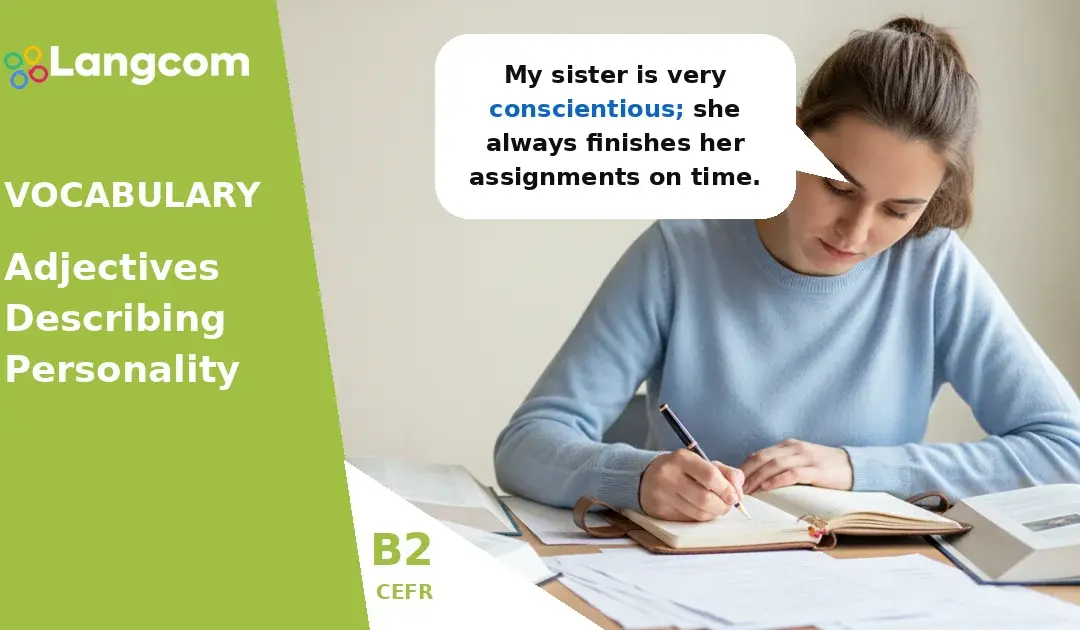
To describe personality precisely at a B2 English level, you need a rich vocabulary of character adjectives that go beyond basic terms. These adjectives allow you to express subtle nuances about people’s traits, making your communication more sophisticated and...
