

¿Por qué es importante aprender las partes del cuerpo en inglés?
Aprender los nombres de las partes del cuerpo te ayuda en muchas situaciones cotidianas. Es vocabulario básico para hablar de ti mismo y de los demás.
- Hablando de salud: Cuando te encuentres mal, tienes que decirle al médico dónde te duele. Por ejemplo, My head hurts o I have a pain in my stomach.
- Cómo describir a las personas: Puedes describir el aspecto de alguien. Por ejemplo, She has long hair and blue eyes.
- Comprender las instrucciones: Es posible que oigas instrucciones como Raise your hand o Touch your toes.
- Conversaciones cotidianas: Muchas expresiones comunes hacen referencia a partes del cuerpo, como to lend a hand (para ayudar).
🎓 Aprende inglés con el método mixto
Grupos reducidos · Tutor de IA disponible las 24 horas del día, los 7 días de la semana · Preparación para los exámenes de Cambridge
Planes de $39 $79 al mes
¿Cuáles son las partes principales de la cabeza y la cara?
En head es la parte superior de tu cuerpo. En tu head, tienes tu face.
- Hair: Lo que te cubre la cabeza. He has short, brown hair.
- Eye / Eyes: Se usan para ver. She has beautiful green eyes.
- Ear / Ears: Se utilizan para oír. My ears are cold.
- Nose: Se utiliza para oler y respirar. He has a small nose.
- Mouth: Lo usas para comer, beber y hablar. Close your mouth when you chew.
- Tooth / Teeth: Dentro de la boca, los utilizas para masticar. Brush your teeth twice a day.
- Tongue: El músculo que hay dentro de la boca. Stick out your tongue!
¿Y qué hay del tronco, los brazos y las piernas?
Debajo de tu head, tienes tu neck, que conecta tu head a tu página principal body.
- Neck: Conecta la cabeza con el cuerpo. I have a long neck.
- Shoulder / Shoulders: La parte donde el brazo se une al cuerpo. He carried the bag on his shoulder.
- Arm / Arms: Las extremidades superiores, desde el hombro hasta la mano. She has strong arms.
- Hand / Hands: Al final de los brazos, los usas para sujetar cosas. Wash your hands before eating.
- Finger / Fingers: Las cinco partes que hay al final de cada mano. He has long fingers.
- Back: La parte posterior de tu cuerpo. My back hurts after lifting that box.
- Stomach: La parte del cuerpo donde se digieren los alimentos. I have a full stomach.
- Leg / Legs: Las extremidades inferiores que utilizas para caminar. She has long legs.
- Foot / Feet: Las piernas te sirven para mantenerte de pie y caminar. My feet are tired.
- Toe / Toes: Las cinco partes que hay al final de cada pie. He stubbed his toe.
| Singular | Plural |
|---|---|
| arm | arms |
| ear | ears |
| eye | eyes |
| finger | fingers |
| foot | feet |
| hand | hands |
| head | heads |
| leg | legs |
| mouth | mouths |
| nose | noses |
| shoulder | shoulders |
| stomach | stomachs |
| tooth | teeth |
| toe | toes |
Ejemplos
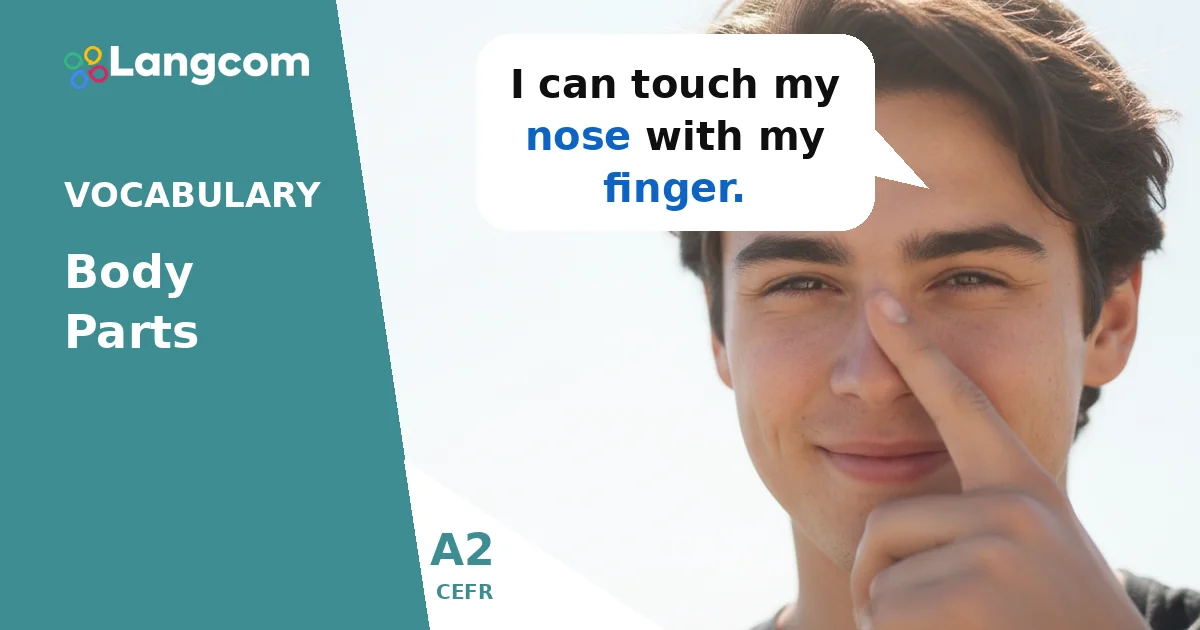
- I can touch my nose with my finger.
- She has beautiful long hair.
- My stomach hurts after eating too much.
- He broke his arm playing football.
- Please close your mouth when you are eating.
- My feet are cold, I need some socks.
Práctica
💬 ¿Necesitas asesoramiento personalizado?
Como centro autorizado de preparación para los exámenes de Cambridge, podemos orientarte para que elijas el curso y la certificación más adecuados. Habla hoy mismo con nuestros asesores.
Chatea con un asesor por WhatsAppErrores habituales de los hispanohablantes
Los hispanohablantes a veces cometen estos errores:
- Singular frente a plural: Recuerda que algunas partes del cuerpo tienen formas de plural irregulares. Por ejemplo, one foot pero two feet. Además, one tooth pero many teeth.
- Using 'the' instead of 'my/his/her': In Spanish, you often say 'la cabeza' or 'el brazo'. In English, we usually use possessive adjectives when talking about our own body parts. For example, say I hurt my leg, no I hurt the leg.
- Confusing 'arm' and 'hand': Un arm es toda la parte que va desde el hombro hasta la muñeca. A hand es únicamente la parte final del brazo, incluidos los dedos.
- Confusing 'leg' and 'foot': A leg es toda la parte que va desde la cadera hasta el tobillo. A foot es únicamente la parte final de la pierna, por debajo del tobillo.
Preguntas más frecuentes
¿Por qué es importante aprender las partes del cuerpo en inglés?
Aprender las partes del cuerpo es esencial para describir a las personas, hablar de salud, entender indicaciones y utilizar muchas expresiones comunes en inglés. Se trata de vocabulario fundamental para la comunicación en el nivel A2.
¿Hay alguna expresión habitual en inglés en la que se utilicen partes del cuerpo?
¡Sí, muchos! Por ejemplo, to lend a hand significa ayudar. To keep an eye on something significa observarlo con atención. To have a sweet tooth significa que te gustan los alimentos dulces.
¿Cómo podría aparecer el vocabulario sobre las partes del cuerpo en el examen A2 Key (KET)?
En el examen A2 Key (KET), es posible que aparezca vocabulario relacionado con las partes del cuerpo en las secciones de Comprensión lectora y Expresión escrita. Por ejemplo, puede que tengas que leer la descripción de una persona e identificarla, o escribir un mensaje breve sobre cómo te sientes mal, utilizando palabras como headache o stomach ache. También puede aparecer en la parte de expresión oral al describir a personas o al hablar de tu salud.


0 Comentarios