

Why is it Important to Know American vs British English Vocabulary?
English is a global language, but it has different varieties. The two most common are American English and British English. They have many similarities, but also some key differences.
For B2 learners, knowing these vocabulary differences is important for several reasons:
- Comunicación clara: You can understand people from both the US and the UK.
- Avoiding Misunderstandings: Using the wrong word might confuse your listener.
- Exam Success: Exams like the B2 First (FCE) may include texts or audio in either American or British English.
- Cultural Awareness: It helps you understand the culture behind the language.
✍️ ¿No sabes en qué nivel estás?
Realiza nuestra prueba de nivel gratuita y recibe comentarios personalizados de examinadores certificados por Cambridge.
Realice nuestra prueba de nivel GRATUITACommon American English and British English Vocabulary Pairs
Many everyday items have different names in American and British English. Here are some of the most common words you should know at a B2 level:
Beyond Single Words: Adverbs and Phrases
Sometimes, the difference is not just a single word, but how words are used or phrased. For example, adverbs can be used differently.
- In American English, you might hear real used as an adverb, as in She got real embarrassed.
- In British English, the adverb really is almost always used in this context: She got really embarrassed.
Aunque real as an adverb is common in informal American speech, really is the standard and more formal choice in both varieties.
Tips for B2 Learners to Master AmE vs BrE Vocabulary
Learning these differences can seem challenging, but here are some tips to help you:
- Choose a Primary Variety: Decide if you want to focus more on American or British English for your active vocabulary. This helps with consistency.
- Be Aware of Both: Even if you choose one, try to recognize and understand words from the other variety.
- Read and Listen Widely: Watch movies, TV shows, and listen to podcasts from both the US and the UK. Pay attention to the words they use.
- Use Context: Often, the surrounding words will help you understand a new term, even if you don't know if it's American or British.
- Make Flashcards: Create flashcards with the AmE word on one side and the BrE equivalent on the other.
| American English | British English |
|---|---|
| subway | underground |
| first floor | ground floor |
| fall | autumn |
| cookie | biscuit |
| trunk (of a car) | boot (of a car) |
| vacation | holiday |
| freeway | motorway |
| gasoline | petrol |
| apartment | flat |
| Scotch tape | sellotape |
| elevator | lift |
| bill (paper money) | banknote |
Ejemplos
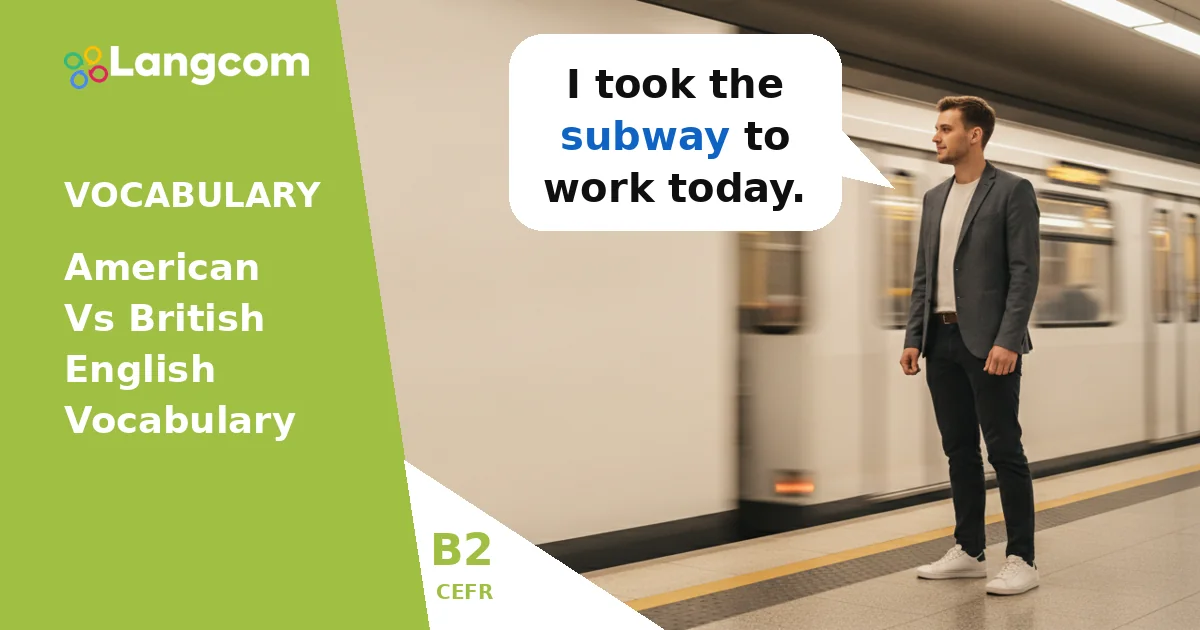
- I took the subway to work today. (American English)
- I took the underground to work today. (British English)
- She bought a new apartment in the city. (American English)
- She bought a new flat in the city. (British English)
- We're going on vacation next month. (American English)
- We're going on holiday next month. (British English)
Práctica
¿Estás listo para obtener tu certificado?
El curso Langcom prepara a los alumnos para los exámenes de Cambridge, IELTS, TOEFL, DELE, SIELE y Michigan.
Empieza a utilizar LangcomErrores habituales de los hispanohablantes
Spanish speakers sometimes make specific mistakes when learning AmE vs BrE vocabulary:
- Confuso Bill: In Spanish, 'factura' can mean a bill for services or a bank note. In English, a bill is usually for services (e.g., electricity bill, restaurant bill). For paper money, Americans say bill (p. ej., a five-dollar bill), but Britons say banknote (p. ej., a five-pound banknote).
- Mixing Varieties: Accidentally using an American word when speaking with a British person (or vice versa) can sound unnatural. For example, saying I need some gasoline to a British person, who would typically say petrol.
- Assuming One is 'Correct': Both American and British English are correct and valid forms of the language. There is no 'better' one.
Preguntas más frecuentes
Do I need to learn both American and British English vocabulary for the B2 First (FCE) exam?
Yes, it is highly recommended to be familiar with both. The B2 First exam often includes listening and reading texts that feature either American or British English speakers and vocabulary. You should be able to understand the common differences, especially for vocabulary items like subway/underground o fall/autumn.
Is one variety of English better or more important to learn?
No, neither American English nor British English is 'better' or more important. Both are widely spoken and understood globally. Your choice might depend on where you plan to travel, study, or work, or which media you consume more often. The key is to be consistent in your active use and aware of differences.
How can I remember all these different words?
Practice is key! Try making flashcards, watching TV shows and movies from both the US and the UK, and reading articles from different English-speaking countries. Focus on the most common differences first, like those in the table above. Regular exposure will help you remember them naturally.
If I use an American English word in a British English conversation, will people understand me?
Most of the time, yes, especially for common words. Native speakers are generally aware of the main differences. However, using the appropriate vocabulary for your audience helps you sound more natural and fluent, and avoids any potential for minor confusion.


0 Comentarios