by Raúl | Sep 27, 2026 | C1 Advanced (CAE)
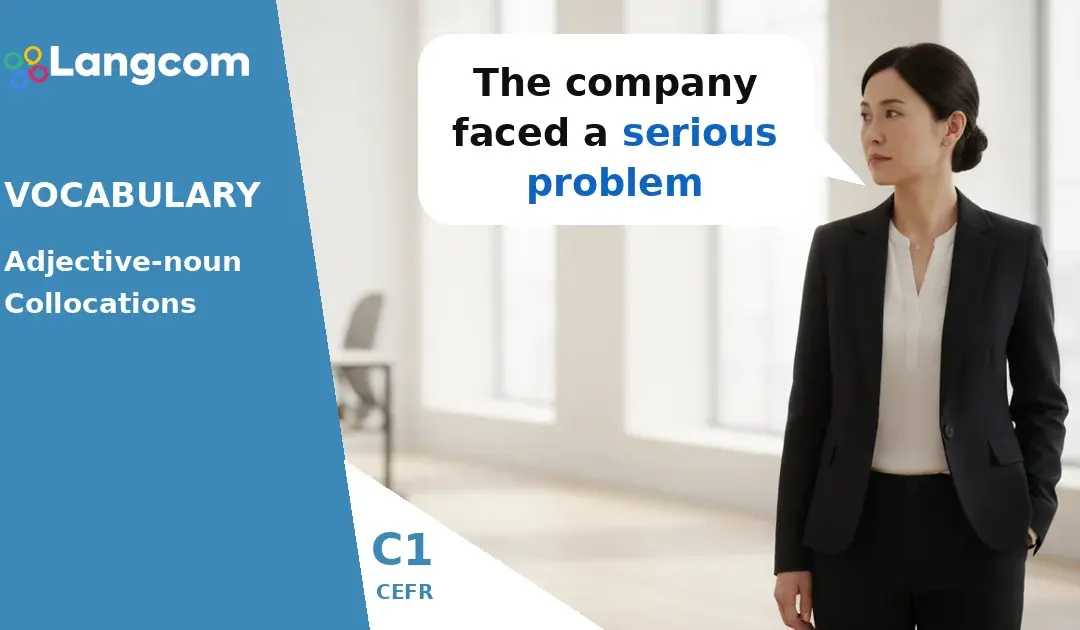
Adjective-noun collocations are pairs of words that naturally go together, like heavy rain or serious problem. For C1 English learners, mastering these fixed expressions is crucial for sounding natural and precise. Instead of using general adjectives like big,...
by Raúl | Sep 27, 2026 | C1 Advanced (CAE)
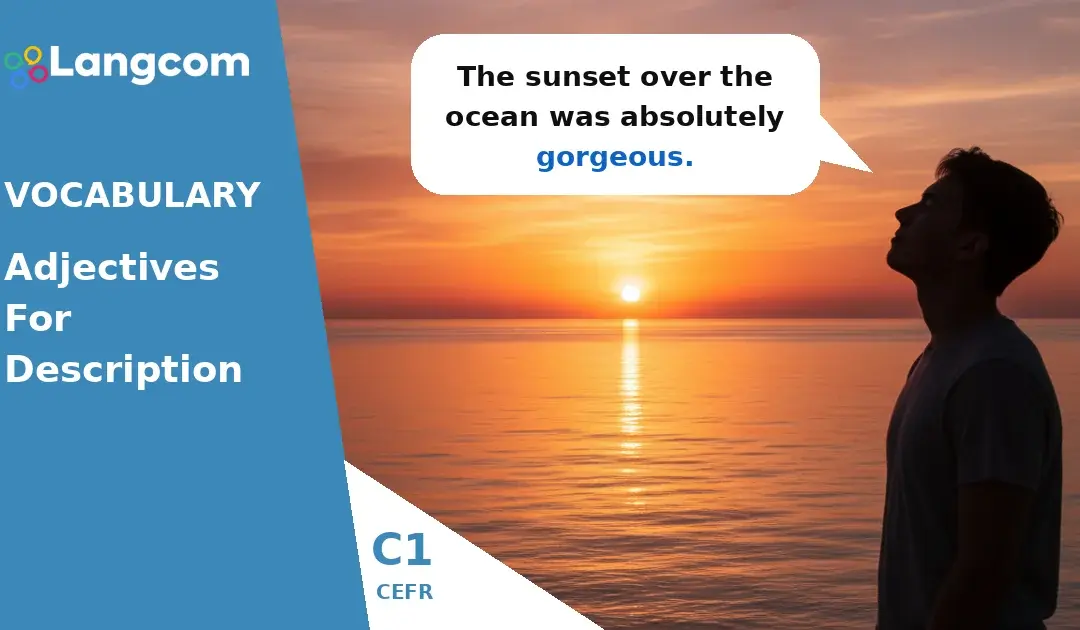
To achieve C1 level English, replace common adjectives like ‘very good’ or ‘very bad’ with more precise and impactful synonyms. Using stronger adjectives makes your language more vivid and sophisticated. Instead of saying ‘The movie was very good,’ you can say ‘The...
by Raúl | Sep 26, 2026 | C1 Advanced (CAE)
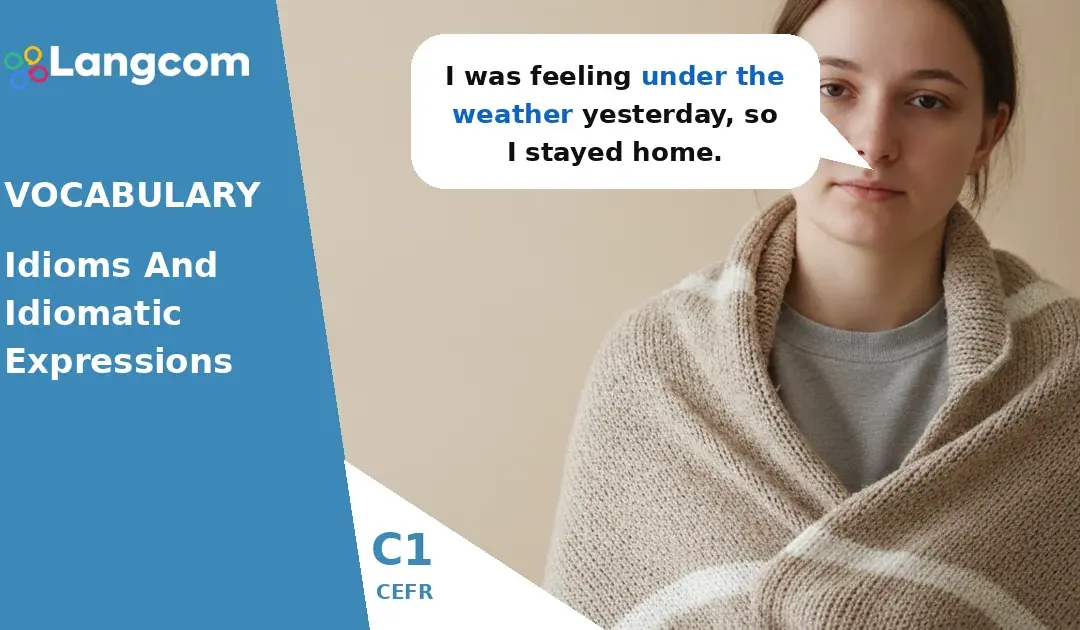
Idioms are fixed phrases or expressions whose meaning cannot be understood from the individual words alone; they are essential for achieving a C1 Advanced level in English. For example, “kick the bucket” means “to die,” not literally to kick a...

by Raúl | Sep 26, 2026 | C1 Advanced (CAE)
In English, many verbs are followed by another verb, which must be in either the -ing form (a gerund) or the to-infinitive form. Choosing the correct form is crucial for C1 fluency and accuracy. Some verbs always take a gerund, like enjoy + -ing (I enjoy reading)....
by Raúl | Sep 26, 2026 | C1 Advanced (CAE)
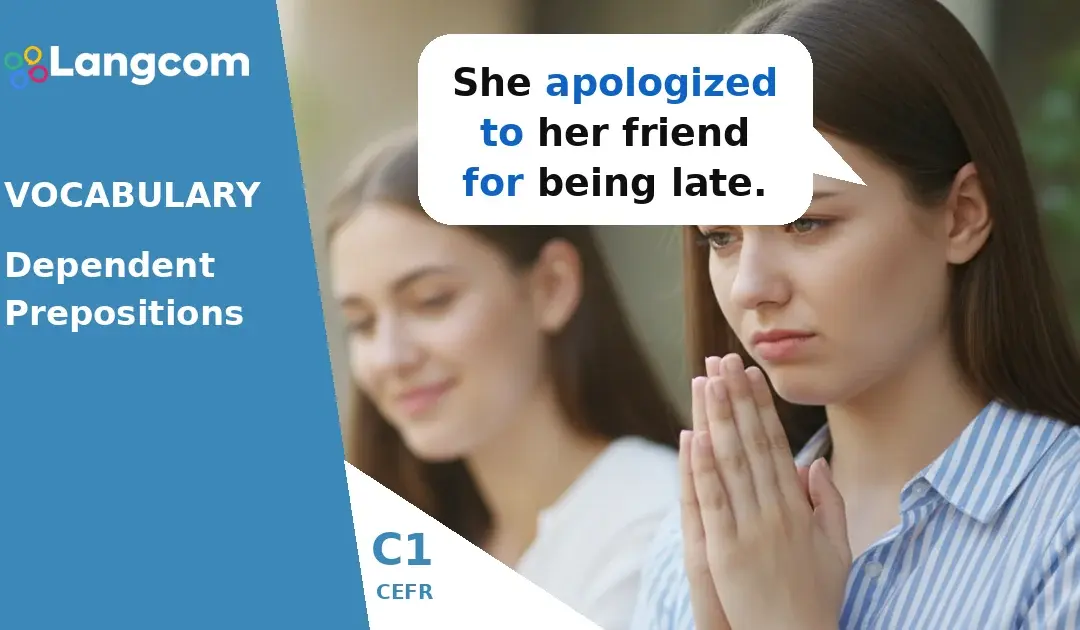
Dependent prepositions are specific prepositions that always follow certain verbs, nouns, or adjectives in English. They are essential for speaking and writing naturally at a C1 level. Unlike prepositions of place or time, dependent prepositions don’t follow...
by Raúl | Sep 26, 2026 | C1 Advanced (CAE)
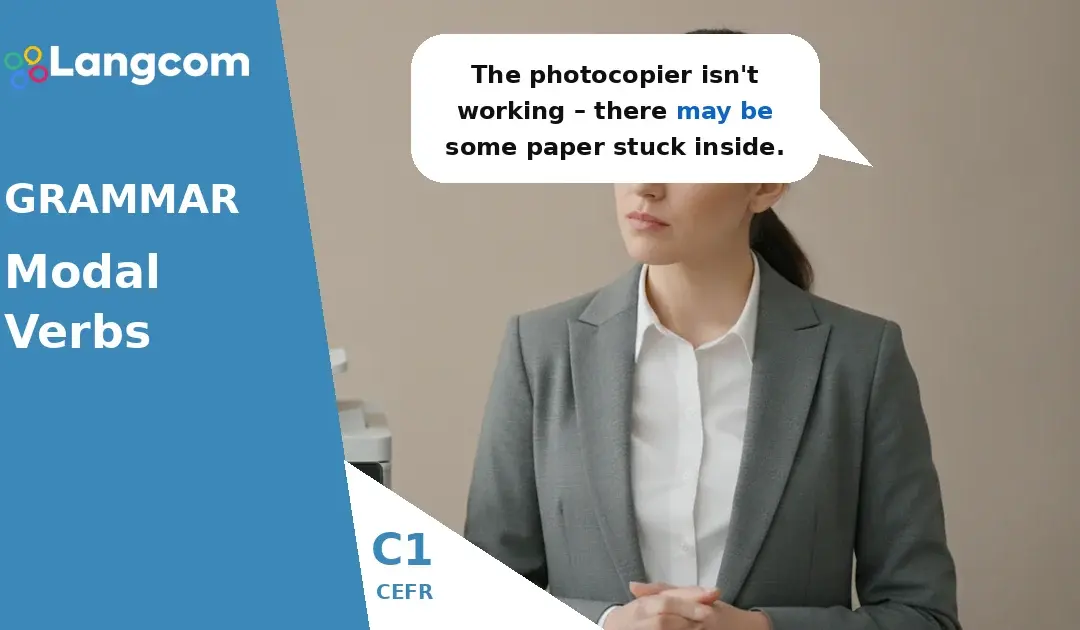
To express possibility, probability, or certainty in C1 English, you use a range of modal verbs and specific phrases that show how likely something is to be true or to happen. For general possibilities, we often use can. For specific events, may, might, and could are...
