by Raúl | Sep 20, 2026 | B2 First (FCE)
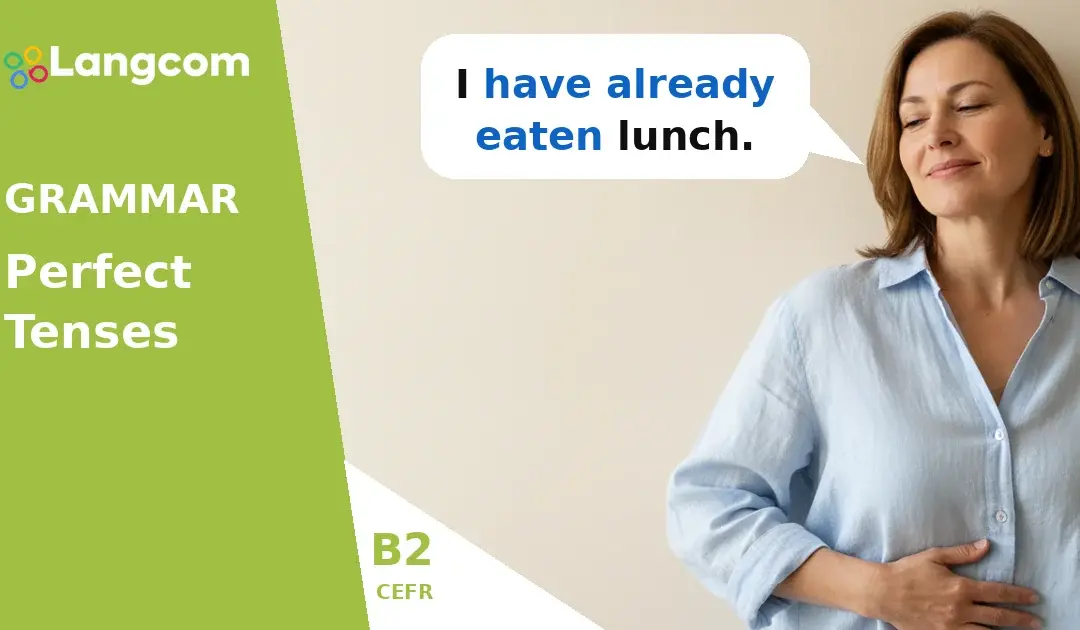
Perfect tenses in English connect an action or state from one point in time to another, emphasizing completion or duration. They are crucial for B2 learners because they allow you to express complex time relationships, essential for natural and accurate communication....

by Raúl | Sep 20, 2026 | B2 First (FCE)
The main difference between all and whole is that all refers to every single part or member of a group, focusing on quantity, while whole refers to something complete and undivided, focusing on the entirety of a single item. For example, All students passed the exam...

by Raúl | Sep 20, 2026 | B1 Preliminary (PET)
Learning vocabulary for buildings and places is essential for B1 English learners to describe their environment and daily activities with confidence. These words help you talk about where you live, where you go to study or shop, and where you spend your free time. For...

by Raúl | Sep 20, 2026 | B1 Preliminary (PET)
Gradable adjectives describe qualities that can have different levels or intensities, while non-gradable (or extreme) adjectives describe qualities that are absolute and cannot be made stronger or weaker. For example, big is a gradable adjective because something can...

by Raúl | Sep 20, 2026 | B1 Preliminary (PET)
To make your B1 English comparisons more precise, use words like a bit, a little, or slightly for small differences. For big differences, use much, far, or a lot. To show things are equal, use as + adjective/adverb + as, and for inequality, use not as +...
