


What is the Present Continuous Tense?
First, let’s remember the present continuous tense. We use it for actions happening now.
- The form is: Subject + am/is/are + verb + -ing.
- Ad esempio: I am studying. She is eating. They are playing.
🎓 Impara l'inglese con il metodo misto
Piccoli gruppi · Tutor IA disponibile 24 ore su 24, 7 giorni su 7 · Preparazione agli esami di Cambridge
Piani da $39 $79 al mese
When Do We Use Present Continuous for the Future?
We use the present continuous tense to talk about future plans and arrangements.
- These are plans you have already made.
- They are fixed, like an appointment or a ticket you bought.
- It is not a spontaneous decision.
It means the plan is already in your calendar or diary.
How to Form Sentences for Future Plans?
The structure is the same as the normal present continuous, but we add a future time word.
- Positive: Subject + am/is/are + verb + -ing + future time expression.
Esempio: I am meeting my friends tomorrow. - Negative: Subject + am/is/are + not + verb + -ing + future time expression.
Esempio: She is not coming to the party tonight. - Question: Am/Is/Are + subject + verb + -ing + future time expression?
Esempio: Are you working next Saturday?
Why Not Use 'Will' or 'Going To'?
The present continuous for the future is for plans that are already organized and confirmed.
- Will is often for sudden decisions or predictions.
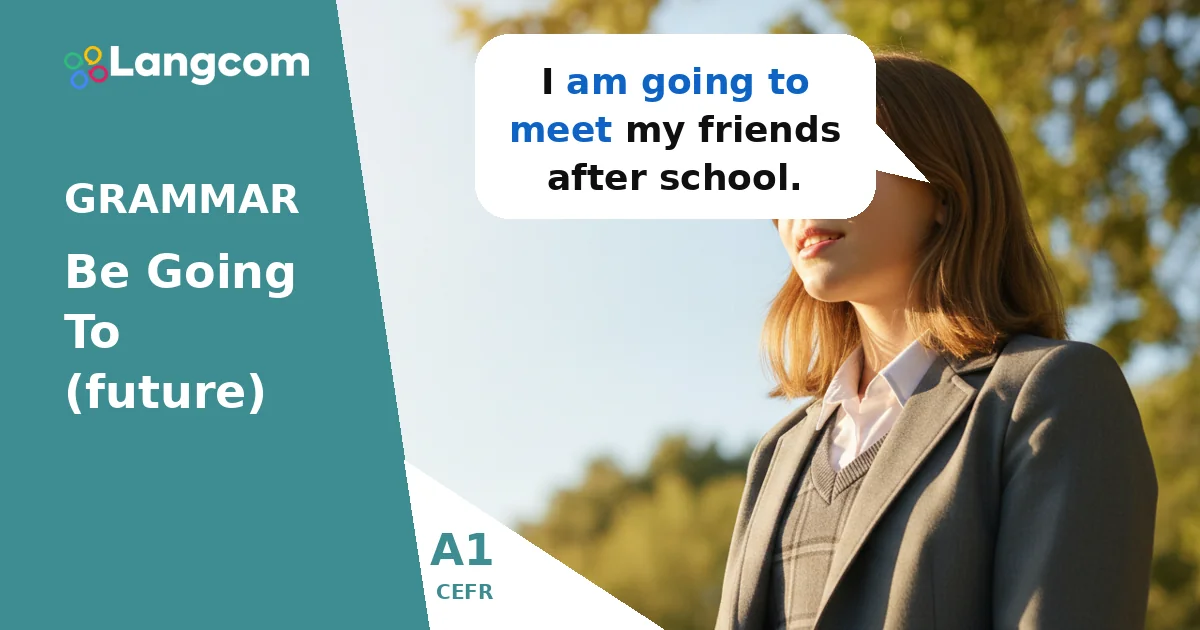
- Going to is for intentions or plans you have, but the present continuous often means the plan is more definite, like an appointment.
For A1 learners, focus on using present continuous for your fixed plans.
| Time Expression | Example Sentence |
|---|---|
| tomorrow | I am working tomorrow. |
| tonight | We are watching a movie tonight. |
| next week | She is traveling next week. |
| on Monday | They are having a meeting on Monday. |
| at 7 PM | He is eating dinner at 7 PM. |
Esempi
- I am visiting my grandparents next weekend.
- We are having dinner at a new restaurant on Friday.
- She is flying to London tomorrow morning.
- They are playing football after school today.
- My brother is starting a new job next month.
- Are you meeting John later?
- He is not working on Sunday.
Esercitazione
💬 Hai bisogno di una consulenza personalizzata?
In qualità di Centro autorizzato di preparazione agli esami Cambridge, possiamo aiutarti a scegliere il corso e la certificazione più adatti alle tue esigenze. Contatta oggi stesso i nostri consulenti.
Chatta con un consulente su WhatsAppErrori comuni per chi parla spagnolo
Chi parla spagnolo a volte commette questi errori:
- Using the simple present: You might say I go to the cinema tomorrow. This is incorrect for a personal plan. In English, the simple present is usually for schedules (like a train schedule: The train leaves at 7 PM.). For your own plans, use the present continuous: I am going to the cinema tomorrow.
- Direct translation of 'ir a': Sometimes you might think of ir a and say I am going to go to the party. While this is grammatically correct, I am going to the party. (present continuous) is more natural and common for a fixed plan.
Domande frequenti
Is the present continuous only for future plans?
No, it is also for actions happening right now. For example, I am reading a book now. But with a future time expression, it means a future plan: I am reading a book tonight.
Can I use 'will' for future plans instead?
È possibile utilizzare will for future, but it often means a sudden decision or a prediction. For fixed, organized plans, the present continuous is more common and natural: I am meeting my friend at 6 PM. (fixed plan) vs. I will call you later. (sudden decision).
What is the difference between 'present continuous for future' and 'going to'?
Both can talk about future plans. The present continuous often emphasizes that the plan is a definite arrangement, like an appointment. I am seeing the dentist on Monday. (It's in my diary). Going to can be for general intentions: I am going to learn English. (It's my intention).



0 Commenti