

What is the Past Simple of ‘Be’?
Il verbo be is very common in English. In the present, it has three forms: am, is, are. In the past, it only has two forms:
- was
- were
We use these forms to talk about things that happened or were true at a specific time in the past.
🎓 Impara l'inglese con il metodo misto
Piccoli gruppi · Tutor IA disponibile 24 ore su 24, 7 giorni su 7 · Preparazione agli esami di Cambridge
Piani da $39 $79 al mese
When do we use 'Was'?
Utilizziamo was with singular subjects. This means when you are talking about one person or one thing.
- Subjects: I, he, she, it
- Esempi:
I was tired.
He was a student.
She was in London.
It was cold yesterday.
When do we use 'Were'?
Utilizziamo were with plural subjects. This means when you are talking about two or more people or things.
- Subjects: you, we, they
- Esempi:
You were happy.
We were friends.
They were at the park.
Ricordate, you always takes were, even if you are talking to one person.
How to Form Negative Sentences with 'Was' and 'Were'?
To make a negative sentence, just add not dopo was oppure were.
- Full forms: was not, were not
- Short forms (contractions): wasn't, weren't
Contractions are very common in spoken English and informal writing.
- Esempi:
I wasn't hungry.
They weren't at school.
It wasn't sunny.
How to Ask Questions with 'Was' and 'Were'?
To ask a question, simply put was oppure were at the beginning of the sentence, before the subject.
- Domande con risposta sì/no:
Was he busy? (Answer: Yes, he was. / No, he wasn't.)
Were you late? (Answer: Yes, I was. / No, I wasn't.) - Wh- Questions (with question words like where, what, who):
Where was she yesterday?
What was the problem?
Who were they?
| Oggetto | Affermativo | Negativo | Domanda |
|---|---|---|---|
| I | I was | I wasn't | Was I...? |
| You | You were | You weren't | Were you...? |
| He/She/It | He/She/It was | He/She/It wasn't | Was he/she/it...? |
| We | We were | We weren't | Were we...? |
| They | They were | They weren't | Were they...? |
Esempi
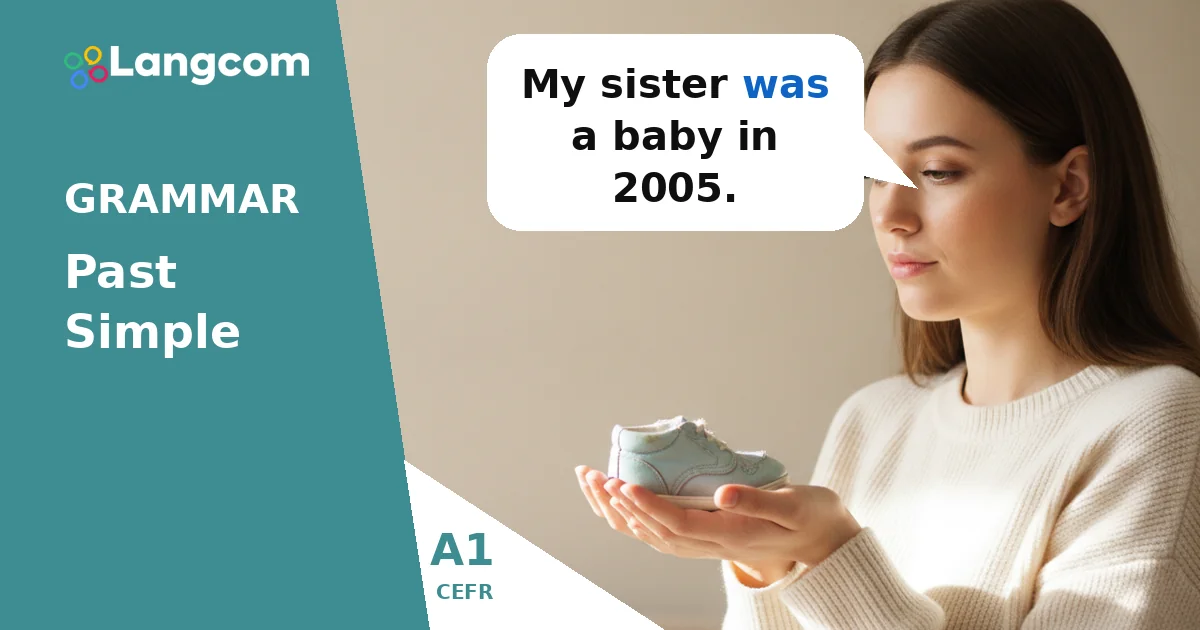
- My sister was a baby in 2005.
- We were very happy on our holiday.
- The weather wasn't good last weekend.
- Were your parents at the party?
- I was at home all day yesterday.
- They weren't ready for the exam.
- Was the movie interesting?
Esercitazione
💬 Hai bisogno di una consulenza personalizzata?
In qualità di Centro autorizzato di preparazione agli esami Cambridge, possiamo aiutarti a scegliere il corso e la certificazione più adatti alle tue esigenze. Contatta oggi stesso i nostri consulenti.
Chatta con un consulente su WhatsAppErrori comuni per chi parla spagnolo
Spanish speakers sometimes make mistakes with the Past Simple of 'be' because of differences between English and Spanish.
- Using 'did' with 'be': In Spanish, you might use an auxiliary verb. But in English, 'be' is special. Do NOT use did con was oppure were.
Errato: I didn't was happy.
Corretto: I wasn't happy.
Errato: Did you were tired?
Corretto: Were you tired? - Confusing 'ser' and 'estar': In Spanish, you have two verbs for 'be' (ser e estar). In English, be covers both. Don't try to translate them separately.
Esempio: He was a doctor. (Era un médico - ser)
Esempio: He was in the hospital. (Estaba en el hospital - estar)
Domande frequenti
What are the two past forms of the verb 'be'?
The two past forms of the verb 'be' are was e were. We use them to talk about past states, locations, or descriptions.
When do I use 'was' and when do I use 'were'?
Si utilizza was with singular subjects (I, he, she, it). You use were with plural subjects (you, we, they).
How do I make a negative sentence with 'was' or 'were'?
To make a negative sentence, add not dopo was oppure were. Ad esempio, I was not (wasn't) there oppure They were not (weren't) ready.
Can I use 'did' with 'was' or 'were'?
No, you cannot use did con was oppure were. The verb 'be' is special and forms its own negatives and questions without did.


0 Commenti