

What Are Hobbies and Free Time Activities?
Hobbies are activities you enjoy doing in your free time. They are things you do for pleasure, not for work or school. Hobbies help you relax, learn new skills, and meet new people.
Many people have hobbies. They can be active, creative, or quiet activities.
✍️ Non sai a quale livello ti trovi?
Fai il nostro test di livello gratuito e ricevi un feedback personalizzato da esaminatori certificati Cambridge.
Fai il nostro test di livello GRATUITOChoosing the Right Verb: Do, Play, or Go?
In English, we use different verbs with hobbies. The most common verbs are do, play, e go.
-
Utilizziamo play for:
- Games with rules, like play chess.
- Sports with a ball, like play football.
- Musical instruments, like play the guitar.
-
Utilizziamo go for:
- Attività che terminano con -ing, especially outdoor activities, like go cycling oppure go camping.
-
Utilizziamo do for:
- General activities or activities that do not fit play oppure go.
- Examples include do photography, do volunteering, oppure do yoga.
People and Equipment for Your Favorite Hobbies
Each hobby often has a specific name for the person who does it and the equipment they use. Learning these words helps you talk about hobbies in more detail.
-
For chess:
- The person is a chess player.
- You need a board e pieces.
-
For cycling:
- The person is a cyclist.
- You need a bike e un helmet.
-
For painting:
- The person is a painter.
- You need paint e un brush.
-
For cooking:
- The person is a cook.
- You might use a cooker or an oven.
-
For music:
- The person is a musician.
- They play an instrument.
-
For photography:
- The person is a photographer.
- You need a camera.
-
For volunteering:
- The person is a volunteer.
- There is no specific equipment, but you give your time.
-
For camping:
- The person is a camper.
- You need a tent and often a backpack.
Why Are Hobbies Important?
Hobbies are very good for you. They help you relax after work or school. They can also help you learn new things and develop new skills.
Having hobbies is a great way to meet people who share your interests and to improve your well-being.
| Hobby | Verbo | Person | Equipment |
|---|---|---|---|
| Chess | Play | Chess player | Board, pieces |
| Cycling | Go | Cyclist | Bike, helmet |
| Painting | Do | Painter | Paint, brush |
| Cooking | Do | Cook | Cooker, oven |
| Music | Play | Musician | Instrument |
| Photography | Do | Photographer | Camera |
| Volunteering | Do | Volunteer | – |
| Camping | Go | Camper | Tent, backpack |
Esempi
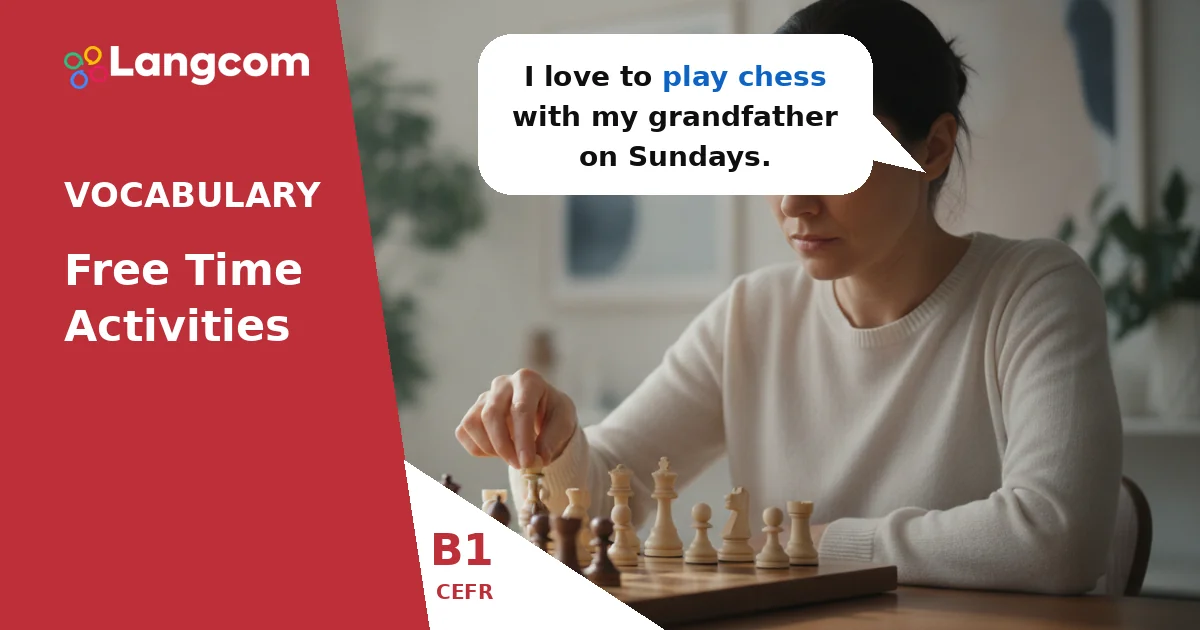
- I love to play chess with my grandfather on Sundays.
- Last summer, we went camping in the mountains.
- She does photography as a hobby and takes amazing pictures.
- He is a talented musician; he plays the guitar and the piano.
- My sister enjoys cooking new recipes every weekend.
- Many people go cycling to stay fit and explore nature.
- Doing volunteering can be a very rewarding free time activity.
Esercitazione
Sei pronto a ottenere il tuo certificato?
Il corso Langcom prepara gli studenti agli esami Cambridge, IELTS, TOEFL, DELE, SIELE e Michigan.
Inizia a utilizzare LangcomErrori comuni per chi parla spagnolo
Be careful with the verbs do, play, e go:
-
Non utilizzare make for hobbies or sports. For example, say I do sports, not I make sports.
-
Ricordati di usare go with activities ending in -ing. For example, say I go cycling, not I play cycling.
-
When talking about musical instruments, use play the. Ad esempio, She plays the piano, not She plays piano.
Domande frequenti
What is a hobby?
A hobby is an activity you enjoy doing regularly in your free time, usually for pleasure and relaxation, not for money. Examples include reading, gardening, oppure playing music.
How can I talk about my hobbies in English?
Si può dire che My hobby is..., I like to..., I enjoy..., oppure I'm interested in... For example, My hobby is photography oppure I enjoy cooking.
Are hobbies important for the B1 Preliminary exam?
Yes, talking about hobbies and free time activities is a common topic in the B1 Preliminary Speaking and Writing parts. You might describe your hobbies or discuss their importance.
Can I have more than one hobby?
Absolutely! Many people have several hobbies. You can enjoy different activities at different times or seasons.

0 Commenti