
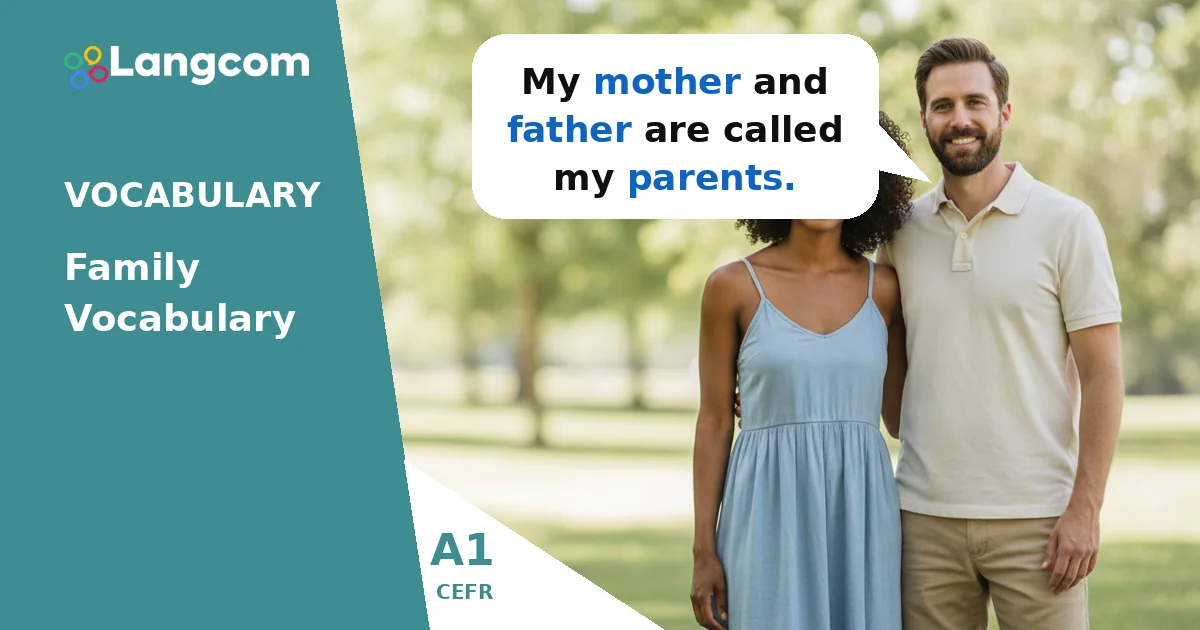

Chi fa parte della tua famiglia stretta?
La tua famiglia stretta comprende i tuoi parenti più vicini. Si tratta delle persone con cui di solito vivi o che vedi molto spesso.
- Il tuo mother è tua madre. Her name is Maria.
- Il tuo father è tuo padre. My father likes to read.
- Il tuo parents sono i tuoi mother e father insieme. My parents are very kind.
- A son è un bambino. They have one son.
- A daughter è una bambina. She is their daughter.
- Il tuo children sono i tuoi sons e daughters. I have two children.
- A brother è un fratello. Do you have a brother?
- A sister è una sorella. My sister is older than me.
🎓 Impara l'inglese con il metodo misto
Piccoli gruppi · Tutor IA disponibile 24 ore su 24, 7 giorni su 7 · Preparazione agli esami di Cambridge
Piani da $39 $79 al mese
E i coniugi dei tuoi genitori?
Queste parole indicano le persone sposate.
- A husband è un uomo sposato. He is her husband.
- A wife è una donna sposata. My wife works in a hospital.
Come si parla della famiglia allargata?
La famiglia allargata comprende altri parenti, come i genitori dei tuoi genitori o i fratelli e le sorelle dei tuoi genitori.
- Il tuo grandfather è il tuo mother's father oppure il tuo father's father. My grandfather is 80 years old.
- Il tuo grandmother è il tuo mother's mother oppure il tuo father's mother. My grandmother loves to cook.
- Il tuo grandparents sono i tuoi grandfathers e grandmothers. I visit my grandparents every Sunday.
- Un aunt è il tuo mother's sister oppure il tuo father's sister. My aunt lives in another city.
- Un uncle è il tuo mother's brother oppure il tuo father's brother. My uncle is a doctor.
- A cousin è il figlio del tuo aunt oppure uncle. I have many cousins.
Come chiedere informazioni sulla famiglia?
Puoi usare domande semplici per chiedere informazioni sulla famiglia di qualcuno.
- Per chiedere informazioni sui fratelli: Do you have any brothers or sisters?
- Per chiedere informazioni sui genitori: Are your parents well?
- Per chiedere informazioni sui bambini: Do you have any children?
- Per chiedere informazioni sul coniuge: Is your husband/wife here?
| Membro della famiglia | Relazione |
|---|---|
| Mother | Female parent |
| Father | Male parent |
| Parents | Mother and father |
| Son | Male child |
| Daughter | Female child |
| Children | Sons and daughters |
| Brother | Male sibling |
| Sister | Female sibling |
| Husband | Married man |
| Wife | Married woman |
| Grandfather | Parent's father |
| Grandmother | Parent's mother |
| Grandparents | Grandfather and grandmother |
| Aunt | Parent's sister |
| Uncle | Parent's brother |
| Cousin | Child of an aunt or uncle |
Esempi
- My mother and father are called my parents.
- I have one brother and one sister.
- She has two children: a son and a daughter.
- My aunt and uncle are coming to visit.
- He is my cousin, the son of my father's sister.
- My grandparents live in a big house.
- Her husband is very tall.
- My wife and I like to travel.
Esercitazione
💬 Hai bisogno di una consulenza personalizzata?
In qualità di Centro autorizzato di preparazione agli esami Cambridge, possiamo aiutarti a scegliere il corso e la certificazione più adatti alle tue esigenze. Contatta oggi stesso i nostri consulenti.
Chatta con un consulente su WhatsAppErrori comuni per chi parla spagnolo
Errori comuni per chi parla spagnolo
- Confondere i termini 'genitori' e 'parenti': In spagnolo, 'parientes' significa 'parenti'. Ma in inglese, parents significa semplicemente mother e father. Non dire My parents are my aunt and uncle. Diciamo My relatives are my aunt and uncle.
- L'uso del termine 'bambino' per gli adulti: In spagnolo, il termine 'hijo/a' può riferirsi a un figlio o a una figlia adulti. In inglese, child di solito si riferisce a una persona giovane. Per gli adulti, usa son oppure daughter. Non dire My child is 30 years old. Diciamo My son/daughter is 30 years old.
- Genere del termine 'Cousin': In spagnolo, 'primo/prima' varia a seconda del genere. In inglese, cousin si usa sia per gli uomini che per le donne. Non dire He is my male cousin. Basta dire He is my cousin.
Domande frequenti
Qual è la differenza tra 'mother' e 'mom'?
Mother è il termine formale. Mom è un'espressione informale e comune nel linguaggio quotidiano, soprattutto nell'inglese americano. Entrambe si riferiscono alla stessa persona.
Come si dice 'i miei genitori' in inglese?
Tu dici my parents. Questa parola si riferisce sia al tuo mother e il tuo father.
Il termine 'bambini' può riferirsi anche a figli e figlie adulti?
No, children di solito si riferisce ai giovani. Per i figli e le figlie adulti, usa sons e daughters, oppure adult children if you need to specify.
What is a 'sibling'?
A sibling is a formal word for a brother oppure un sister. You can say I have two siblings anziché I have one brother and one sister.

0 Commenti