
par Raúl | Sep 16, 2026 | B1 Anglais intermédiaire
The word news is always an uncountable noun in English. This means it always takes a singular verb, like is or was, and you cannot use a or an before it. You also cannot make news plural by adding -s. To talk about one specific item of news, we use phrases like a...

par Raúl | Sep 16, 2026 | B1 Anglais intermédiaire
To sound polite in English, pay close attention to your intonation – the rise and fall of your voice. Using the correct intonation can make a big difference in how your message is received. For questions and requests, a rising intonation often sounds softer and more...

par Raúl | Sep 16, 2026 | B1 Anglais intermédiaire
Quantifiers are words that tell us about the quantity or amount of something. They answer questions like ‘How much?’ or ‘How many?’. Knowing how to use quantifiers correctly is essential for clear communication in English, especially at B1...

par Raúl | Sep 16, 2026 | B1 Anglais intermédiaire
Many English verbs need a specific preposition to complete their meaning. These combinations are fixed, meaning you must learn the verb and its preposition together as a single unit. For example, we always say listen to, not just listen, when talking about hearing...

par Raúl | Sep 16, 2026 | B1 Anglais intermédiaire
Learning the names of common buildings in English is essential for B1 learners to describe their surroundings, ask for directions, and understand everyday conversations. Knowing words like hospital, cinema, and train station helps you navigate cities and talk about...
par Raúl | Sep 16, 2026 | B1 Anglais intermédiaire
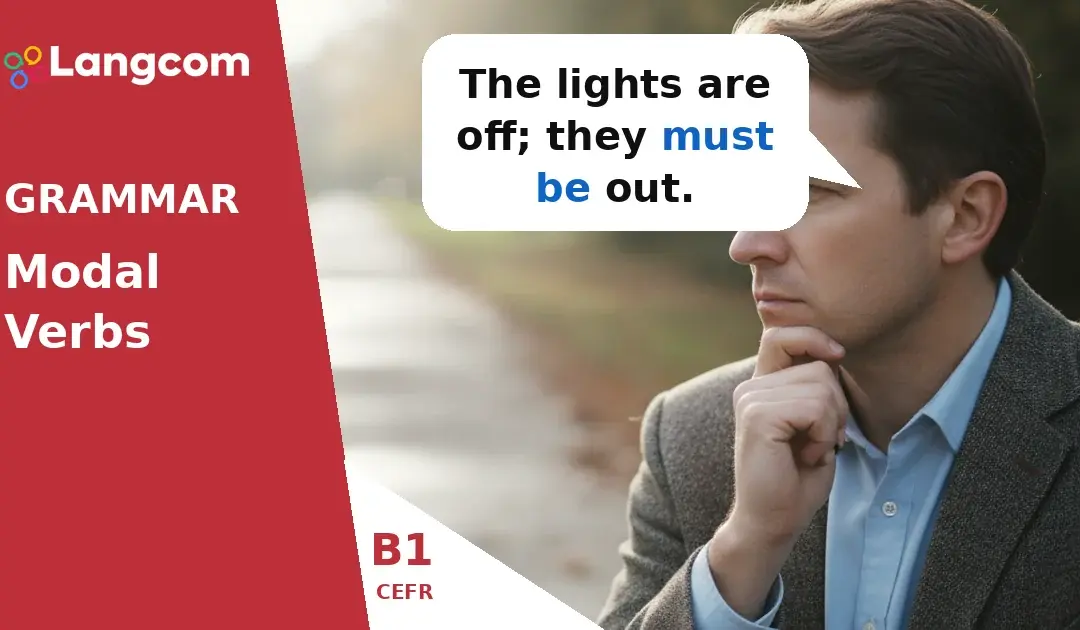
Modals of deduction help us make educated guesses or conclusions about situations when we are not 100% sure. They allow you to express how certain you are about something happening now or in the future. We use must when we are almost certain something is true, based...
