
par Raúl | Juil 20, 2026 | Anglais de base A2
When you speak English naturally, words often join together. This is called connected speech. It happens especially when a word ends with a consonant sound and the next word starts with a vowel sound. Instead of a pause, the sounds link, making your speech smoother...
par Raúl | Juil 20, 2026 | Anglais pour enfants : niveau pré-A1 (débutants)
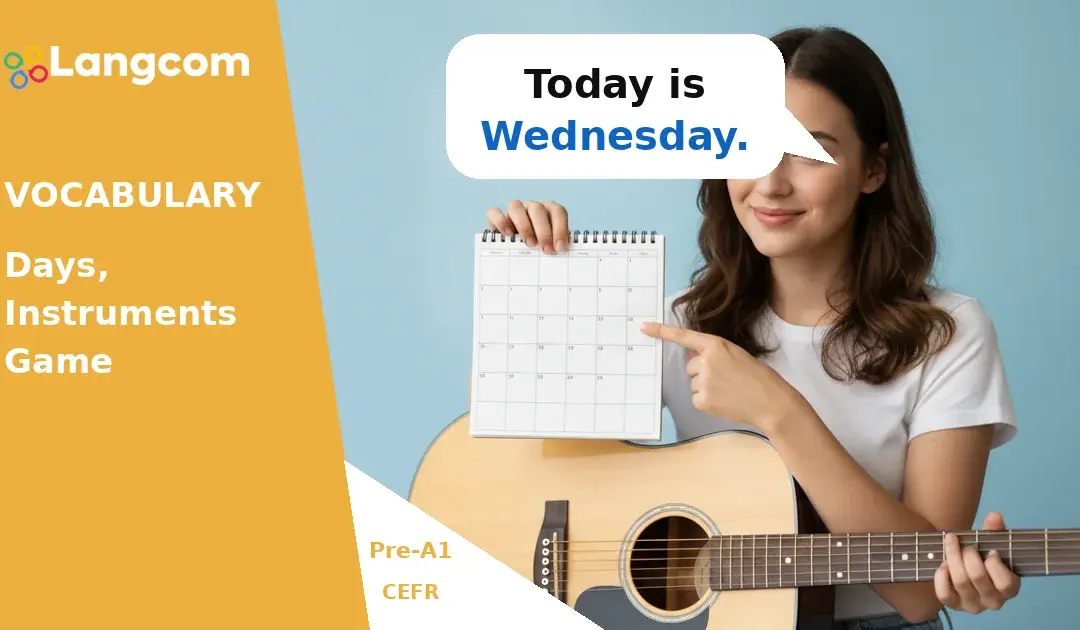
Learning the days of the week and common musical instruments is a fantastic first step in your English journey. These words are very important for everyday communication. Knowing the days helps you talk about your schedule, make plans, and understand when things...
par Raúl | Juil 20, 2026 | Anglais pour enfants : niveau pré-A1 (débutants)
The days of the week are seven important words you use every day to talk about time and plan your activities. Learning Monday, Tuesday, Wednesday, Thursday, Friday, Saturday, and Sunday is a basic and essential step in English. These words help you understand...
par Raúl | Juil 20, 2026 | Anglais pour enfants : niveau pré-A1 (débutants)
You use can to talk about abilities. This means things you know how to do or things that are possible for you. For example, if you know how to swim, you say I can swim. If you don’t know how to swim, you say I can’t swim. Can is a special verb called a...
par Raúl | Juil 20, 2026 | Anglais pour enfants : niveau pré-A1 (débutants)
The seven days of the week in English are Monday, Tuesday, Wednesday, Thursday, Friday, Saturday, and Sunday. These words are fundamental for talking about time and scheduling. It is very important to always write the days of the week with a capital letter at the...
