

What is a TV Programme?
A TV programme is any show or broadcast you watch on television. We use this general word for everything from movies to news reports.
In British English, we say programme. In American English, people often say program.
✍️ Vous ne savez pas quel est votre niveau ?
Passez notre test de niveau gratuit et recevez des commentaires personnalisés de la part d'examinateurs certifiés par Cambridge.
Passez notre test de niveau GRATUITPopular Types of TV Programmes
Here are some common types of TV programmes you should know:
- An advert (short for advertisement) or commercial: This is a very short film that tries to sell you something. Adverts usually appear between programmes.
- A cartoon: This is an animated programme, often for children, with drawings or computer-generated images.
- A chat show (also called a talk show): In this programme, a host interviews famous people or discusses interesting topics with guests.
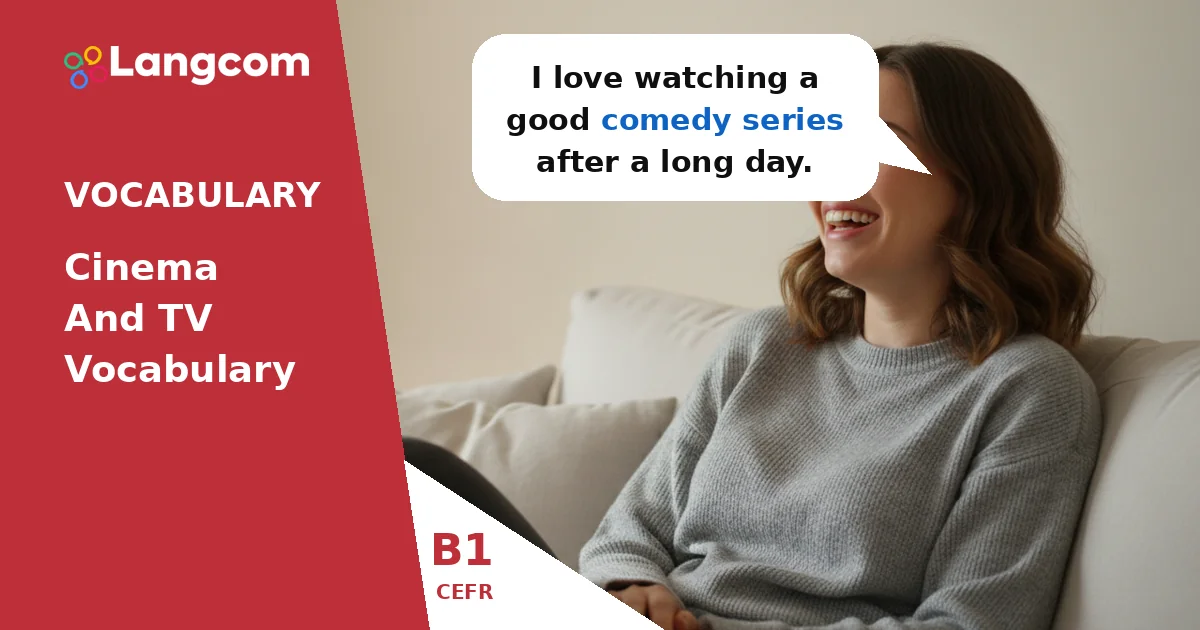
- A comedy series: This is a programme with funny stories and characters, usually with different episodes each week.
- A cooking show: This programme teaches you how to prepare food. Chefs often share recipes and cooking tips.
- A quiz show: In this programme, people answer questions to win prizes. It tests their knowledge.
- A reality show: This programme follows the lives of real people, often in unusual situations, without a script.
- Sports: This refers to programmes that show sports events, like football matches or tennis games.
- The news: This programme tells you about important recent events happening in the world.
- A wildlife documentary: This programme shows facts and information about animals and nature.
What is a Series?
A series is a set of TV programmes that tell a continuous story or have the same characters. Each part is called an episode.
- A new series of my favourite comedy starts next month.
- How many episodes are there in this series?
Le mot series is both singular and plural. For example, one series, two series.
Talking About TV and Other Media
Here are some useful phrases and related words:
- À watch TV: This means to look at and listen to programmes on television.
- On TV: This means something is being broadcast on a television channel.
- Online: Many people now watch programmes online using streaming services or websites.
- Cinema: This is a place where you go to watch films (British English) or movies (American English) on a big screen.
- Theatre: This is a building where people watch plays (live performances with actors).
| Programme Type | Description |
|---|---|
| Advert | A short film that tries to sell something. |
| Cartoon | An animated programme, often for children. |
| Chat show | A programme where a host interviews guests. |
| Comedy series | A programme with funny stories and characters. |
| Cooking show | A programme that teaches you how to prepare food. |
| Quiz show | A programme where people answer questions to win prizes. |
| Reality show | A programme following the unscripted lives of real people. |
| Sports | Programmes showing sports events. |
| The news | A programme reporting on recent events. |
| Wildlife documentary | A programme about animals and nature. |
Exemples
- I love watching a good comedy series after a long day.
- My favourite cooking show always inspires me to try new recipes.
- Did you see the news this morning? There was an interesting report.
- Children often enjoy cartoons with colourful characters.
- I find reality shows a bit boring because they are not real stories.
- The wildlife documentary about lions was absolutely fascinating.
- There are too many adverts during the film!
- My parents prefer going to the theatre to see a play than watching TV.
Entraînement
Prêt à obtenir votre certificat ?
Le cours Langcom prépare les étudiants aux examens de Cambridge, IELTS, TOEFL, DELE, SIELE et Michigan.
Commencez avec LangcomErreurs courantes chez les hispanophones
Erreurs courantes chez les hispanophones
- 'Programme' vs 'Program': In British English, used for the B1 Preliminary exam, we use programme (with -mme) for TV shows. Program (with -m) is American English or refers to computer code.
- 'Series' (singular and plural): In English, series is both singular and plural. Do not add '-es' to make it plural. For example, one series, two series.
- 'Watching TV' vs 'Seeing TV': In Spanish, you say 'ver la tele'. In English, we always use watch TV, not 'see TV'. For example, I watch TV every evening. (NOT: I see TV every evening.)
- 'Documental' vs 'Documentary': The English word is documentary.
- 'Advert' vs 'Advertisement' vs 'Commercial': All are correct, but advert is common in British English. Commercial is also very common, especially in American English.
Questions fréquemment posées
What is the difference between a 'series' and a 'season'?
A series is the complete collection of programmes with the same story or characters. A season (American English) or series (British English) refers to one set of episodes broadcast in a particular period, usually once a year. So, in British English, you might say series one, series two, etc.
Can I use 'movie' for a TV programme?
Generally, a movie (American English) or film (British English) refers to a production made for the cinema. However, sometimes a film can be shown on TV, or a TV movie is made specifically for television.
How is this vocabulary useful for the B1 Preliminary (PET) exam?
This vocabulary is very useful for the B1 Preliminary exam, especially in the Speaking and Writing parts. You might need to describe your favourite TV programmes, talk about your viewing habits, or discuss different types of entertainment. For example, in Speaking Part 2, you might have to describe a picture related to TV or cinema.
What is the difference between a 'chat show' and a 'quiz show'?
A chat show focuses on conversations and interviews with guests, often celebrities. A quiz show focuses on contestants answering questions to win prizes, testing their general knowledge or specific skills.




0 commentaire