

How Do We Talk About Sports in English?
In English, we often use three main verbs to talk about sports and exercise: play, do, y go. Choosing the correct verb is important for sounding natural.
Each verb has a general rule for the types of activities it combines with. Let’s look at them one by one.
🎓 Aprende inglés con el método mixto
Grupos reducidos · Tutor de IA disponible las 24 horas del día, los 7 días de la semana · Preparación para los exámenes de Cambridge
Planes de $39 $79 al mes
When Do We Use 'Play'?
Utilizamos play for team sports, ball sports, or competitive games.
- Uso play with sports where you usually need a ball or play against other people.
- These are often competitive games.
Ejemplos:
- play football
- play basketball
- play tennis
- play badminton
When Do We Use 'Do'?
Utilizamos do for individual activities, non-team sports, martial arts, or general exercise.
- Uso do for activities that are often individual or focus on exercise and fitness.
- These activities usually do not involve a ball or a team.
Ejemplos:
- do yoga
- do gymnastics
- do karate
- do exercise
When Do We Use 'Go'?
Utilizamos go for activities that end in -ing. These are often activities you do outdoors or that involve movement from one place to another.
- Uso go with many activities that involve continuous movement.
- The activity itself is often a verb ending in -ing.
Ejemplos:
- go swimming
- go running
- go cycling
- go skiing
- go skating
What About Other Verbs for Exercise?
Some activities use their own specific verbs, not play, do, o go.
- For activities with a bike or a horse, we use ride. Por ejemplo, ride a bike o ride a horse.
- For the activity of moving rhythmically to music, we use the verb dance. Por ejemplo, dance salsa o dance at a party.
| Verbo | Type of Activity | Ejemplos |
|---|---|---|
| Play | Team sports, ball sports, competitive games | football, tennis, badminton |
| Do | Individual activities, martial arts, general exercise | yoga, gymnastics, karate |
| Go | Activities ending in -ing (often outdoors/movement) | swimming, running, skiing, skating |
Ejemplos
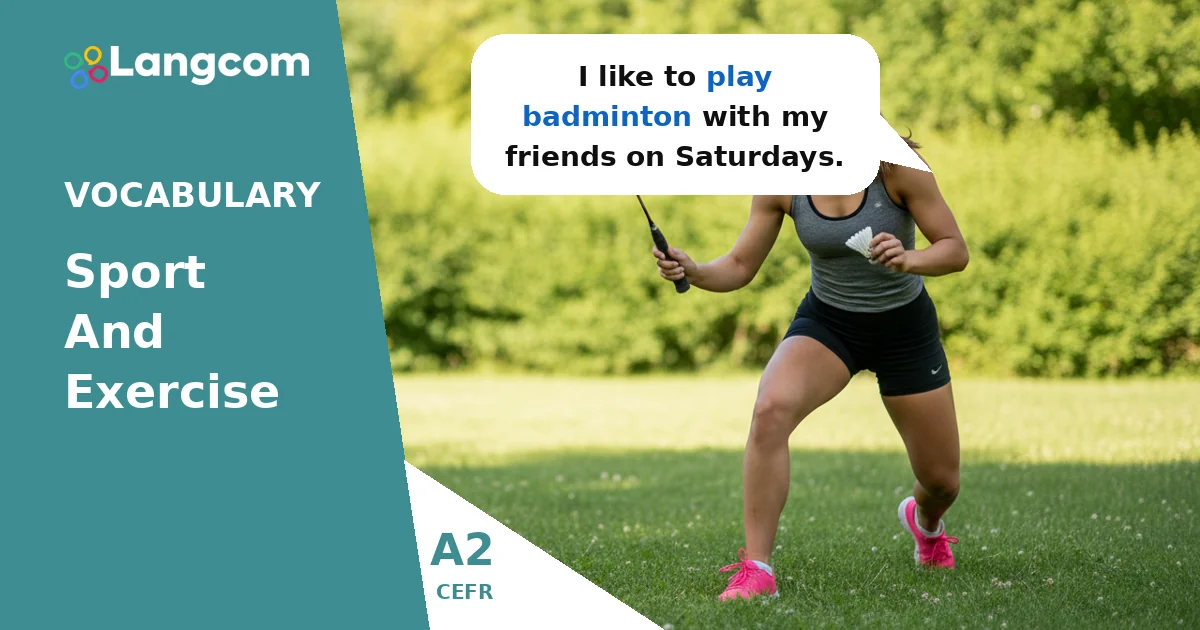
- I like to play badminton with my friends on Saturdays.
- She does yoga every morning to relax.
- We often go skiing in the mountains in winter.
- He loves to ride his bike in the park.
- They go skating at the ice rink every week.
- My sister wants to learn to dance.
- Do you want to play football this afternoon?
Práctica
💬 ¿Necesitas asesoramiento personalizado?
Como centro autorizado de preparación para los exámenes de Cambridge, podemos orientarte para que elijas el curso y la certificación más adecuados. Habla hoy mismo con nuestros asesores.
Chatea con un asesor por WhatsAppErrores habituales de los hispanohablantes
Using 'Do' for all activities
A common mistake for Spanish speakers is to use do for many sports, similar to 'hacer' in Spanish. However, English uses specific verbs.
- Incorrecto: I do football.
- Correcto: I play football.
- Incorrecto: She does swimming.
- Correcto: She goes swimming.
Remember to use play for ball/team sports, do for individual exercise, and go para -ing activities.
Preguntas más frecuentes
Can I say 'do sport'?
Sí, se puede decir do sport as a general phrase, meaning to participate in sports. However, when talking about a specific sport, it's better to use play, do, o go. Por ejemplo, I do sport every weekend is correct, but I play football is more specific than I do football.
What about 'run' or 'swim'?
Run y swim are verbs themselves. You can say I run every day o I swim in the sea. Sin embargo, go running y go swimming are also very common collocations, meaning to go somewhere specifically to do that activity. For example, Let's go swimming!
Is it 'do a bike' or 'ride a bike'?
The correct phrase is ride a bike. We use the verb ride for things you sit on and control, like a bicycle or a horse. We do not use do for this activity.




0 Comentarios