

What is a Beach?
A beach is a sandy or stony area next to the sea or a lake. People go to the beach to relax, swim, or play.
- We are going to the beach today.
- The beach is very sunny.
🎓 Aprende inglés con el método mixto
Grupos reducidos · Tutor de IA disponible las 24 horas del día, los 7 días de la semana · Preparación para los exámenes de Cambridge
Planes de $39 $79 al mes
What is Sand?
Sand is the very small, loose grains of rock found on a beach. It is soft and yellow or white.
- I like to walk on the warm sand.
- Children build castles with sand.
What are Waves?
Waves are lines of water that move across the surface of the sea. They come to the beach and go back.
- The waves are big today.
- I like to listen to the sound of the waves.
What are Rocks?
Rocks are large, hard pieces of stone. You can find rocks on the beach or in the sea.
- Be careful, there are many rocks in the water.
- The small fish hide under the rocks.
What is a Cliff?
A cliff is a high, steep rock face, often by the sea. It is a tall wall of rock.
- The house is on top of a high cliff.
- We can see the sea from the cliff.
What is a Path?
A path is a narrow way made by people walking. It can lead to the beach or along the coast.
- Follow the path to the beach.
- The path goes along the cliff.
What is a Flag?
A flag is a piece of cloth with a special design, often on a pole. On a beach, a flag can show if it is safe to swim.
- There is a red flag on the beach today, so no swimming.
- The flag is waving in the wind.
| English Word | Simple Meaning |
|---|---|
| Beach | A sandy or stony area next to the sea. |
| Sand | Tiny grains of rock found on a beach. |
| Waves | Moving lines of water in the sea. |
| Rocks | Hard pieces of stone. |
| Cliff | A high, steep rock wall, often by the sea. |
| Path | A narrow way for walking. |
| Flag | A piece of cloth on a pole, often showing safety on a beach. |
Ejemplos
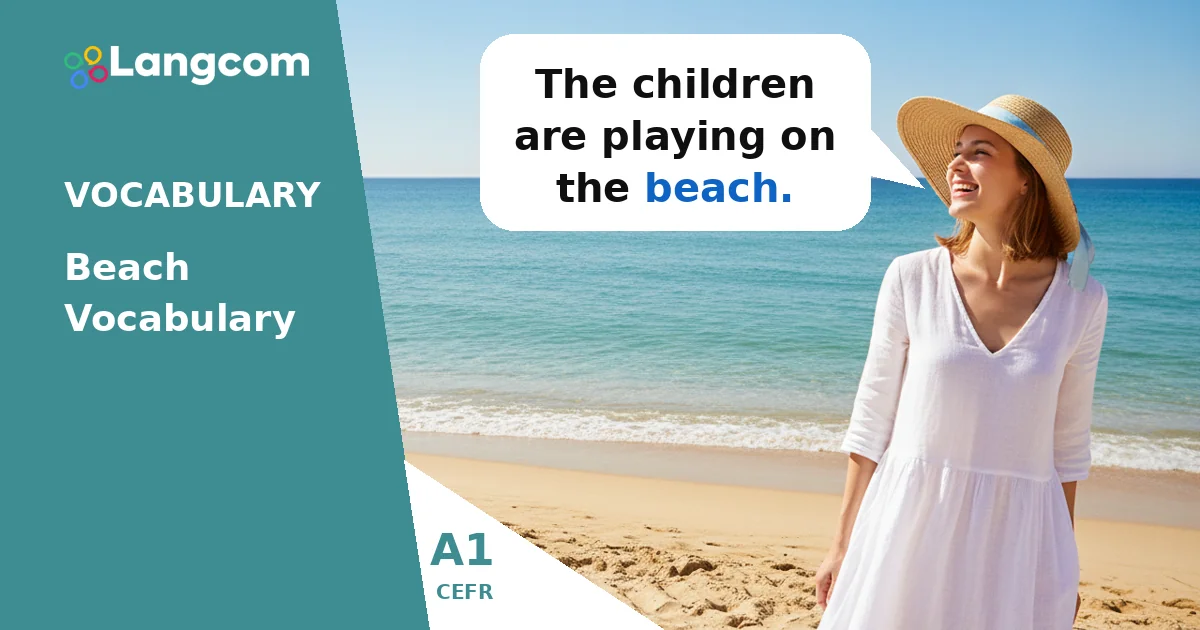
- The children are playing on the beach.
- I love the feeling of sand between my toes.
- The waves are perfect for surfing.
- We found some interesting rocks near the water.
- The view from the top of the cliff is amazing.
- Is there a path to the lighthouse?
- The green flag means it is safe to swim.
Práctica
💬 ¿Necesitas asesoramiento personalizado?
Como centro autorizado de preparación para los exámenes de Cambridge, podemos orientarte para que elijas el curso y la certificación más adecuados. Habla hoy mismo con nuestros asesores.
Chatea con un asesor por WhatsAppErrores habituales de los hispanohablantes
Confusing 'Beach' and 'Coast'
In Spanish, you might use 'costa' for both. In English:
- Beach: This is the specific sandy or stony area where you sit and swim. I am on the beach. (Correct)
- Coast: This is the general area where the land meets the sea. It can include beaches, cliffs, and towns. The coast is beautiful. (Correct)
Using 'Sand' as a Countable Noun
Sand is usually uncountable in English. Do not say a sand o many sands.
- I like the sand. (Correct)
- There is a lot of sand here. (Correct)
Preguntas más frecuentes
Why is it important to learn beach vocabulary?
Learning these words helps you talk about holidays, nature, and describe places by the sea. It makes your English more complete for everyday conversations.
Are these words only for the sea?
Mostly, yes. Words like beach, waves, y cliff are strongly connected to the sea. However, you can find sand y rocks in other places too, and a path can be anywhere.
How can I remember these new words?
Try to imagine the word when you hear it. Look at pictures, or if you are near a beach, point to the sand o waves and say the English word. Practice with the exercise and use them in simple sentences.




0 Comentarios