

What Are the Main Meals in English?
In English, we have three main meals every day. Each meal has a special name.
-
Breakfast: This is the first meal of the day. We eat breakfast in the morning.
-
Lunch: This is the meal in the middle of the day. We usually eat lunch around noon or early afternoon.
-
Dinner: This is the last meal of the day. We eat dinner in the evening.
Sometimes, people also say supper for the evening meal, but dinner is more common.
🎓 Aprende inglés con el método mixto
Grupos reducidos · Tutor de IA disponible las 24 horas del día, los 7 días de la semana · Preparación para los exámenes de Cambridge
Planes de $39 $79 al mes
How Do We Talk About Eating Meals?
To talk about eating a meal, we usually use the verb have. This is a very common way to speak in English.
-
We say have breakfast.
-
We say have lunch.
-
We say have dinner.
Remember to use have for all three main meals. For example, I have breakfast every day.
How Do We Say Meal Times?
When you want to say the time of your meal, use the preposition at before the time.
-
For example, I have breakfast at seven o'clock.
-
Or, She has lunch at one PM.
You can use exact times like seven o'clock o one thirty. You can also use AM for morning and PM for afternoon/evening.
| Meal Name | Typical Time | Example Sentence |
|---|---|---|
| Breakfast | Morning (e.g., 7 AM - 9 AM) | I have breakfast at eight o'clock. |
| Lunch | Midday (e.g., 12 PM - 2 PM) | She has lunch at one PM. |
| Dinner | Evening (e.g., 6 PM - 9 PM) | We have dinner at seven thirty. |
Ejemplos
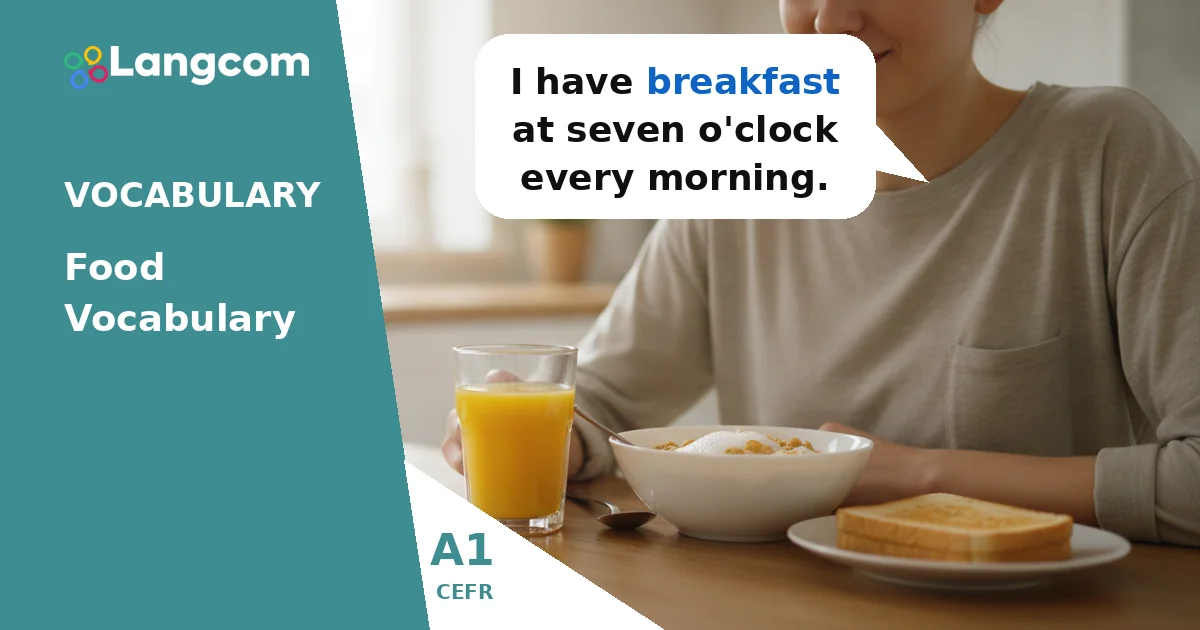
- I have breakfast at seven o'clock every morning.
- She has lunch with her friends at twelve thirty.
- We usually have dinner at eight PM.
- What time do you have breakfast?
- They have dinner late on weekends.
Práctica
💬 ¿Necesitas asesoramiento personalizado?
Como centro autorizado de preparación para los exámenes de Cambridge, podemos orientarte para que elijas el curso y la certificación más adecuados. Habla hoy mismo con nuestros asesores.
Chatea con un asesor por WhatsAppErrores habituales de los hispanohablantes
Common Mistakes with Meal Vocabulary
Many English learners make small mistakes with meal vocabulary. Here are some common ones to avoid:
-
Using 'eat' instead of 'have': Aunque eat is not wrong, have is more natural and common for talking about meals.
❌ I eat breakfast.
✅ I have breakfast. -
Missing 'at' for time: Utiliza siempre at before a specific time.
❌ We have dinner seven o'clock.
✅ We have dinner at seven o'clock. -
Using 'the' before meal names: We usually do not use the antes de breakfast, lunch, o dinner.
❌ I have the lunch.
✅ I have lunch.
Preguntas más frecuentes
What is the difference between breakfast, lunch, and dinner?
Breakfast is the first meal in the morning. Lunch is the meal in the middle of the day. Dinner is the last meal in the evening.
Can I use 'eat' instead of 'have' for meals?
Sí, puedes usar eat, pero have is more common and natural in English when talking about the whole meal. For example, I have breakfast is more typical than I eat breakfast.
Do I need 'the' before meal names?
No, usually we do not use the antes de breakfast, lunch, o dinner. You simply say have breakfast, have lunch, etc.
How do I ask about someone's meal time?
You can ask: What time do you have breakfast? o When do you usually have dinner?



0 Comentarios