

Why is ‘Going To’ Pronunciation Important?
Learning how to pronounce going to correctly is very important for English learners.
- It helps you understand native speakers better, especially when they speak quickly.
- It makes your own English sound more natural and fluent.
- It prepares you for listening and speaking tasks in exams like the A2 Key.
✍️ ¿No sabes en qué nivel estás?
Realiza nuestra prueba de nivel gratuita y recibe comentarios personalizados de examinadores certificados por Cambridge.
Realice nuestra prueba de nivel GRATUITAThe Full Pronunciation of 'Going To'
The full pronunciation of going to is clear and distinct. You say each word separately.
- It sounds like 'go-ing too'.
- The phonetic symbol is /ˈɡoɪŋ tuː/.
- We use this pronunciation when we want to be very clear, speak slowly, or in more formal situations.
For example, if you are giving instructions, you might say: You are going to turn left at the corner.
The Reduced Pronunciation: 'Gonna'
In everyday, informal English, going to is often reduced to gonna.
- It sounds like 'gon-na'.
- The phonetic symbol is /ˈɡɒnə/.
- This is a very common sound in natural, fast speech.
Many native speakers use gonna without even thinking about it. It makes sentences flow more smoothly.
Recuerda que, gonna is for speaking only. Do not write gonna in formal essays or emails.
When to Use Each Pronunciation?
Choosing between the full and reduced pronunciation depends on the situation.
- Use the full pronunciation (going to) when:
- You are speaking slowly and carefully.
- You are in a formal setting (e.g., a presentation).
- You want to emphasize the words.
- Use the reduced pronunciation (gonna) when:
- You are having a casual conversation with friends or family.
- You are speaking at a normal, fast pace.
- You want to sound more natural.
| Full Pronunciation | Reduced Pronunciation |
|---|---|
| going to | gonna |
| /ˈɡoɪŋ tuː/ | /ˈɡɒnə/ |
| Used for: Clear, slow speech, formal situations | Used for: Fast, informal conversations |
| Ejemplo: I am going to study. | Ejemplo: I'm gonna study. |
Ejemplos
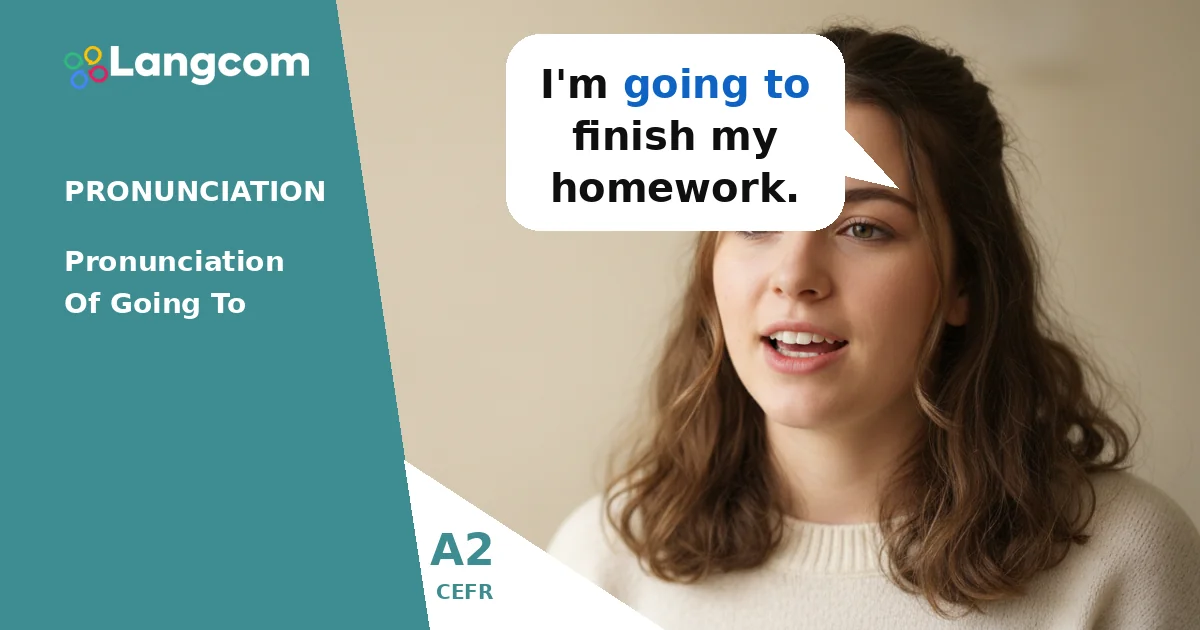
- I'm going to finish my homework. (Full, clear)
- I'm gonna finish my homework. (Reduced, natural)
- Are you going to the party tonight? (Full, clear)
- Are you gonna go to the party tonight? (Reduced, natural)
- She is not going to like that. (Full, clear)
- She's not gonna like that. (Reduced, natural)
Práctica
¿Estás listo para obtener tu certificado?
El curso Langcom prepara a los alumnos para los exámenes de Cambridge, IELTS, TOEFL, DELE, SIELE y Michigan.
Empieza a utilizar LangcomErrores habituales de los hispanohablantes
Errores habituales de los hispanohablantes
Spanish speakers sometimes make specific mistakes with going to pronunciation:
- Over-pronouncing 'to': In Spanish, vowels are often very clear. English 'to' is often reduced to a weak sound, like /tə/. No digas /tuː/ too strongly in natural speech.
- Not recognizing 'gonna': Many learners only learn the full going to. When native speakers use gonna, it can be hard to understand. Practice listening for gonna.
- Using 'gonna' in writing: Recuerda que, gonna is for speaking only. Always write going to in written English, unless you are writing dialogue in a very informal context.
Preguntas más frecuentes
What are the two main ways to say 'going to'?
The two main ways are the full, clear pronunciation /ˈɡoɪŋ tuː/ and the reduced, faster pronunciation /ˈɡɒnə/, which sounds like gonna.
Is 'gonna' correct English?
Gonna is correct and very common in spoken, informal English. However, it is not used in formal writing. Always write going to.
How can I practice this pronunciation for the A2 Key exam?
For the A2 Key speaking test, practice using both the full going to and the reduced gonna naturally in your answers. Listen to English speakers in movies and podcasts to hear how they use it. Try to imitate them. This will help you sound more natural and improve your fluency, which is important for the speaking tasks.
Should I always use 'gonna' when speaking?
No, you should not always use gonna. Use the full going to when you want to speak clearly, slowly, or in formal situations. Use gonna for fast, informal conversations to sound more natural.



0 Comentarios