
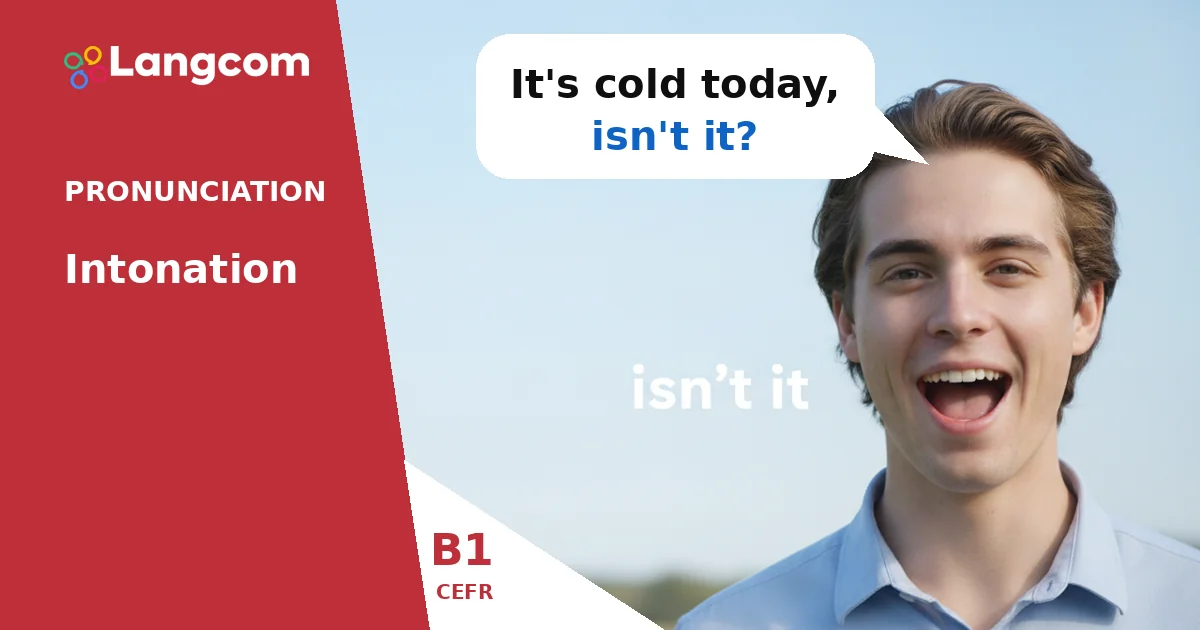

The way your voice goes up or down at the end of a question tag changes its meaning. If your voice goes down (falling intonation), you are usually checking information you already believe is true, and you expect the other person to agree. For example, in “It’s a beautiful day, isn’t it?” with falling intonation, you are saying, “I think it’s a beautiful day, and I’m sure you agree.”
If your voice goes up (rising intonation), you are asking a real question because you are not sure about the information. You genuinely want to know the answer. For instance, if you say “You haven’t seen my keys, have you?” with rising intonation, you are truly asking if the person has seen your keys. Understanding this difference helps you communicate your intentions clearly in English.
What Are Question Tags?
Question tags are short questions at the end of a statement. We use them to ask for confirmation or to check information.
- They usually have an auxiliary verb (like be, have, do, can) and a pronoun.
- If the main statement is positive, the question tag is negative. Example: “You like coffee, don’t you?”
- If the main statement is negative, the question tag is positive. Example: “She isn’t here, is she?”
The pronunciation of the question tag, specifically the intonation, is very important for its meaning.
🎓 Learn English with the Blended method
Small groups · 24/7 AI Tutor · Cambridge preparation
Plans from $39 $79 per month
When Does Your Voice Go Down? (Falling Intonation)
When your voice goes down at the end of a question tag, it means you are quite sure about the information. You are not really asking a question; you are inviting the other person to agree with you.
- You expect the answer to be "yes" or agreement.
- It's like saying, "I know this is true, and you know it too, right?"
- This is common in casual conversation when you want to confirm something or make small talk.
When Does Your Voice Go Up? (Rising Intonation)
When your voice goes up at the end of a question tag, it means you are asking a real question. You are not sure about the information and you genuinely want to know the answer.
- You do not know the answer and want the other person to tell you.
- It's like saying, "Is this true? Please tell me."
- This is used when you need new information or clarification.
Practice with Intonation
Now that you understand the difference, listen carefully to how native speakers use intonation in question tags. Pay attention to whether their voice goes up or down at the end. This will help you to not only understand their meaning but also to sound more natural when you speak English.
Examples
- It's cold today, isn't it? (Falling intonation: You expect agreement, you think it's cold.)
- You live in Madrid, don't you? (Falling intonation: You think they live in Madrid and want confirmation.)
- She can swim, can't she? (Falling intonation: You believe she can swim and are just checking.)
- You haven't finished your homework, have you? (Rising intonation: You genuinely want to know if they finished.)
- He's coming to the party, isn't he? (Rising intonation: You are unsure if he is coming and need to know.)
- They won't be late, will they? (Rising intonation: You are worried they might be late and are asking for reassurance.)
Practice
✍️ Not sure which level you are?
Take our free placement test and get personalized feedback from certified Cambridge examiners.
Take our FREE Placement TestCommon mistakes for Spanish speakers
Spanish speakers sometimes use question tags with only one type of intonation, or they might translate directly from Spanish expressions like "¿verdad?" or "¿no?" without considering the English nuance.
- Mistake: Always using rising intonation, even when you expect agreement. This can make you sound uncertain or constantly asking for new information, even when you just want to confirm something obvious.
- Correction: Remember to use falling intonation when you are confident and want agreement, like in "The food was delicious, wasn't it?" (voice goes down).
- Mistake: Not changing intonation at all, making the question tag sound flat. This can make your speech sound unnatural or even a bit rude, as it lacks the natural rhythm of English.
- Correction: Practice the rise and fall. Think about the meaning you want to convey: certainty/agreement (down) or uncertainty/real question (up).
Frequently asked questions
Why is intonation important in question tags?
The intonation in a question tag tells the listener if you are asking a real question or just checking information you already believe. It changes the meaning and your intention.
How can I practice intonation in question tags?
Listen to native English speakers in movies, TV shows, or podcasts. Pay close attention to their voices when they use question tags. Try to imitate them. You can also record yourself and compare it to a native speaker.
Does intonation in question tags affect formality?
Not directly, but using the correct intonation makes your speech sound more natural and appropriate for the context. Misusing it might make you sound less confident or unintentionally rude, regardless of formality.
Are there any exceptions to these intonation rules?
Generally, these rules cover most situations. However, sometimes speakers might use rising intonation for emphasis or surprise, even when they expect agreement. But for B1 level, focusing on the main two rules (falling for confirmation, rising for real questions) is the most important.

0 Comments