

What Are Film and TV Genres?
A genre is a category for films, TV shows, books, or music. It describes the style or type of story. For example, a story that makes you laugh is a comedy.
Knowing different genres helps you choose what to watch. It also helps you talk about your preferences clearly in English.
🎓 Learn English with the Blended method
Small groups · 24/7 AI Tutor · Cambridge preparation
Plans from $39 $79 per month
Common Film Genres to Know
Here are some popular film genres and what they mean:
-
Action: These films have exciting events, like car chases, fights, and explosions. They are often fast-paced and thrilling.
-
Animation: Films made using drawings, computer graphics, or models, not live actors. They are popular with children and adults.
-
Comedy: The main goal of these films is to make you laugh. They often have funny situations and characters.
-
Drama: These films tell serious stories about real-life situations or emotional conflicts. They often focus on character development.
-
Horror: Films designed to scare the audience. They often feature monsters, ghosts, or terrifying situations.
-
Romance: These films focus on love stories and relationships. They usually have a happy ending for the main characters.
-
Science Fiction (Sci-Fi): Films set in the future or in space, often involving advanced technology, aliens, or scientific concepts.
-
Thriller: These films create suspense and excitement. They often involve crime, mystery, or danger, keeping you on the edge of your seat.
Popular TV Show Genres
TV shows also have specific genres. Some are similar to films, but others are unique to television:
-
Chat show (or talk show): A program where a host interviews famous people or discusses current topics with guests.
-
Documentary: A non-fiction program that provides facts and information about a specific subject, often real events or people.
-
Game show: A program where contestants compete to win prizes by answering questions or completing challenges.
-
Soap opera: A long-running drama series about the daily lives and relationships of a group of characters. They often have many episodes.
How Can You Use Genre Vocabulary?
You can use these words to describe what you like or don't like:
-
To express preference: I love watching action films. or I'm not a big fan of horror movies.
-
To ask others: What kind of TV shows do you usually watch? or Do you like science fiction?
-
To recommend something: You should watch this new comedy. It's hilarious!
| Genre | Main Characteristic |
|---|---|
| Action | Exciting scenes, fighting, chases |
| Comedy | Makes you laugh |
| Drama | Serious stories, strong emotions |
| Horror | Scary, designed to frighten |
| Science Fiction | Future, space, technology |
| Documentary | Real facts, information |
| Soap Opera | Long-running drama about daily lives |
Examples
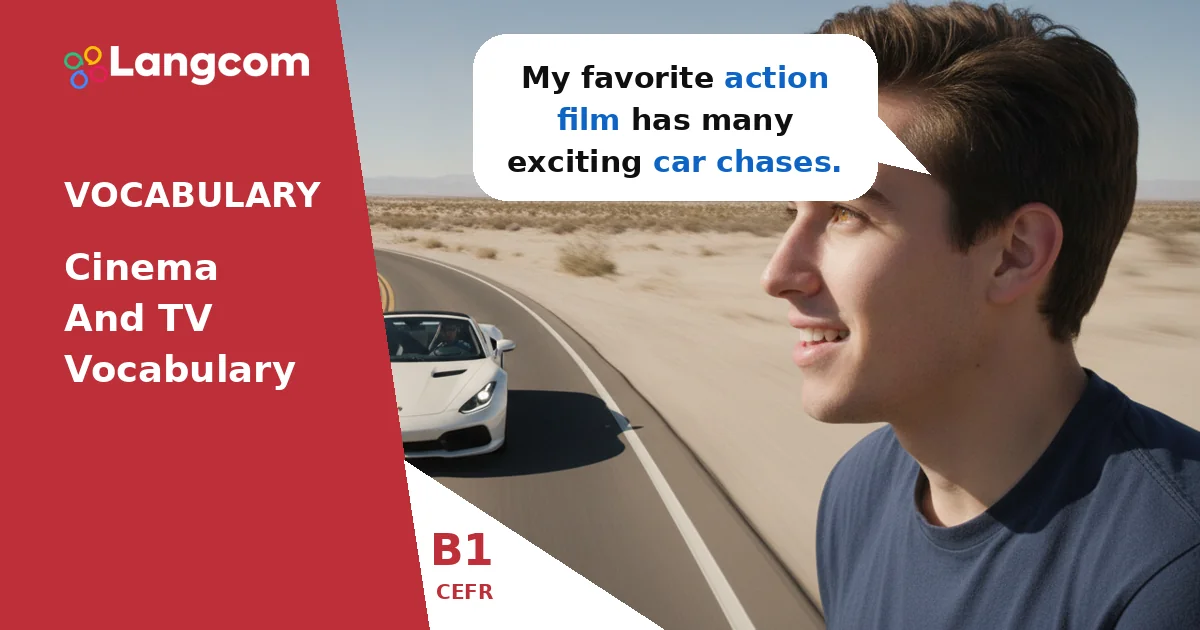
- My favorite action film has many exciting car chases.
- Children often enjoy animation because of the colorful characters.
- That comedy made me laugh so much my stomach hurt.
- She prefers dramas that explore deep human emotions.
- I can't watch horror movies alone; they are too scary.
- Do you believe in aliens? Many science fiction films explore this idea.
- The romance film had a beautiful love story and a happy ending.
- I watched a thriller last night, and I couldn't guess the ending.
- Many famous actors appear on chat shows to promote their new films.
- I learned a lot about history from that documentary series.
- My grandmother watches her favorite soap opera every afternoon.
- They won a lot of money on a popular game show.
Practice
✍️ Not sure which level you are?
Take our free placement test and get personalized feedback from certified Cambridge examiners.
Take our FREE Placement TestCommon mistakes for Spanish speakers
Spanish speakers sometimes make these mistakes:
-
Using Spanish genre names: Remember to use the English words. For example, say science fiction, not 'ciencia ficción'.
-
Confusing drama (genre) with 'dramatic' (adjective): A drama is a type of film or show. Something can be dramatic (full of emotion or excitement), but that doesn't always mean it's a drama genre. For example, an action film can be dramatic.
-
Using 'film' and 'movie' interchangeably: Both are correct! Film is more common in British English, while movie is more common in American English. You can use either.
Frequently asked questions
What is the difference between a film and a movie?
There is no difference in meaning. Film is generally preferred in British English, and movie is more common in American English. You can use either word, and people will understand you.
How do I ask someone what kind of films or TV shows they like?
You can ask: What kind of films do you like? or What genres of TV shows do you watch? You can also say: What's your favorite type of movie?
Are there other words for 'TV show'?
Yes, you can also say TV program or simply show. For example, I watched a great show last night.
Will knowing these genres help me with English exams?
Yes, understanding and using genre vocabulary can help you in speaking and writing tasks, especially when describing your interests or giving opinions about entertainment.



0 Comments