

Who Helps Us in Emergencies?
When something bad happens, special people come to help. They work for emergency services. It is good to know their names.
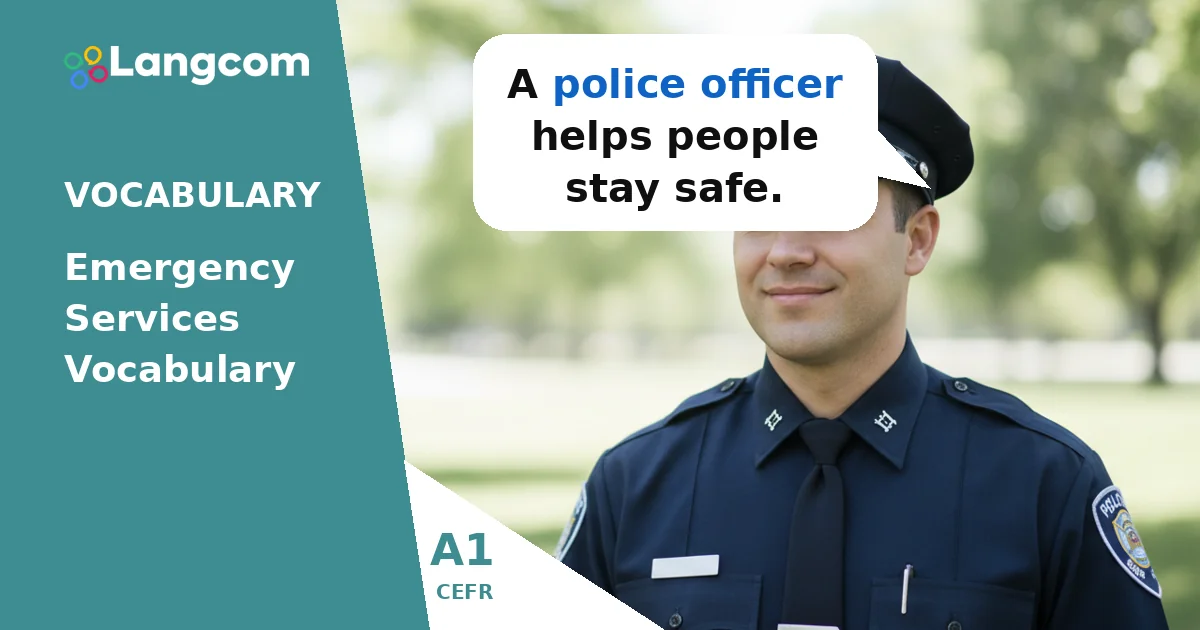
- A police officer helps with crimes and keeps people safe.
- A firefighter puts out fires and rescues people from dangerous places.
- An ambulance officer (also called a paramedic) helps sick or injured people.
- A rescue pilot flies a helicopter to save people, for example, from mountains or the sea.
- The coast guard helps people and boats that are in trouble at sea or near the coast.
🎓 Learn English with the Blended method
Small groups · 24/7 AI Tutor · Cambridge preparation
Plans from $39 $79 per month
What Do Emergency Services Do?
Each emergency service has a special job. Knowing these actions helps you understand what they do.
- The police protect people and catch criminals.
- Firefighters put out fires and save lives.
- Ambulance officers give first aid and take people to hospital.
- Rescue pilots fly helicopters and rescue people.
- The coast guard patrols the coast and helps boats in danger.
When Do We Call for Help?
You should call emergency services when there is a serious problem. Here are some situations:
- Call the police if there is a crime or a car accident.
- Call the fire department if there is a fire.
- Call an ambulance if someone is very sick or has a serious injury.
- Call the coast guard if someone is in danger at sea.
| Person | Main Action |
|---|---|
| Police officer | Helps with crime and safety |
| Firefighter | Puts out fires and rescues people |
| Ambulance officer | Helps sick or injured people |
| Rescue pilot | Rescues people from difficult places |
| Coast guard | Helps people and boats at sea |
Examples
- A police officer helps people stay safe.
- The firefighter quickly put out the fire.
- We need an ambulance officer for the injured person.
- The rescue pilot saw the lost hikers from the helicopter.
- The coast guard saved the swimmers from the strong current.
Practice
💬 Need personalized guidance?
As an Authorized Cambridge Preparation Centre, we can guide you to the right course and certification. Chat with our advisors today.
Chat with an Advisor on WhatsAppCommon mistakes for Spanish speakers
Spanish speakers sometimes use specific gendered terms like "policeman" or "fireman" too often. In English, it is better to use gender-neutral words.
- Correct: police officer (for a man or a woman)
- Less common/specific: policeman (only for a man), policewoman (only for a woman)
Also, be careful with articles when talking about the service:
- Correct: Call the police. (You call the service/organization.)
- Incorrect: Call a police.
- Correct: Call an ambulance. (You call the vehicle/service.)
Frequently asked questions
What is an emergency?
An emergency is a serious situation where you need help very fast. It can be dangerous.
What number do I call in an emergency?
In many countries, you call 911 or 112 for all emergency services.
What is the difference between 'police' and 'police officer'?
Police is the name of the organization or group of people. A police officer is one person who works for the police.
Is 'paramedic' the same as 'ambulance officer'?
Yes, paramedic is another common word for an ambulance officer. Both words mean the person who helps sick or injured people in an ambulance.




0 Comments