
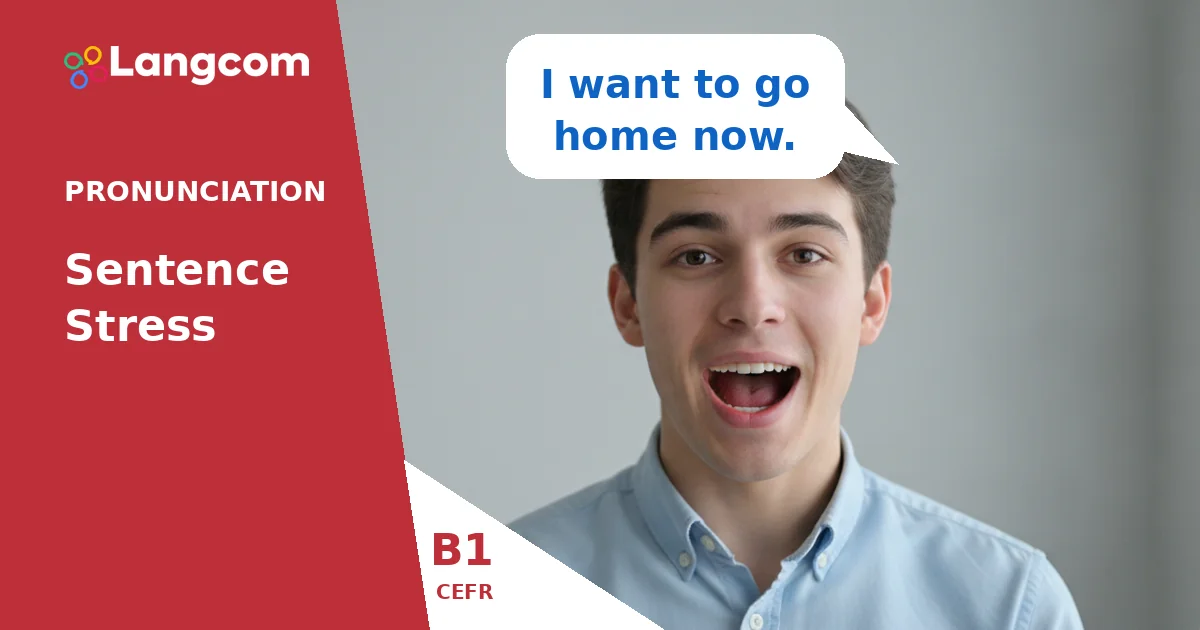

What Is Sentence Stress in English?
Sentence stress is the way we emphasize certain words in a sentence. It’s like giving some words more importance than others when you speak.
This emphasis makes your speech clear and helps your listener understand the main information. It also makes your English sound more natural and rhythmic, similar to how native speakers talk.
🎓 Learn English with the Blended method
Small groups · 24/7 AI Tutor · Cambridge preparation
Plans from $39 $79 per month
Which Words Do We Usually Stress?
In English, we typically stress 'content words'. These are the words that carry the main meaning of the sentence.
- Nouns: words for people, places, things, or ideas. e.g., teacher, city, happiness
- Main Verbs: action words. e.g., eat, sleep, decide
- Adjectives: words that describe nouns. e.g., big, cold, interesting
- Adverbs: words that describe verbs, adjectives, or other adverbs. e.g., quickly, very, always
We usually do NOT stress 'function words'. These words help with grammar but don't carry much meaning on their own.
- Articles: e.g., a, an, the
- Prepositions: e.g., in, on, at, for
- Conjunctions: e.g., and, but, or
- Auxiliary Verbs: e.g., is, am, are, do, have, will
- Pronouns: e.g., he, she, it, they, you
How Does Sentence Stress Sound?
When you stress a word, you make it stand out. This means you say it:
- Louder: with more volume.
- Longer: you stretch out the vowel sound slightly.
- Higher in pitch: your voice goes up a little.
Unstressed words, on the other hand, are said more quickly and quietly. Their vowel sounds often become a short, neutral sound called the 'schwa' (/ə/), like the 'a' in about.
Why Is Sentence Stress Important for B1 Learners?
For B1 English learners, understanding and using sentence stress is very important for several reasons:
- Clearer Communication: It helps your listeners understand your message without effort.
- Better Listening: When you know about stress, you can better identify key words when native speakers talk.
- More Natural Sounding English: Using correct stress makes your English sound more fluent and confident. It helps you sound less like you are reading from a book and more like you are having a real conversation.
Examples
- I want to go home now.
- She lives in a beautiful house.
- They haven't finished their work yet.
- Could you please repeat the last sentence?
- We always eat dinner at seven o'clock.
Practice
✍️ Not sure which level you are?
Take our free placement test and get personalized feedback from certified Cambridge examiners.
Take our FREE Placement TestCommon mistakes for Spanish speakers
A common mistake for Spanish speakers learning English is to stress every syllable or to give equal stress to all words. Spanish is a 'syllable-timed' language, meaning each syllable tends to take a similar amount of time.
English, however, is a 'stress-timed' language. This means the time between stressed syllables is usually consistent, and unstressed syllables are shortened and rushed. If you stress every word, your English can sound choppy and difficult to understand.
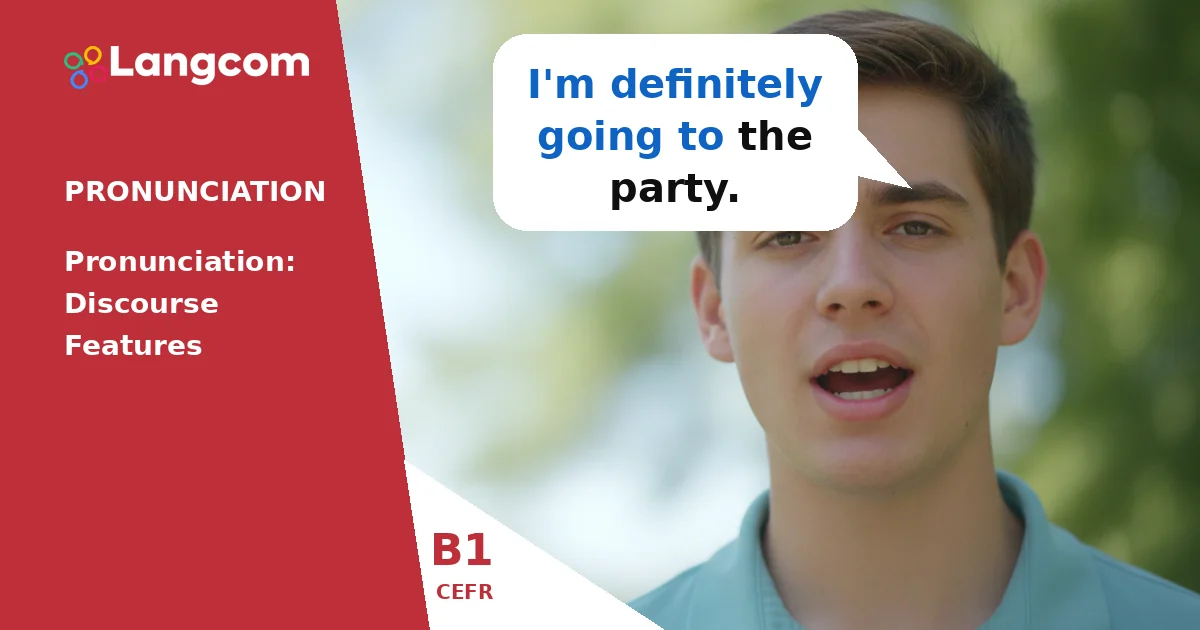
Incorrect: I AM GOING TO THE SHOP. (All words stressed)
Correct: I am going to the shop. (Only content words stressed)
Remember to reduce and connect the unstressed words to achieve a natural English rhythm.
Frequently asked questions
What is the main rule for sentence stress?
The main rule is to stress 'content words' (nouns, main verbs, adjectives, adverbs) because they carry the most meaning. 'Function words' (articles, prepositions, auxiliary verbs, pronouns) are usually unstressed.
Does sentence stress change the meaning?
Yes, sometimes! Stressing different words can change the focus or even the meaning of a sentence. For example, I didn't steal the money (someone else did) is different from I didn't steal the money (I just borrowed it).
How can I practice sentence stress?
Listen carefully to native English speakers in movies, podcasts, or songs. Try to identify which words they stress. Then, practice imitating them. You can also record yourself speaking and listen back to check your stress patterns. Reading aloud and marking the stressed words beforehand can also help.

0 Comments