

What are the basic words for clothes?
There are many words for clothes. We can divide them into different groups to make them easier to learn.
- Tops: These are clothes you wear on the upper part of your body.
- Bottoms: These are clothes you wear on the lower part of your body.
- Outerwear: These are clothes you wear over other clothes, especially when it’s cold or raining.
- Footwear: These are clothes you wear on your feet.
- Accessories: These are extra items that complete an outfit.
✍️ Not sure which level you are?
Take our free placement test and get personalized feedback from certified Cambridge examiners.
Take our FREE Placement TestWhat are common tops and shirts?
These are items you wear on your upper body.
- A shirt is a piece of clothing for the upper body, often with a collar and buttons. For example, He is wearing a blue shirt.
- A T-shirt is a casual shirt, usually with short sleeves and no collar. For example, I wear a T-shirt in summer.
- A sweater (or jumper in UK English) is a warm piece of clothing, usually made of wool, worn on the upper body. For example, She needs a warm sweater.
- A blouse is a formal shirt for women. For example, She wore a silk blouse to the meeting.
What words describe clothes for your legs?
These are items you wear on your lower body.
- Trousers (UK English) or pants (US English) are clothes that cover your legs separately. For example, He bought new black trousers.
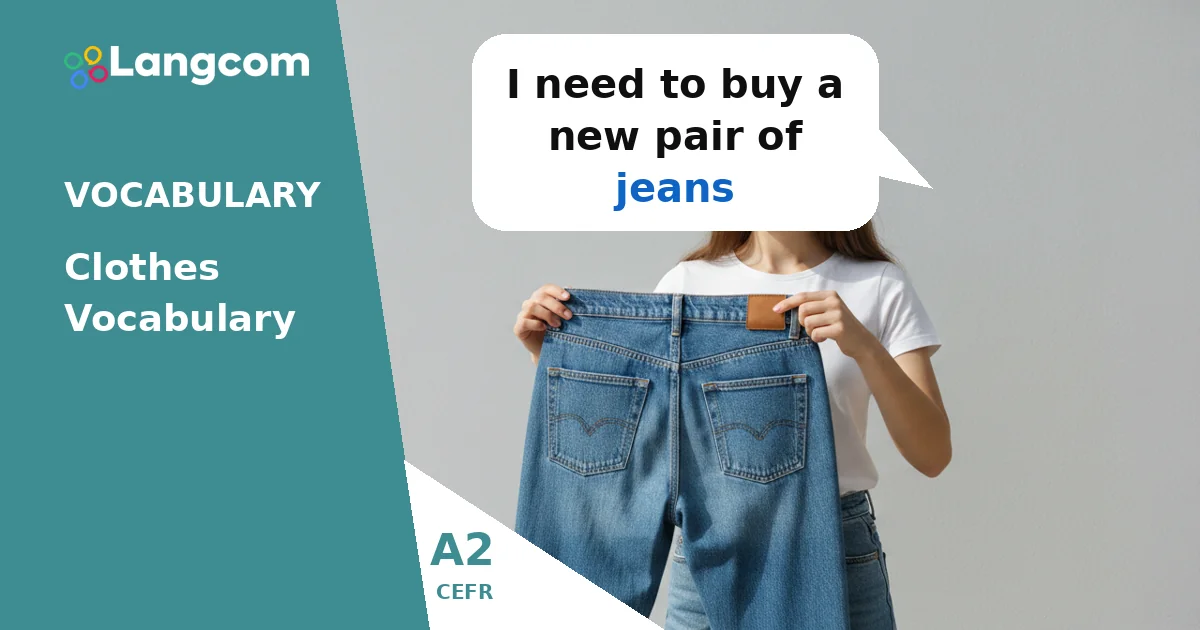
- Jeans are casual trousers made of denim fabric. For example, I wear jeans every day.
- A skirt is a piece of clothing for women and girls that hangs from the waist and covers the lower part of the body. For example, She likes to wear long skirts.
- Shorts are trousers that end above the knee. For example, It's hot, so I'm wearing shorts.
What are common outerwear items?
These clothes keep you warm or dry.
- A coat is a warm piece of clothing worn over other clothes, usually long. For example, Put on your coat; it's cold outside.
- A jacket is a shorter coat. For example, He wears a leather jacket.
- A raincoat is a waterproof coat to protect you from rain. For example, Don't forget your raincoat!
What are words for footwear and accessories?
These items go on your feet or complete your look.
- Shoes are coverings for your feet, usually made of leather or plastic. For example, My new shoes are comfortable.
- Boots are a type of shoe that covers the foot and part of the leg. For example, She wears winter boots.
- Socks are soft coverings for your feet, worn inside shoes. For example, I need clean socks.
- A hat is a covering for the head. For example, He wears a hat in the sun.
- A belt is a strip of material worn around the waist. For example, My trousers are too big; I need a belt.
- Glasses are worn to help you see better or to protect your eyes. For example, She wears glasses for reading.
What about dresses and suits?
These are complete outfits or more formal wear.
- A dress is a piece of clothing for women or girls that covers the body and legs. For example, She bought a beautiful red dress.
- A suit is a set of clothes made from the same fabric, usually a jacket and trousers or a skirt, worn for formal occasions. For example, He wore a suit to the wedding.
| Category | English Word |
|---|---|
| Tops | Shirt |
| Tops | T-shirt |
| Tops | Sweater |
| Bottoms | Trousers |
| Bottoms | Jeans |
| Bottoms | Skirt |
| Outerwear | Coat |
| Outerwear | Jacket |
| Footwear | Shoes |
| Footwear | Boots |
| Accessories | Hat |
| Accessories | Belt |
| Full Outfit | Dress |
Examples
- I need to buy a new pair of jeans and a T-shirt for the weekend.
- It's cold outside, so wear your coat and boots.
- She looks elegant in her red dress and black shoes.
- He always wears a shirt and trousers to work.
- Don't forget your hat and sunglasses when you go to the beach.
Practice
Ready to earn your certificate?
Langcom prepares students for Cambridge, IELTS, TOEFL, DELE, SIELE and Michigan exams.
Get started with LangcomCommon mistakes for Spanish speakers
Spanish speakers sometimes make mistakes with clothes vocabulary due to direct translation or differences in usage.
- Pants vs. Trousers: In UK English, pants means underwear. For clothes covering legs, use trousers. In US English, pants means clothes for legs.
- Correct (UK): I need new trousers.
- Incorrect (UK): I need new pants. (unless you mean underwear)
- Correct (US): I need new pants.
- Singular vs. Plural: Many clothes items that come in pairs are always plural in English, even if they refer to one item.
- Correct: My jeans are blue. (Not My jean is blue.)
- Correct: These shoes are comfortable. (Not This shoe is comfortable. if referring to the pair)
- Use a pair of for singular reference: a pair of jeans, a pair of shoes, a pair of glasses.
Frequently asked questions
Why is clothes vocabulary important for A2 learners?
Learning clothes vocabulary helps you describe people, talk about shopping, and express your personal style. It's essential for everyday conversations and understanding simple texts.
How can I practice new clothes words?
You can practice by describing what you or your friends are wearing, making shopping lists, or looking at pictures of clothes and naming the items. Try to use the words in full sentences like I am wearing a blue shirt and black trousers.
Are there different words for clothes in UK and US English?
Yes, there are some differences. For example, what is called trousers in UK English is often called pants in US English. A jumper (UK) is a sweater (US).
How does clothes vocabulary help with the A2 Key exam?
In the A2 Key exam, you might need to describe people in pictures (Speaking Part 2) or understand descriptions of clothes in reading tasks. Knowing these words will help you answer questions correctly and speak more confidently.



0 Comments