

What Does ‘It’ Mean?
It is a pronoun. We use it to talk about:
- One thing: It’s a book.
- One animal: It’s a cat.
- One idea or situation: It’s interesting.
We do not use it for people. For people, we use he (for a man/boy) or she (for a woman/girl).
🎓 Learn English with the Blended method
Small groups · 24/7 AI Tutor · Cambridge preparation
Plans from $39 $79 per month
How Do We Use 'It's'?
It's is the short form of it is. We use it's for positive sentences.
- To describe something: It's big.
- To say what something is: It's a phone.
- To talk about the weather: It's sunny.
Using it's makes your English sound more natural, especially in speaking.
How Do We Use 'It Isn't'?
It isn't is the short form of it is not. We use it isn't for negative sentences.
- To say something is not true: It isn't correct.
- To say what something is not: It isn't a car.
- To say something is not in a place: It isn't here.
You can also say it's not, which means the same as it isn't. For example, It's not cold.
Asking Questions with 'Is It...?'
To ask a question about a singular thing, animal, or idea, we put is before it.
- Is it a new house?
- Is it expensive?
- Is it in Spain?
These are 'Yes/No' questions because the answer is usually 'Yes' or 'No'.
Giving Short Answers with 'It Is' / 'It Isn't'
When someone asks a 'Yes/No' question with Is it...?, you can give a short answer:
- For 'Yes': Yes, it is.
- For 'No': No, it isn't.
It is important to use the full form it is in positive short answers. Do NOT use Yes, it's.
| Positive (+) | Negative (-) | Question (?) | Short Answer (+) | Short Answer (-) | |
|---|---|---|---|---|---|
| it | It's a new house. | It isn't a new house. | Is it a new house? | Yes, it is. | No, it isn't. |
| they | They're old houses. | They aren't old houses. | Are they old houses? | Yes, they are. | No, they aren't. |
Examples
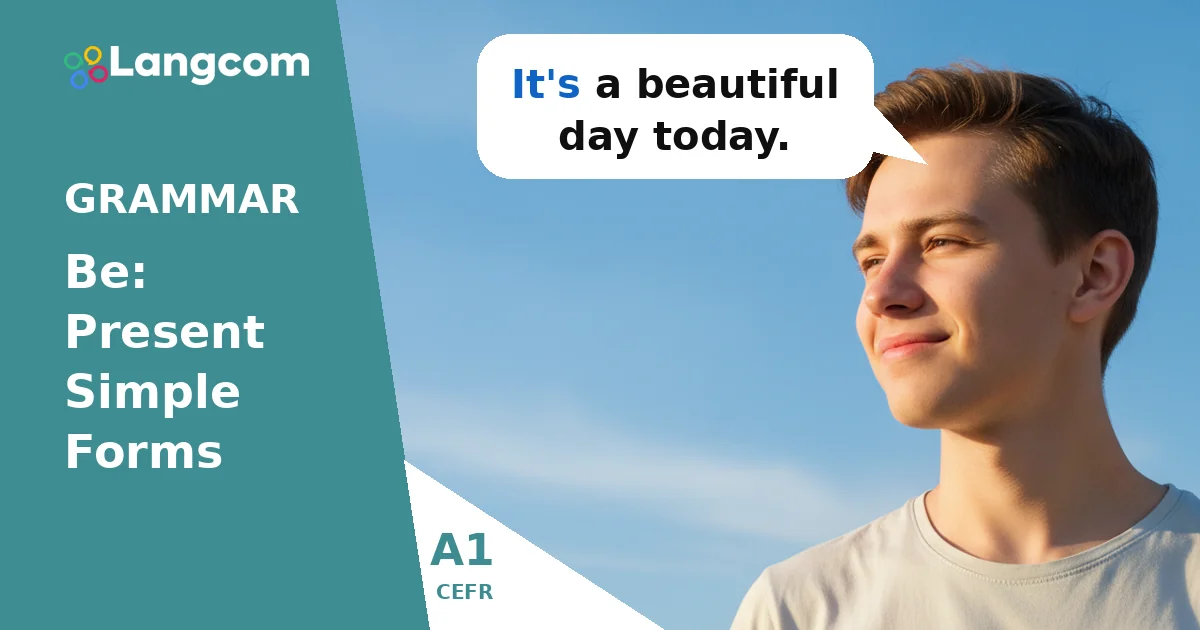
- It's a beautiful day today.
- It isn't a difficult question.
- Is it your first time here?
- No, it isn't. I was here last year.
- It's very hot in summer.
- It isn't far from the city center.
Practice
💬 Need personalized guidance?
As an Authorized Cambridge Preparation Centre, we can guide you to the right course and certification. Chat with our advisors today.
Chat with an Advisor on WhatsAppCommon mistakes for Spanish speakers
Spanish speakers often make these mistakes:
- Omitting 'it': In Spanish, you can often leave out the subject pronoun. In English, you must always use it when talking about a thing, animal, or idea.
Is good. ✗
It's good. ✓ - Using 'is' without 'it' in questions:
Is in Canada? ✗
Is it in Canada? ✓ - Using contractions in positive short answers:
Yes, it's. ✗
Yes, it is. ✓
Frequently asked questions
When do I use 'it's' and when do I use 'its'?
It's is a contraction of it is or it has. For example, It's a book. Its is a possessive pronoun, meaning 'belonging to it'. For example, The dog wagged its tail.
Can I use 'it' for a baby?
Sometimes, people use it for a baby if they don't know the baby's gender. For example, It's a beautiful baby! However, it's more common and polite to use he or she if you know the gender, or they if you don't.
Is 'it's not' the same as 'it isn't'?
Yes, it's not and it isn't mean exactly the same thing. Both are common in spoken and informal written English. For example, It's not cold and It isn't cold are both correct.

0 Comments