
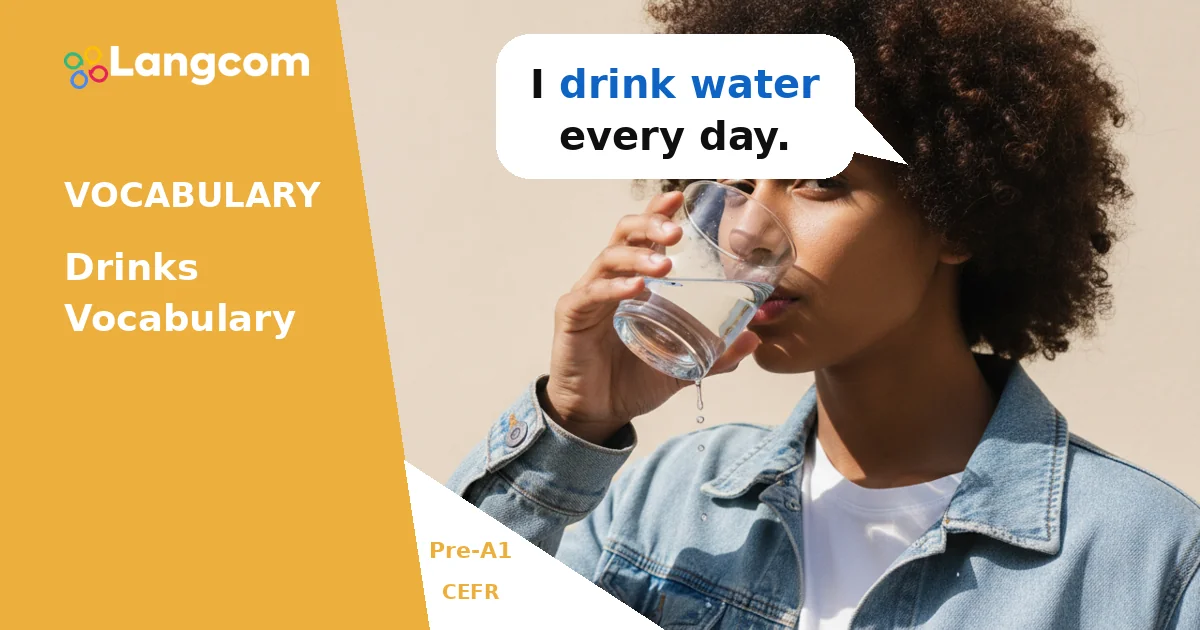

What Are Common Drinks in English?
When you want to talk about what you drink, these words are very useful. They are common in many places like homes, cafes, and restaurants.
- Water: This is the most basic drink. Everyone drinks water.
- Coffee: Many people drink this hot in the morning.
- Tea: This is another popular hot drink. You can drink it with milk or sugar.
- Milk: This is a white drink, often from cows. Children drink a lot of milk.
- Orange juice: This is a sweet drink made from oranges.
- Apple juice: This is a sweet drink made from apples.
- Hot chocolate: This is a sweet, warm drink made with chocolate and milk.
🎓 Learn English with the Blended method
Small groups · 24/7 AI Tutor · Cambridge preparation
Plans from $39 $79 per month
How Do We Ask for Drinks?
It is important to know how to ask for a drink politely. You can use simple phrases.
- To say what you want, you can say I want... or, more politely, Can I have...?
- For example, if you are thirsty, you can say I want water or Can I have some water, please?
- If you are at a cafe, you might say Can I have a coffee, please?
What About Hot and Cold Drinks?
Drinks can be hot or cold. It is good to know the difference.
- Hot drinks are warm. Examples are coffee, tea, and hot chocolate.
- Cold drinks are cool. Examples are water, milk, orange juice, and apple juice.
| Drink | Type |
|---|---|
| Water | Cold |
| Coffee | Hot |
| Tea | Hot |
| Milk | Cold |
| Orange juice | Cold |
| Apple juice | Cold |
| Hot chocolate | Hot |
Examples
- I drink water every day.
- Can I have a cup of coffee, please?
- She likes hot tea with milk.
- My children drink a lot of milk.
- Do you want orange juice or apple juice?
- I like hot chocolate in winter.
Practice
💬 Need personalized guidance?
As an Authorized Cambridge Preparation Centre, we can guide you to the right course and certification. Chat with our advisors today.
Chat with an Advisor on WhatsAppCommon mistakes for Spanish speakers
Spanish speakers sometimes translate too directly. For example, saying I want coffee is correct, but Can I have some coffee, please? is more polite. Also, remember that juice is a general word. In English, we usually say the fruit name, like orange juice or apple juice, not just juice alone when specifying. Avoid saying I want a water; instead, say I want some water or Can I have a glass of water?
Frequently asked questions
What is the most common drink?
Water is the most common drink everywhere. It is essential for life.
How do I ask for a drink politely?
You can say Can I have...? or I would like...? For example, Can I have a coffee, please? is very polite.
What is the difference between tea and coffee?
Tea is made from tea leaves, often with hot water. Coffee is made from roasted coffee beans, also with hot water.
Can I say 'juice' instead of 'orange juice'?
Yes, you can say juice, but it is better to be specific if you know the type, like orange juice or apple juice.




0 Comments