

What is the Present Simple in English?
We use the Present Simple for things that happen regularly, often, or are always true. Think about your daily routine or facts about the world.
- العادات والروتينات: Actions you do many times. For example, I wake up at 7 AM every day.
- General Truths and Facts: أمور صحيحة دائمًا. على سبيل المثال،, The sun rises in the east.
- Schedules: Fixed times for events. For example, The train leaves at 8 o’clock.
The form is simple: use the base verb. For he, she, it, add -s أو -es to the verb.
🎓 تعلم اللغة الإنجليزية باستخدام الطريقة المختلطة
مجموعات صغيرة · مدرس ذكاء اصطناعي متاح على مدار الساعة · التحضير لامتحانات كامبريدج
خطط من $39 $79 في الشهر
متى نستخدم صيغة المضارع المستمر؟
We use the Present Continuous for actions happening right now, at this moment. It describes something in progress.
- الأحداث الجارية حالياً: Things you are doing at the time of speaking. For example, I am studying English now.
- الحالات المؤقتة: Actions that are happening for a short time. For example, She is living with her sister this month.
The form for the Present Continuous is be (am/is/are) + verb + -ing. على سبيل المثال،, I am reading, He is working, They are playing.
How are Present Simple and Present Continuous different?
The main difference is about time. The Present Simple is for general time or repeated actions. The Present Continuous is for a specific time: now.
- المضارع البسيط: Use words like always, often, usually, sometimes, never, every day/week.
- صيغة المضارع المستمر: Use words like now, right now, at the moment, today.
Think of it this way: Present Simple is like a photograph of a general truth. Present Continuous is like a video of an action happening.
| ميزة | المضارع البسيط | صيغة المضارع المستمر |
|---|---|---|
| Use | Habits, routines, facts | Actions happening now, temporary actions |
| Form | Base verb (verb + -s/-es for he/she/it) | be (am/is/are) + verb + -ing |
| Keywords | Always, often, every day | Now, right now, at the moment |
| Example | I drink water. | I am drinking water. |
أمثلة
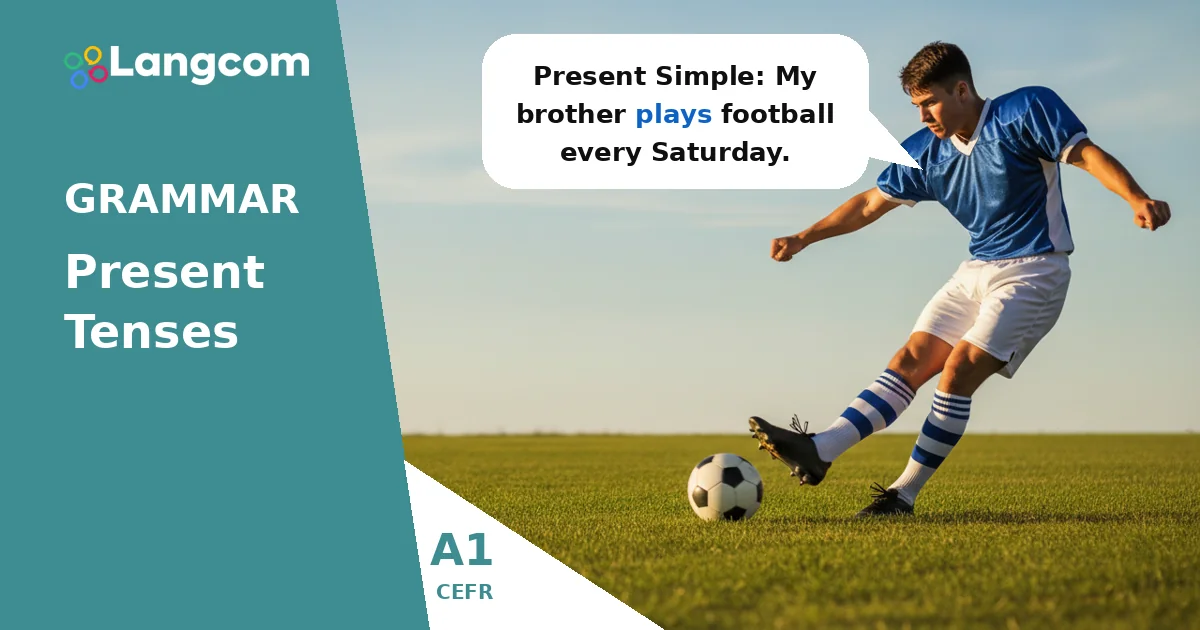
- Present Simple: My brother plays football every Saturday.
- Present Continuous: My brother is playing football right now.
- Present Simple: We live in Madrid.
- Present Continuous: We are visiting London this week.
- Present Simple: She drinks coffee in the morning.
- Present Continuous: She is drinking tea at the moment.
التدريب
💬 هل تحتاج إلى إرشادات مخصصة؟
بصفتنا مركزًا معتمدًا للتحضير لاختبارات كامبريدج، يمكننا توجيهك نحو الدورة والشهادة المناسبتين لك. تحدث مع مستشارينا اليوم.
دردش مع مستشار على واتسابالأخطاء الشائعة لدى المتحدثين باللغة الإسبانية
الأخطاء الشائعة لدى المتحدثين باللغة الإسبانية
Spanish speakers sometimes make specific mistakes when using these tenses:
- Using Present Simple for actions happening now: In Spanish, you might say "Yo como ahora." But in English, for an action happening at this moment, you must use the Present Continuous.
خطأ: I eat now.
على اليمين: I am eating now. - Forgetting 'do/does' in Present Simple questions/negatives: In Spanish, you just add 'no' or change the word order. In English, you need do أو does.
خطأ: You not work here.
على اليمين: You don't work here.
خطأ: He works here?
على اليمين: Does he work here? - Forgetting the 'be' verb in Present Continuous: You need am, is, ، أو are before the -ing verb.
خطأ: She watching TV.
على اليمين: She is watching TV.
الأسئلة الشائعة
What is the main use of the Present Simple?
The Present Simple is mainly for habits, routines, and general facts. It describes things that happen regularly or are always true, like I go to school every day.
When should I use the Present Continuous?
You should use the Present Continuous for actions that are happening right now, at the moment of speaking, or for temporary situations. For example, She is reading a book now.
Can I use 'now' with the Present Simple?
No, generally you do not use now with the Present Simple. Now is a signal word for the Present Continuous, indicating an action in progress. For example, I am working now.




0 تعليق