

What are common holiday activities?
When you go on holiday, there are many different things you can do. Some people like active holidays, while others prefer to relax. Knowing the right words helps you describe your perfect trip.
Here are some common activities you can do:
- Go sightseeing: This means visiting famous places like monuments, museums, or historical sites in a city. We went sightseeing in Rome and saw the Colosseum.
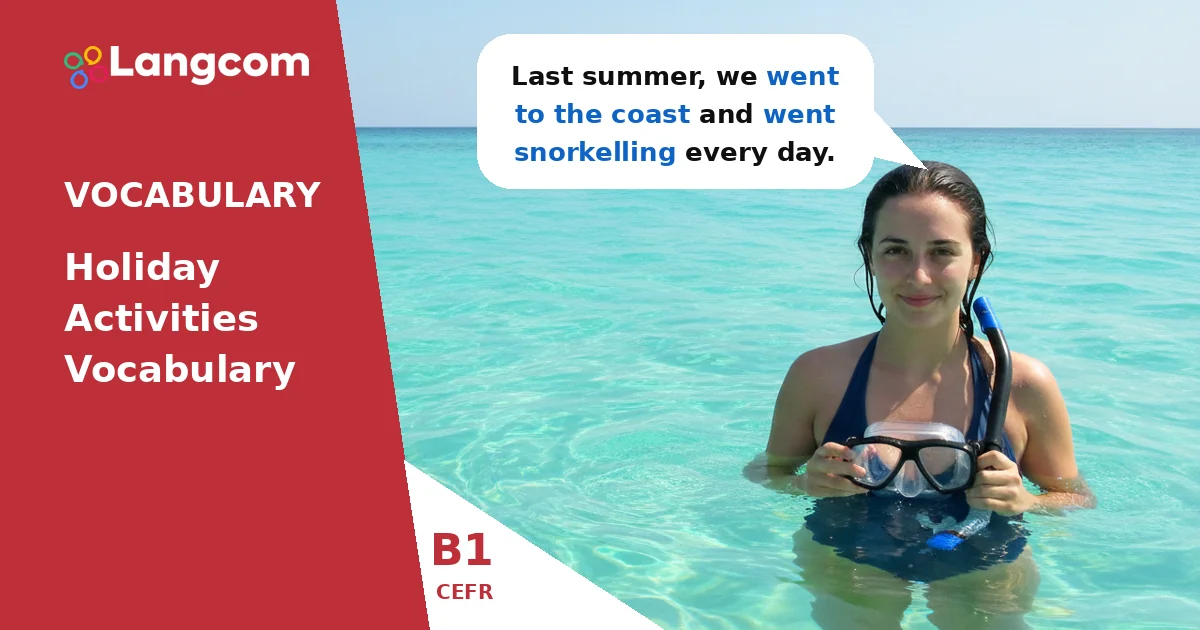
- Go snorkelling: This is swimming with a mask and a tube to breathe, looking at fish and underwater life. In the Caribbean, we went snorkelling every day.
- Go snowboarding: This is a winter sport where you slide down a mountain on a board. I want to go snowboarding in the Alps next winter.
- Go shopping: This means visiting shops to buy things, like clothes or souvenirs. Sonia loves to go shopping for gifts when she’s on holiday.
- Hire a bike: This means renting a bicycle for a period of time. It’s fun to hire a bike and explore the city.
- Play in the sand: This is what children often do at the beach, building sandcastles. The kids loved to play in the sand all afternoon.
- Hang out with friends: This means spending time informally with your friends, often relaxing. On my last holiday, I just wanted to hang out with friends.
- Buy gifts / souvenirs: This is purchasing small items to remember your trip or give to others. I always buy souvenirs for my family.
- Look around a market: This means walking through a market to see what is for sale. In Marrakesh, we looked around the famous Souks.
- Take photos: This is using a camera or phone to capture images. Don’t forget to take photos of the beautiful scenery!
✍️ Не знаете, на каком уровне вы находитесь?
Пройдите наш бесплатный тест на определение уровня и получите индивидуальные рекомендации от сертифицированных экзаменаторов Кембриджского университета.
Пройдите наш БЕСПЛАТНЫЙ тест на определение местаHow do we use 'Go' for activities?
Many holiday activities use the verb go followed by a verb ending in -ing. This pattern is very common for sports and activities that involve movement.
- For water activities: go swimming, go surfing, go snorkelling.
- For exploring: go sightseeing, go hiking, go camping.
- For shopping: go shopping.
- For winter sports: go skiing, go snowboarding.
Remember, we use go for these activities, not do.
What other verbs describe holiday fun?
Besides go, many other verbs help you talk about your holiday experiences. These verbs often describe specific actions or types of relaxation.
- Hire: This means to pay money to use something for a short time. You can hire a car, hire a bike, или hire a boat. We hired a car to explore the island.
- Buy: This is to get something by paying money. You can buy gifts, buy souvenirs, или buy food. I bought some delicious local food at the market.
- Look around: This means to explore a place, often without a specific goal, just to see what is there. You can look around a market, look around a museum, или look around a town. We spent the morning looking around the old town.
- Play: This is used for games or activities, especially for children. The children love to play in the sand on the beach.
- Hang out: This is an informal way to say you are spending time relaxing with friends or in a place. I like to hang out at the cafe with my friends. You can also hang out on the beach.
- Take: We use take photos to mean using a camera. Remember to take lots of photos!
| Activity | Что это означает |
|---|---|
| Go sightseeing | Visit famous places like monuments or museums. |
| Go snorkelling | Swim underwater with a mask to see marine life. |
| Go snowboarding | Slide down snowy mountains on a board. |
| Go shopping | Visit shops to buy things. |
| Hire a bike | Rent a bicycle for a period. |
| Play in the sand | Build sandcastles or play games on the beach. |
| Hang out with friends | Spend time relaxing informally with friends. |
| Buy gifts / souvenirs | Purchase items to remember a trip or give to others. |
| Look around a market | Explore a market to see what is for sale. |
| Take photos | Use a camera to capture images. |
Примеры
- Last summer, we went to the coast and went snorkelling every day.
- When I visit new cities, I always go sightseeing and take many photos.
- My sister loves winter holidays because she can go snowboarding.
- We hired a bike to explore the small villages near our hotel.
- The children were happy to play in the sand for hours.
- After looking around the market, I bought some beautiful souvenirs.
- I prefer to hang out with friends and relax when I'm on holiday.
Практика
Готовы получить сертификат?
Курс Langcom готовит студентов к сдаче экзаменов Cambridge, IELTS, TOEFL, DELE, SIELE и Michigan.
Начните работу с LangcomРаспространенные ошибки у носителей испанского языка
Spanish speakers sometimes make specific mistakes when talking about holiday activities. Be careful with these common errors:
- Using 'do' instead of 'go' for activities:
Неправильно: I do sightseeing.
Правильно: I go sightseeing.
Не забудьте использовать go + -ing for most sports and activities like go shopping, go swimming, go hiking. - Confusing 'visit' with 'look around':
Visit is for specific places like a city or a museum. I visited Paris last year.
Look around means to explore a place generally, often without buying anything, like a market or a shop. We looked around the market for an hour. - Using 'make photos' instead of 'take photos':
Неправильно: I made many photos.
Правильно: I took many photos.
The correct verb to use with photos является take.
Часто задаваемые вопросы
What is the difference between go sightseeing and visit a city?
Go sightseeing means to actively explore and see the main attractions of a place, like monuments or museums. Visit a city is more general; it just means going to that city. You can visit a city without doing much sightseeing.
Can I say do shopping instead of go shopping?
No, in English, the correct phrase is go shopping. We use do for general activities like do homework или do exercise, but for the activity of buying things, it's always go shopping.
What does hang out mean?
Hang out is an informal phrase meaning to spend time relaxing, often with friends, without a specific plan. For example, I like to hang out at the cafe with my friends.
Why is this vocabulary important for the B1 Preliminary (PET) exam?
The B1 Preliminary exam often includes tasks where you need to describe past experiences or talk about future plans, especially in the Speaking and Writing parts. Vocabulary related to holiday activities is very common for these topics, helping you show a good range of language.


0 Комментариев