

What Are Feeling Adjectives?
Feeling adjectives are words that describe emotions, moods, or physical states of people. They help us talk about how someone feels.
These adjectives are very important for clear communication in English. They let you share your own feelings and understand the feelings of others.
✍️ Не знаете, на каком уровне вы находитесь?
Пройдите наш бесплатный тест на определение уровня и получите индивидуальные рекомендации от сертифицированных экзаменаторов Кембриджского университета.
Пройдите наш БЕСПЛАТНЫЙ тест на определение местаEssential A2 Feeling Adjectives and Their Meanings
Here are some common feeling adjectives you need to know for A2 English, with simple explanations and examples:
- Amazing: This means very surprising or very good. You feel amazing when something wonderful happens.
- Free: This can mean not busy or available. You feel free when you have no plans.
- Horrible: This means very bad or unpleasant. You feel horrible when something is very wrong.
- Lucky: This means good things happen to you by chance. You feel lucky when you have good fortune.
- Pleased: This means happy or satisfied about something. You feel pleased when you like a result.
- Popular: This describes something or someone liked by many people. A person or thing can be popular, making others feel good about it.
- Sick: This means ill or not well. You feel sick when you are unwell physically.
- Worried: This means anxious or thinking about problems. You feel worried when you are concerned about something.
How to Use Feeling Adjectives in Sentences
You can use feeling adjectives in different ways. The most common ways are with the verb to be or the verb to feel.
- With to be (am, is, are):
Использование Subject + be + adjective.
Пример: I am pleased. - With to feel:
Использование Subject + feel(s) + adjective.
Пример: She feels worried. - To describe things that cause feelings:
Использование It is + adjective или A + adjective + noun.
Пример: The film is amazing.
| Прилагательное | Значение |
|---|---|
| Amazing | Very surprising or good |
| Free | Not busy; available |
| Horrible | Very bad or unpleasant |
| Lucky | Having good fortune |
| Pleased | Happy or satisfied |
| Popular | Liked by many people |
| Sick | Ill; not well |
| Worried | Anxious; thinking about problems |
Примеры
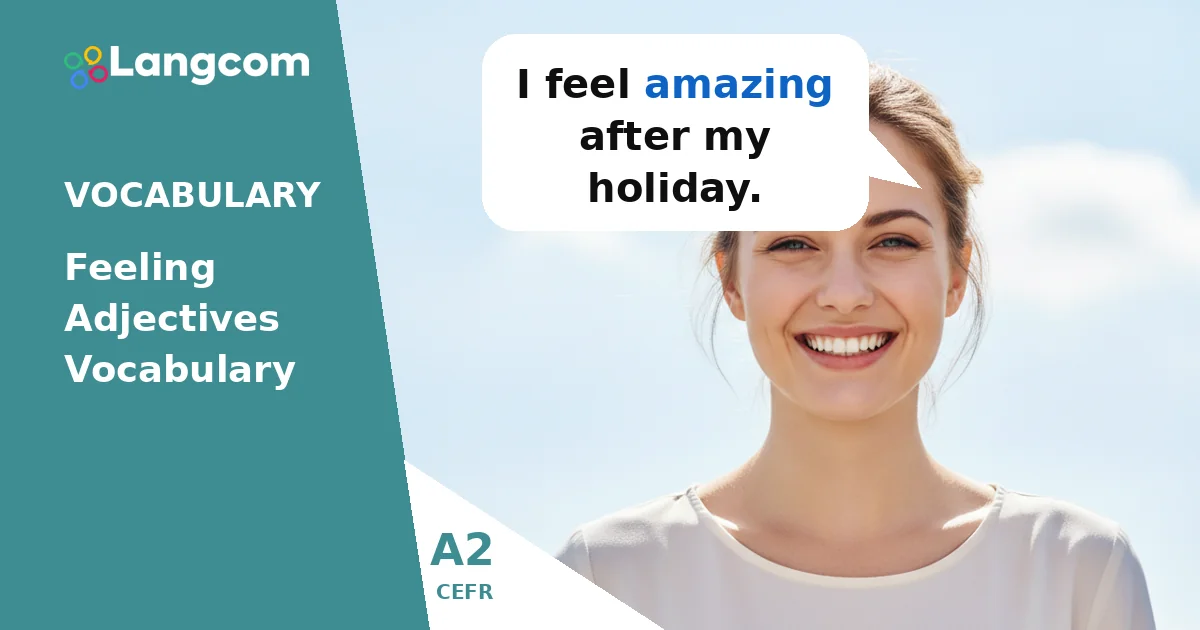
- I feel amazing after my holiday.
- Are you free to talk later?
- The weather is horrible today.
- He was lucky to win the prize.
- My parents are pleased with my exam results.
- That new song is very popular.
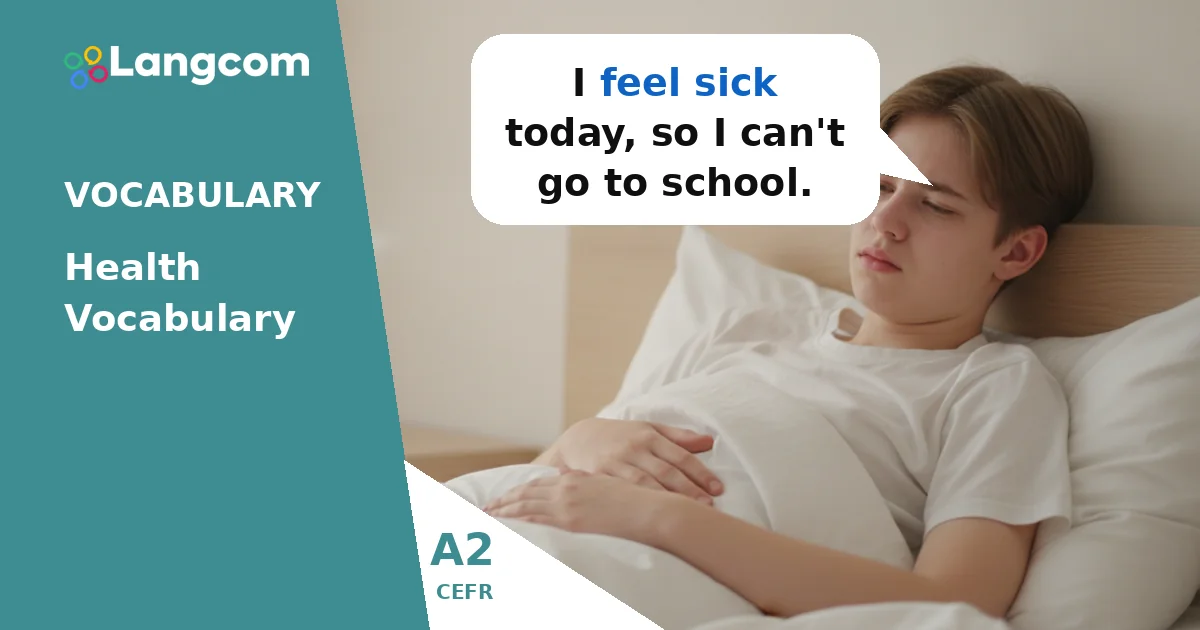
- I feel sick, I think I ate too much.
- Don't be worried; everything will be fine.
Практика
Готовы получить сертификат?
Курс Langcom готовит студентов к сдаче экзаменов Cambridge, IELTS, TOEFL, DELE, SIELE и Michigan.
Начните работу с LangcomРаспространенные ошибки у носителей испанского языка
A common mistake for Spanish speakers is confusing adjectives that end in -ing и -ed, especially with feeling adjectives.
- Использование -ing adjectives (like boring, amazing) to describe the thing or person that causes the feeling.
Correct: The film is boring. (The film causes boredom.)
Incorrect: I am boring. (Unless you mean you cause boredom in others.) - Использование -ed adjectives (like bored, pleased, worried) to describe how a person feels.
Correct: I am bored. (I feel boredom.)
Incorrect: The film is bored.
Часто задаваемые вопросы
What is the main purpose of feeling adjectives?
Feeling adjectives help us describe emotions, moods, or physical states. They tell us how a person feels, such as happy, sad, или worried.
How can I remember new feeling adjectives easily?
To remember new feeling adjectives, try to use them in sentences about yourself or your friends. You can also make flashcards with the adjective on one side and its meaning and an example sentence on the other. Listening to English songs or watching videos can also help you hear them in context.
Are there other ways to express feelings in English?
Yes, besides adjectives, you can use nouns (e.g., happiness, sadness) or verbs (e.g., to love, to hate) to express feelings. However, adjectives are very common and direct for describing current emotional states.
How are feeling adjectives used in the A2 Key (KET) exam?
In the A2 Key exam, you might find feeling adjectives in Reading and Writing Part 2 (matching descriptions to people) or Part 6 (completing gaps in a short text or email). You may need to choose the correct adjective to fit the context of a sentence.



0 Комментариев