

What is ‘Have got’?
‘Have got’ is a phrase we use to talk about things we own or possess. It is very common in spoken English.
- It means the same as ‘have’ when talking about possession.
- Например, I have got a book means I have a book.
- We use ‘have got’ for things like objects, relationships, and characteristics.
🎓 Изучайте английский по смешанной методике
Небольшие группы · ИИ-репетитор 24/7 · Подготовка к экзаменам Кембриджского университета
Планы от $39 $79 в месяц
How to Use 'Have got' for Possession?
Using 'have got' is simple. The verb 'have' changes depending on the subject.
Positive Sentences
Для I, you, we, they, мы используем have got.
- I have got a big family.
- You have got a nice smile.
Для he, she, it, мы используем has got.
- He has got a new car.
- She has got long hair.
Negative Sentences
To make 'have got' negative, we add not после have или has.
- I have not got a pen. (Short form: I haven't got a pen.)
- She has not got a brother. (Short form: She hasn't got a brother.)
Questions
To ask a question, we put Have или Has в начале предложения.
- Have you got a sister?
- Has he got a dog?
Short Answers
Мы используем have или has in short answers.
- Yes, I have. / No, I haven't.
- Yes, she has. / No, she hasn't.
| Тема | Positive | Отрицательный | Вопрос |
|---|---|---|---|
| I / You / We / They | have got | haven't got | Have ... got? |
| He / She / It | has got | hasn't got | Has ... got? |
Примеры
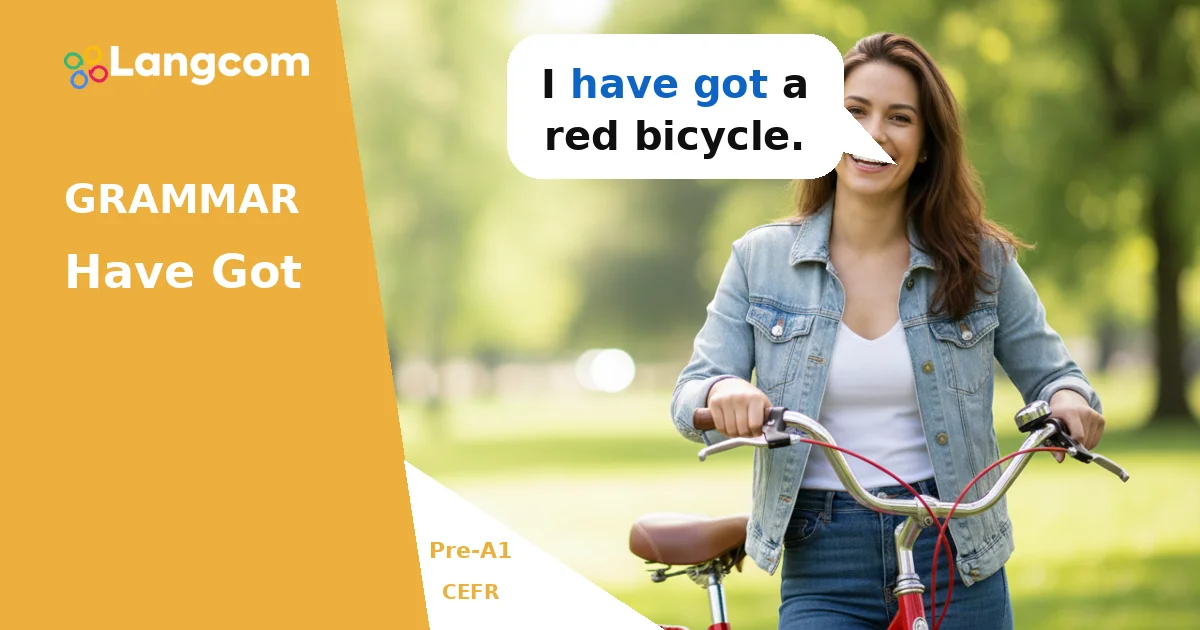
- I have got a red bicycle.
- They have got two children.
- He has got a lot of friends.
- She hasn't got any money.
- We haven't got time for that.
- Have you got a map?
- Has it got a name?
- Yes, I have.
- No, she hasn't.
Практика
💬 Нужна индивидуальная консультация?
Являясь официальным центром подготовки к экзаменам Кембриджского университета, мы поможем вам выбрать подходящий курс и программу сертификации. Свяжитесь с нашими консультантами уже сегодня.
Общайтесь с консультантом в WhatsAppРаспространенные ошибки у носителей испанского языка
Spanish speakers sometimes make specific mistakes with 'have got'.
- Using 'do/does' with 'have got' for questions or negatives: In Spanish, you often use 'do' or 'does' for questions and negatives. But with 'have got', 'have' acts as the auxiliary verb.
- Неправильно: Do you have got a car?
- Правильно: Have you got a car?
- Неправильно: She doesn't have got a pet.
- Правильно: She hasn't got a pet.
- Confusing 'have got' (possession) with 'have' as an action verb: Remember that 'have got' is only for possession. 'Have' can also be an action verb (e.g., have breakfast, have a shower). Do not use 'got' in these cases.
- Неправильно: I have got breakfast every morning.
- Правильно: I have breakfast every morning.
Часто задаваемые вопросы
What does 'have got' mean?
'Have got' means 'to possess' or 'to own' something. It is used to talk about things you have, like I have got a new book.
Is 'have got' formal or informal?
'Have got' is generally considered informal. It is very common in everyday spoken English. In more formal writing, you would usually just use 'have'.
Can I just say 'have' instead of 'have got'?
Yes, you can. When talking about possession, 'have' and 'have got' mean the same thing. For example, I have a car is correct, and I have got a car is also correct.
Is 'have got' more common in British or American English?
'Have got' is more commonly used in British English. In American English, people often prefer to use 'have' without 'got' for possession.


0 Комментариев