

What is the Present Continuous?
The Present Continuous tense talks about actions happening now. It uses the be verb (am, is, are) and a verb with -ing.
Por exemplo:
- I am studying.
- She is listening.
- They are playing.
🎓 Aprenda inglês com o método misto
Grupos pequenos · Tutor de IA 24 horas por dia, 7 dias por semana · Preparação para os exames de Cambridge
Planos de $39 $79 por mês
How do we make Yes/No questions?
To make a Yes/No question, we put the be verb first. This is for questions that can be answered with just Yes ou No.
The structure is:
- Be verb + Subject + Verb-ing...?
Look at these examples:
- Am I talking too fast?
- Are you learning English?
- Is he working right now?
- Is she wearing a blue shirt?
- Is it raining outside?
- Are we going home soon?
- Are they watching TV?
You can give short answers:
- Yes, I am. / No, I'm not.
- Yes, you are. / No, you aren't.
- Yes, he is. / No, he isn't.
How do we make Wh- questions?
For more information, we add a Wh- word before the be verb. Wh- words include What, Where, Why, Who, e How.
The structure is:
- Wh- word + Be verb + Subject + Verb-ing...?
Here are some examples:
- What are you doing?
- Where is she going?
- Why are they laughing?
- Who is he talking to?
When do we use Present Continuous questions?
We use these questions for different situations:
- Actions happening at the moment of speaking:
Are you listening to me? - Temporary actions or situations:
Is he living in London this month? - Plans for the near future (especially with time expressions):
Are you meeting John tonight?
| Be Verb | Subject | Verb + -ing | Exemplo |
|---|---|---|---|
| Am | I | working | Am I working? |
| Are | you/we/they | studying | Are you studying? |
| Is | he/she/it | reading | Is she reading? |
Exemplos
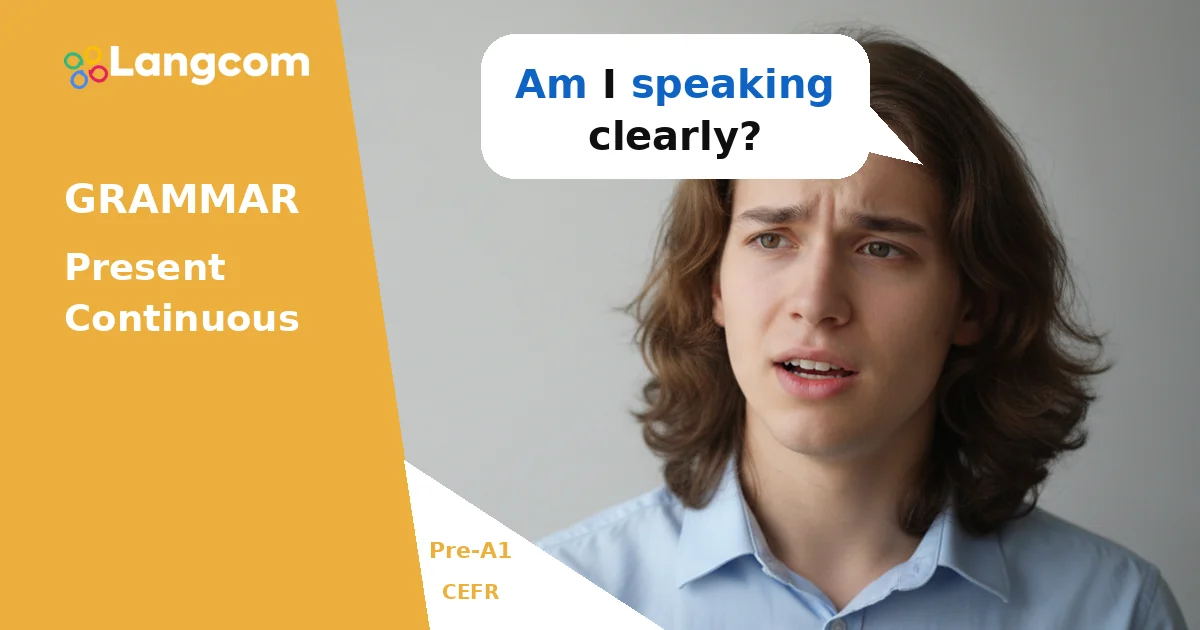
- Am I speaking clearly?
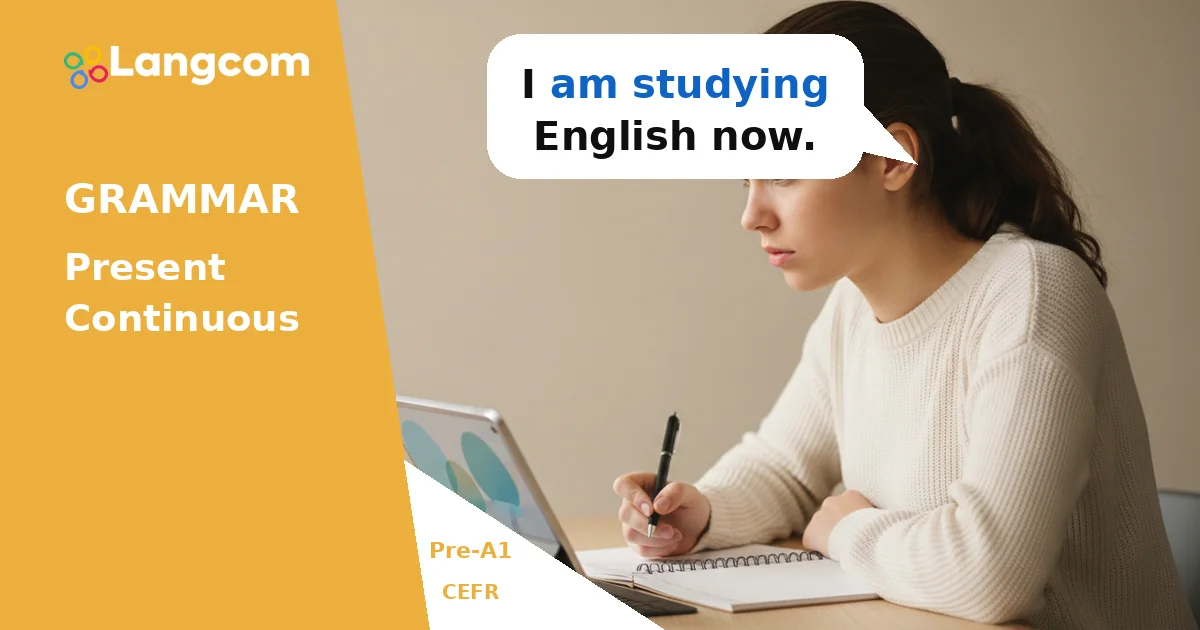
- Are you studying English now?
- Is he cooking dinner?
- Is she reading a book?
- Is it raining heavily?
- Are we watching a good movie?
- Are they playing football?
- What are you wearing today?
- Where is he going after work?
- Why are they shouting?
Prática
💬 Precisa de orientação personalizada?
Como Centro Autorizado de Preparação para os Exames de Cambridge, podemos orientá-lo na escolha do curso e da certificação mais adequados. Entre em contato com nossos orientadores hoje mesmo.
Converse com um consultor pelo WhatsAppErros comuns entre falantes de espanhol
Os falantes de espanhol às vezes cometem estes erros:
- Incorrect Word Order: You might put the subject before the be verb, like in a statement.
- Errado: You are working?
- Direita: Are you working?
- Missing 'be' verb: Esquecendo o be verb (am, is, are) is a common error.
- Errado: She reading a book?
- Direita: Is she reading a book?
- Missing '-ing': The main verb must always have -ing.
- Errado: Are you study English?
- Direita: Are you studying English?
Perguntas frequentes
What is the basic structure for Present Continuous questions?
The basic structure is Be verb + Subject + Verb-ing...? Por exemplo, Are you listening?
Can I use 'do' or 'does' with Present Continuous questions?
No, you do not use do ou does with the Present Continuous. You only use the be verb (am, is, are). For example, Do you are working? is incorrect. The correct way is Are you working?
How do I give short answers to Present Continuous questions?
You use Yes ou No, followed by the subject and the correct be verb. For example: Are you happy? Yes, I am. ou Is he sleeping? No, he isn't.


0 Comentários