

What are Word Groups in English Pronunciation?
In English, a word group is a set of words that belong together because they express one complete idea or part of an idea. Think of them as small ‘chunks’ of meaning.
- Speakers usually say these words together without stopping.
- They then make a short pause before starting the next word group.
- These groups often match grammatical units like phrases or clauses.
🎓 Aprenda inglês com o método misto
Grupos pequenos · Tutor de IA 24 horas por dia, 7 dias por semana · Preparação para os exames de Cambridge
Planos de $39 $79 por mês
Why are Pauses and Word Groups Important?
Usando word groups and pauses correctly is very important for good pronunciation and communication.
- Clarity: Pauses help your listener understand your message. They show where one idea ends and another begins.
- Naturalness: English speakers naturally pause. If you don't pause, or pause in the wrong places, your speech can sound unnatural or difficult to follow.
- Rhythm: Pauses contribute to the natural rhythm and flow of spoken English. They make your speech more pleasant to listen to.
Where Do We Usually Pause in English?
There are common places where English speakers usually pause. These pauses help to separate ideas.
- Between clauses: A clause is a part of a sentence with a subject e um verb. You often pause between them.
Exemplo: I went to the market, // and I bought some fresh fruit. - Before conjunctions: Palavras como and, but, or, so often introduce a new idea, so a pause can come before them.
Exemplo: She likes coffee, // but I prefer tea. - After a long subject: If the subject of your sentence is many words long, you might pause after it.
Exemplo: The old house at the end of the street // is for sale. - Before prepositional phrases (sometimes): A prepositional phrase starts with a preposition (like in, on, at). You might pause before it if it adds new information.
Exemplo: He works // in a big office building. - To emphasize a point: Sometimes, speakers pause to make a word or idea stand out.
How Long Should Pauses Be?
Pauses in English speech are usually short and natural. They are not long silences.
- Think of them as brief breaths you take while speaking.
- The length can change depending on how fast you are speaking or how important the idea is.
- Too many long pauses can make you sound hesitant or unsure.
Tips for Practicing Word Groups and Pauses
Improving your use of word groups and pauses will make your English sound much better.
- Listen carefully: Pay attention to how native English speakers pause when they talk. Listen to podcasts, movies, and conversations.
- Read aloud: When you read an English text, try to identify the word groups. Mark where you think the speaker would pause (e.g., with a slash //). Then, read it aloud.
- Record yourself: Speak a few sentences and record your voice. Listen back to hear if your pauses sound natural and help make your message clear.
- Practice with short sentences: Start with simple sentences and gradually move to longer, more complex ones.
Exemplos
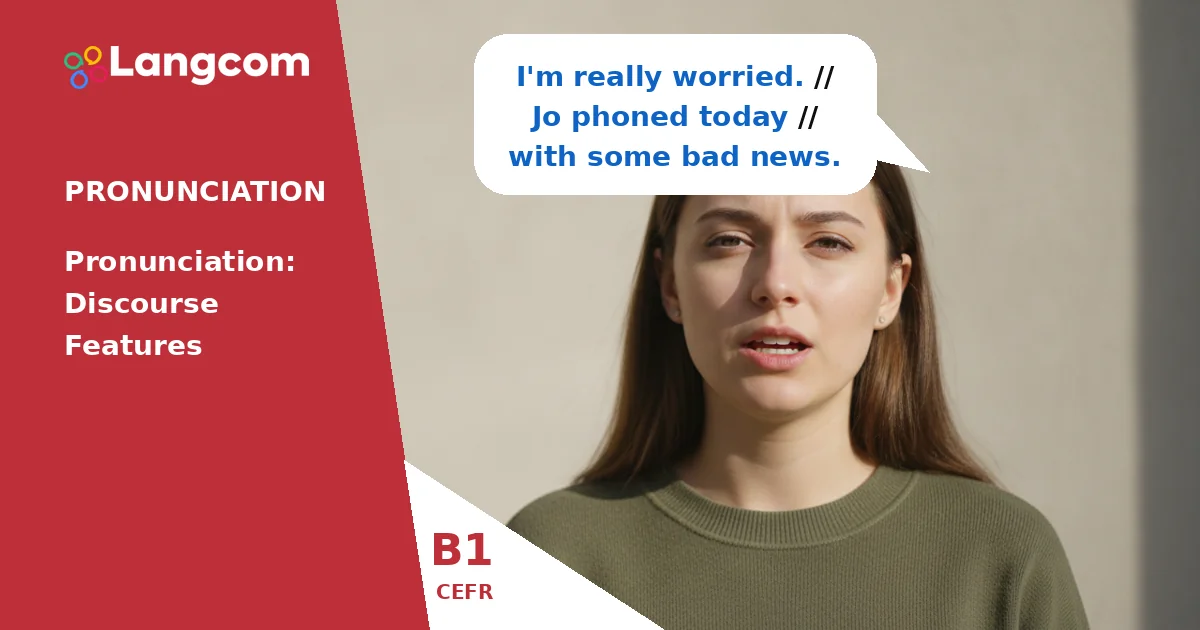
- I'm really worried. // Jo phoned today // with some bad news.
- The woman who lives next door // is a doctor.
- We can meet at the cafe // or we can go to the park.
- After a long day at work, // I like to relax.
- She studied hard // for her exam.
Prática
✍️ Não sabe em que nível você está?
Faça nosso teste de nivelamento gratuito e receba um feedback personalizado de examinadores certificados pela Cambridge.
Faça nosso teste de nivelamento GRATUITOErros comuns entre falantes de espanhol
Spanish speakers sometimes make specific mistakes with pauses in English:
- Not pausing enough: Speaking a long sentence without any breaks can make it sound like one continuous stream of words, which is hard for listeners to process. For example, saying I went to the store and bought milk and then I came home all in one breath.
- Pausing in the middle of a natural phrase: Breaking up a word group can confuse the listener. For instance, pausing in the tall // man em vez de the tall man //.
- Pausing too long: While pauses are good, very long silences can make you sound unsure or make the listener think you have finished speaking.
Perguntas frequentes
What is a 'word group' in English pronunciation?
A word group (ou thought group) is a small collection of words that express a single idea. English speakers say these words together and then usually pause briefly before the next group.
Why is learning about pauses important for my B1 English?
Learning about pauses helps you speak more clearly and naturally. It makes your English easier for others to understand and improves your overall fluency and rhythm, which are important skills at the B1 level.
Can pausing in different places change the meaning of a sentence?
Yes, sometimes. A pause can change how a listener understands your sentence. For example, Let's eat, // Grandma! (inviting Grandma to eat) is different from Let's eat Grandma! (which sounds like you want to eat Grandma!). Correct pausing helps avoid confusion.
How can I practice using word groups and pauses effectively?
The best ways to practice are to listen carefully to native speakers, read English texts aloud and mark where you would pause, and record yourself speaking. Then, listen to your recording to identify areas for improvement.

0 Comentários