por Raúl | jul 18, 2026 | A1 Inglês para Iniciantes
To talk about what you are able to do, or what is possible, use the English word can. For things you are not able to do, or that are not possible, use can’t. Can is a special verb called a ‘modal verb’. This means it does not change its form for...
por Raúl | jul 17, 2026 | Inglês básico A2
Have to shows that something is necessary or an obligation, often because of a rule or situation. For example, I have to work today means working is necessary for me. It is similar to must, but have to often refers to external rules or duties. On the other hand,...
por Raúl | jul 17, 2026 | Inglês básico A2
To talk about sports and exercise in English, we use specific verbs like play, do, and go. These verbs combine with different activities. We use play for team sports or games with a ball, like play badminton or play football. For individual exercises, martial arts, or...
por Raúl | jul 17, 2026 | Inglês básico A2
We use can and can’t to talk about abilities in the present. Can means you know how to do something or you are able to do it. Can’t (or cannot) means you do not know how to do something or you are not able to do it. These are modal verbs, so they do not...
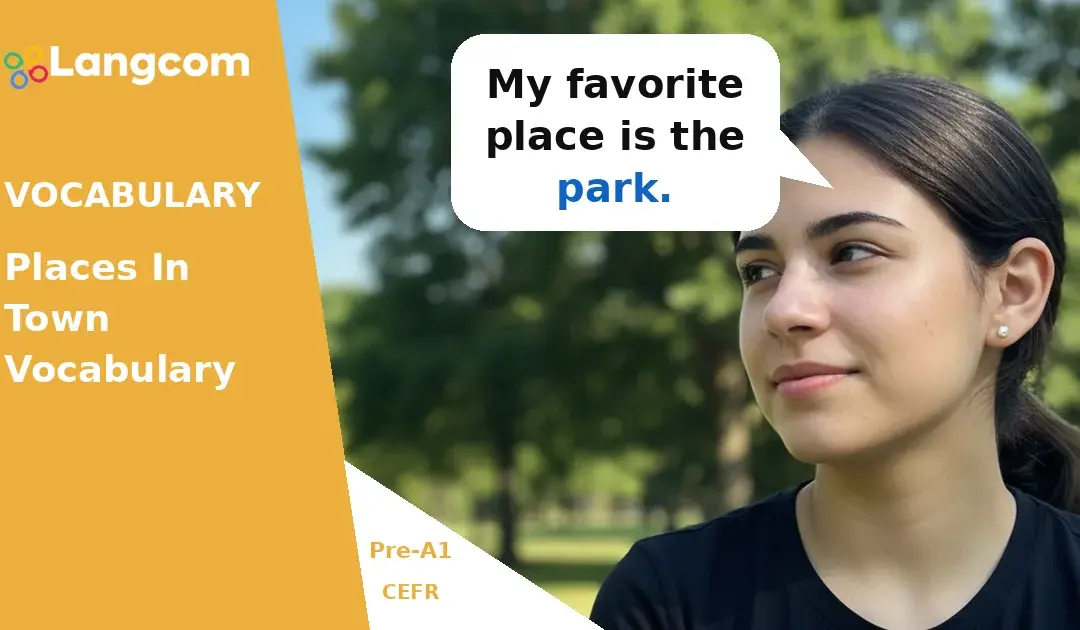
por Raúl | jul 17, 2026 | Inglês para crianças – Nível Pré-A1 (Iniciante)
Learning words for places in town helps you talk about where you live and what you do every day. These are important words for Pre-A1 English learners. Imagine you want to tell a friend where you are going, or ask for directions. You need to know words like park,...
