

Why Use Phrasal Verbs for Discussing Sleep?
Phrasal verbs are common in everyday English, especially in informal and semi-formal conversations. Using them makes your English sound more natural and fluent.
For C1 learners, understanding and using these verbs shows a high level of linguistic competence. They allow you to express nuances about sleep that single verbs cannot.
✍️ Não sabe em que nível você está?
Faça nosso teste de nivelamento gratuito e receba um feedback personalizado de examinadores certificados pela Cambridge.
Faça nosso teste de nivelamento GRATUITOPhrasal Verbs for Falling Asleep and Staying Awake
These phrasal verbs describe the process of falling asleep or the reasons why you might not be able to sleep.
- Drift off: To gradually fall asleep. This often implies a gentle, unintentional process.
Exemplo: I was so tired, I started to drift off during the movie. - Keep (someone) up: To prevent someone from sleeping. This phrasal verb is transitive and separable.
Exemplo: The noisy neighbours kept me up until 3 AM.
Exemplo: Don't let your worries keep you up at night.
Managing Sleep Habits and Preparation
These phrasal verbs are useful for talking about how you prepare for sleep or adjust your daily routines to improve rest.
- Wind down: To relax after a period of activity, often before going to bed. It means to become less active and prepare for rest.
Exemplo: After a busy day, I like to wind down with a good book. - Cut back on: To reduce the amount or frequency of something. This is often used for habits that negatively affect sleep.
Exemplo: I'm trying to cut back on caffeine in the evenings. - Cut out: To stop doing or consuming something completely. This is a stronger action than cut back on.
Exemplo: My doctor advised me to cut out all screen time an hour before bed.
Discussing Sleep Problems and Consequences
When talking about the challenges of sleep or the results of poor sleep, these phrasal verbs are very helpful.
- Build up: To accumulate gradually, often referring to stress, fatigue, or sleep debt. It can be transitive or intransitive.
Exemplo: Lack of sleep can build up over time and affect your health.
Exemplo: The stress from work has been building up, making it hard to sleep. - Rack up: To accumulate a large amount of something, often negative, like sleep debt or hours without sleep. It implies a significant total.
Exemplo: Students often rack up huge sleep debts during exam periods. - Slip away: To pass quickly or disappear, often referring to sleep itself or the opportunity to sleep. It suggests something lost or missed.
Exemplo: My chance to get a full night's sleep slipped away when the baby woke up.
Exemplo: Sometimes, sleep just seems to slip away from me.
| Phrasal Verb | Significado | Example Usage |
|---|---|---|
| drift off | To gradually fall asleep | I often drift off on the sofa. |
| keep (someone) up | To prevent someone from sleeping | The noise kept me up. |
| wind down | To relax before sleep | I need to wind down after work. |
| cut back on | To reduce the amount of something | Cut back on caffeine. |
| cut out | To stop something completely | Cut out late-night snacks. |
| build up | To accumulate (e.g., stress, debt) | Sleep debt can build up. |
| rack up | To accumulate a large amount (often negative) | He racked up hours of overtime. |
| slip away | To pass quickly or disappear (e.g., sleep, time) | My chance for sleep slipped away. |
Exemplos
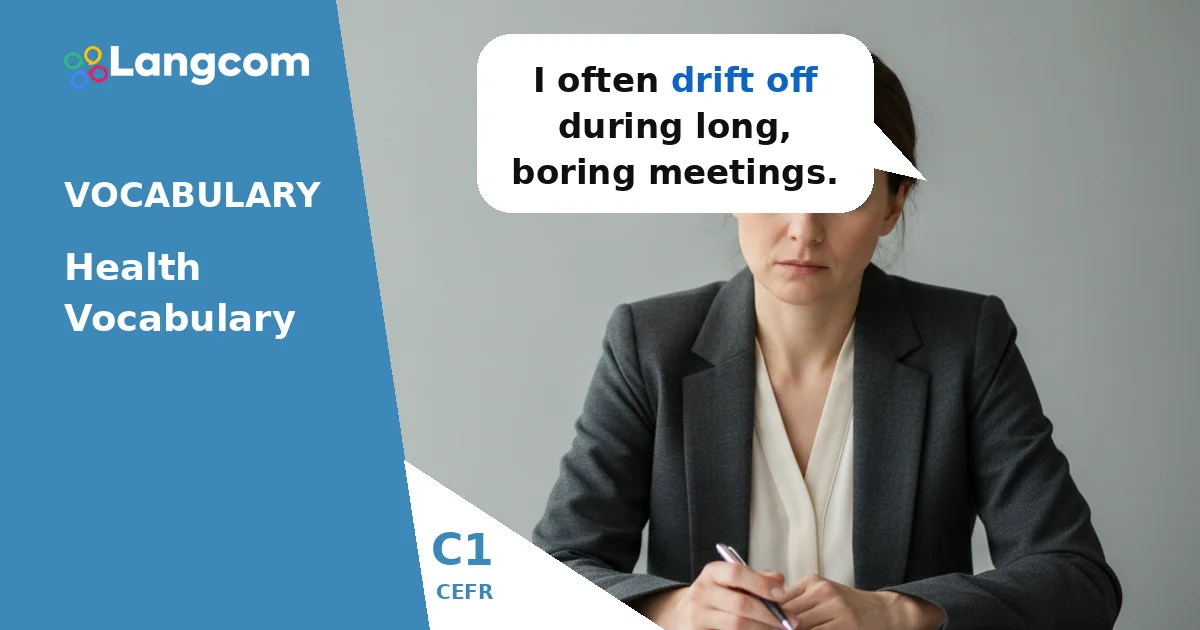
- I often drift off during long, boring meetings.
- The constant noise from the street kept me up all night.
- It's important to wind down before bed to ensure good sleep.
- I'm trying to cut back on late-night snacks to sleep better.
- Many people find it difficult to cut out coffee completely.
- If you don't get enough rest, sleep deprivation can build up.
- He's been racking up extra hours at work, so he's exhausted.
- After a busy week, the weekend always seems to slip away too fast.
Prática
Pronto para receber seu certificado?
O curso Langcom prepara os alunos para os exames de Cambridge, IELTS, TOEFL, DELE, SIELE e Michigan.
Comece a usar o LangcomErros comuns entre falantes de espanhol
Spanish speakers often make mistakes by using single verbs instead of the more natural phrasal verbs, or by choosing the wrong preposition.
- Incorreto: I fell asleep slowly during the lecture.
Correto: I started to drift off during the lecture. (Using drift off sounds more natural for a gradual process.) - Incorreto: The stress accumulated.
Correto: The stress built up. (Using build up is more idiomatic for gradual accumulation.) - Incorreto: I reduced my screen time.
Correto: I cut back on my screen time. (Phrasal verb is more specific and common in this context.) - Incorreto: The opportunity to sleep disappeared.
Correto: The opportunity to sleep slipped away. (Using slip away conveys a sense of loss or missed chance.)
Perguntas frequentes
What is the difference between 'cut back on' and 'cut out'?
The difference is in the degree of reduction. To cut back on something means to reduce the amount or frequency, but not stop completely. For example, I'm cutting back on sugar means eating less sugar. To cut out something means to eliminate it entirely. For example, I'm cutting out all sugary drinks means stopping them completely.
Can 'build up' be used for positive things related to sleep?
While build up is often used for negative things like stress or sleep debt, it can sometimes be used neutrally or even positively in other contexts (e.g., build up strength). However, for sleep, it most commonly refers to the accumulation of a deficit or problem, like sleep debt building up.
How can I remember these phrasal verbs for C1 exams?
To remember these phrasal verbs for C1 exams, try to use them in context. Create your own sentences about your sleep habits. Practice explaining common sleep problems using these verbs. For example, describe a time when something kept you up, or how you wind down before bed. This active recall helps solidify your understanding and usage.
Is 'drift off' always about falling asleep unintentionally?
Yes, drift off typically implies a gentle, often unintentional transition into sleep, as if you're slowly floating away. It suggests you weren't actively trying to fall asleep, but it happened naturally or due to tiredness.



0 Comentários